
Executive women's leadership summit: the details that signal respect
At an executive women's summit, the small logistics carry the message. Lighting for the headshots, a real lactation room, seating that isn't theater rows. Here are the details that tell 200 senior leaders the host actually thought about them.
The detail that told 200 senior women the host hadn’t thought about them was the bathrooms. A leadership summit, a general session that broke at 10:30, and one small restroom off the ballroom with four stalls for a room that was 85 percent women. The line ran past the coffee, the break ran 25 minutes long, and the 11am panelist started to a half-empty room. It’s a small thing. It’s also the exact kind of small thing that signals whether the people planning the event pictured the people attending it. At a women’s leadership summit, the logistics are the message.
I convene leadership summits, and the ones aimed at senior women have a higher bar on details that a mixed executive conference gets away with ignoring. Not because the content is different, the content is peer leaders talking about hard things, but because the audience notices whether the host planned for them specifically. Respect at an event isn’t stated from the stage. It’s demonstrated in restroom capacity, lighting, seating, and a dozen quiet choices that say we thought about you.
Restroom capacity is the first tell
I check the restroom-to-attendee ratio before I check the ballroom. A venue built for a general business crowd assumes a roughly even split and sizes facilities accordingly. A summit that’s 85 percent women overloads that assumption instantly, and a 20-minute break becomes 40 because half the room is standing in a line. So I ask the venue for stall counts near the general session, and if the fixed facilities can’t handle a female-majority crowd on a tight break, I either pick a different room or bring in additional facilities. It’s unglamorous and it’s the first thing attendees feel.
I also build longer breaks, 25 to 30 minutes instead of 15, because a real break lets people use the restroom, refill coffee, and have the hallway conversation that’s half the value of the summit. Short breaks look efficient on the agenda and create lines everywhere.
A lactation room is not optional
If there’s any chance a nursing parent is in the room, and at a summit of 200 senior women there is, I provide a private, clean, lockable lactation space with a comfortable chair, an outlet, a small fridge, and a sink nearby if possible. Not a repurposed storage closet. Not the accessible restroom. A real room, marked discreetly, that a returning-from-leave executive can use with dignity. Providing it without being asked is the whole point, because a parent who has to hunt for a space or ask a stranger has already been told this event wasn’t built with her in mind.
This shapes the venue choice. A conference center with flexible small rooms can dedicate one easily. A hotel or resort can convert a guest room or a small meeting room. I confirm the specific room in the walkthrough, not a vague promise, because “we can figure that out” on the day means a closet.
Lighting, because the headshots matter
Executive summits increasingly offer on-site professional headshots, and for a room of senior women who are also building personal brands, that station is genuinely valued. But it only works with the right light. A dim ballroom corner produces headshots nobody will use. I put the headshot station near a window or I bring proper photographic lighting, a softbox setup, and I give it a clean backdrop and enough space for a short queue that doesn’t spill into the reception.
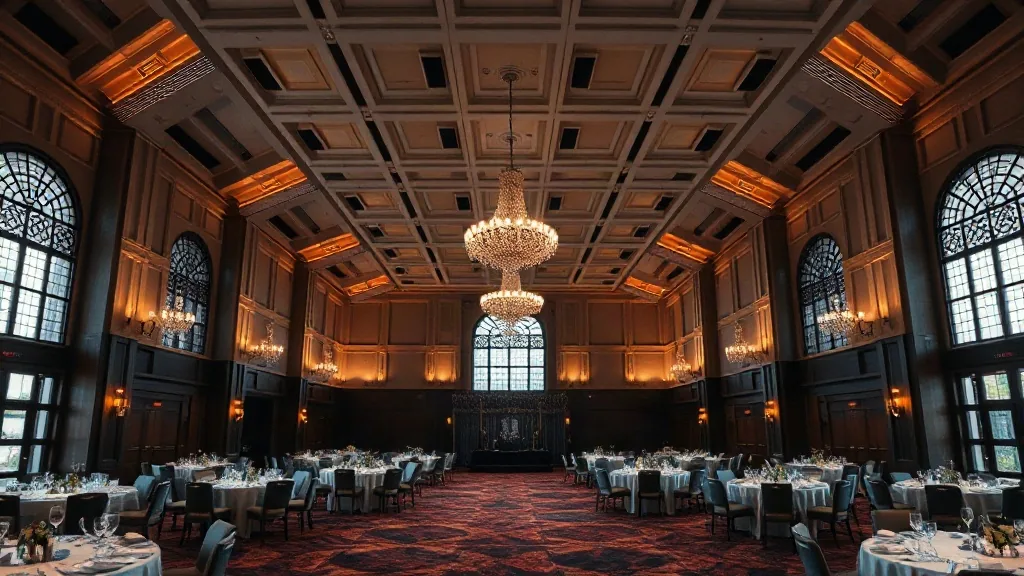
Room lighting matters beyond the headshots too. I avoid venues that can only do harsh overhead fluorescent or a single dim setting. I want dimmable, warm, controllable light, because the room’s light is on every attendee’s face all day and in every photo of the event. This is a real reason I sometimes place a summit in a historic mansion or a well-lit boutique property over a generic ballroom, the light is simply better and people feel better in it.
Seating that invites conversation
Theater rows tell people to sit and receive. A leadership summit is peers exchanging, so I set crescent rounds or full rounds wherever the format allows, because senior leaders want to talk to the person beside them, not stare at the back of a head. Rounds also make the room feel populated and warm rather than a sea of chairs. For the panels I keep the stage low and close, no towering riser that puts the speakers on a pedestal above the room, because the tone I want is peer-to-peer, not lecture.
I brief the venue on this specifically, the way a good executive assistant briefs a venue on the non-obvious requirements, because the default they’ll set is theater and I’ll have to change it on site if I don’t specify it in the contract.
The food and the timing
Summit catering for this audience skips the heavy, sleepy banquet lunch. I do a lighter, high-quality lunch, plated or a well-run buffet with real vegetables and protein, not a pasta bar that puts the afternoon panel to sleep. Coffee is good coffee, refreshed, available at every break and not just at 8am, because the 3pm slump is real and bad coffee is a small daily insult people notice. Dietary options are labeled and plentiful, and they’re integrated, not a sad separate table, so nobody with a restriction feels like an afterthought.
I also protect the schedule. Panels start on time, breaks are honored, and the day ends when the agenda says it ends, because senior women have flights, families, and teams waiting, and a summit that runs 45 minutes long because the morning slipped tells everyone their time wasn’t respected. Ending on time is itself a signal.
The evening, and who’s in the room
The reception is where the network forms, so I make it good and I make it comfortable, seating for people who don’t want to stand for two hours in heels, quiet corners for real conversation, and a noise level where you can actually hear a peer. I keep the host’s own executives present but not dominating, the same principle that governs a customer summit, because the value is the attendees connecting with each other, not being worked by the hosts.
None of these choices is expensive on its own. Longer breaks, a real lactation room, good lighting, rounds instead of theater, decent coffee. Together they’re the difference between a summit that feels built for the women in the room and one that feels like a generic conference with a theme slapped on. The details are the respect.
Tell me the headcount, the likely percentage of women in the room, and if you’re offering headshots or expecting nursing parents. That tells me the restroom capacity I need, the rooms I have to dedicate, and the venues whose light and layout will make 200 senior leaders feel the host actually planned for them.


