
Government Contractor Events — The Security-Cleared-Room Rule
Planning corporate events for government contractors means navigating classified adjacency, badging requirements, foreign national restrictions, and venues that may not grasp any of it. Here's the framework.

The first time a client told me that two of the thirty attendees at their leadership offsite couldn’t be in the same room as three of the others due to clearance and access restrictions, I was forty-eight hours from the event and had no framework for what they were describing. I solved it — separate breakout rooms, adjusted agenda, a logistical workaround that nobody outside that client noticed — but I solved it with no preparation and a lot of luck.
I have now planned corporate events for government contractors for seven years, and that first experience produced the framework I run every government-contractor event through before I sign a venue contract. The defense and intelligence contracting world has event-planning requirements that the general corporate event market genuinely doesn’t understand, and venues — even experienced ones — routinely have no procedures for them.
The cleared-room rule
The single most critical concept for a government contractor event is what I call the cleared-room rule: not all attendees can be present for all content, and the room configuration, signage, and agenda have to reflect that.
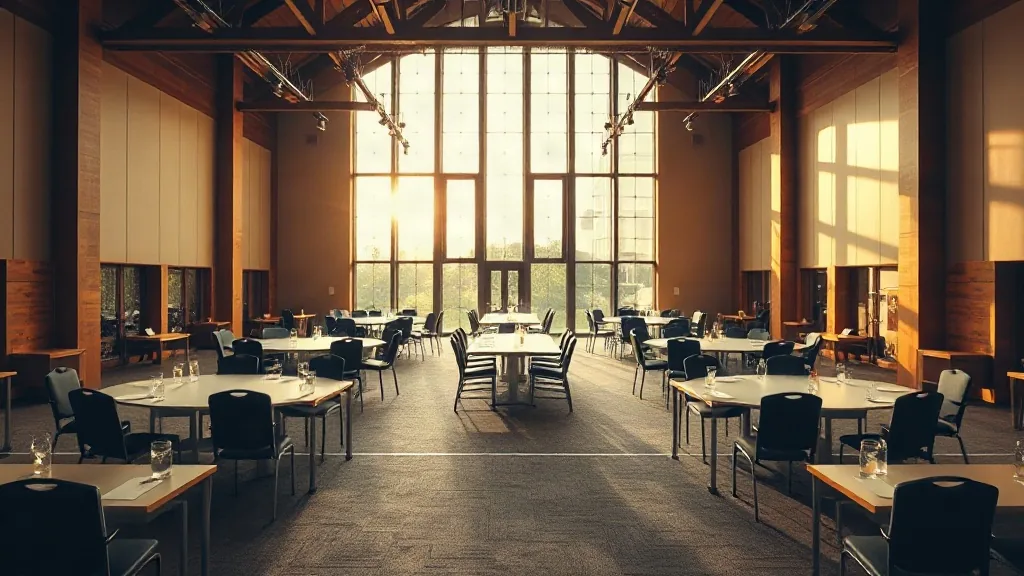
Here’s the reality: a government contractor with programs at multiple classification levels has employees whose clearances determine what they can discuss and with whom. A corporate strategy session that includes both cleared and uncleared staff cannot present classified-adjacent material in a shared session without a violation. The event planner’s job is not to adjudicate the clearances — the client’s security officer does that — but to build an event structure where the session breaks are clean and the physical separation is real.
What “real” physical separation means:
- Separate rooms, not separate sections of the same room. A folding partition is not a classified boundary.
- Clear signage protocols that identify which sessions are cleared-only without revealing why. My clients often use neutral language: “Leadership Team Session” or “Program Track A” rather than any clearance designation.
- Agenda management so that cleared and uncleared attendees know their own schedule without having the full schedule visible to everyone.
I build a two-track agenda for every government contractor event with mixed clearance levels. The client’s security officer reviews it before the agenda is distributed to attendees.
Foreign national restrictions
This is the one that surprises venues most. Many government contractors have program restrictions that prohibit foreign nationals from being present during certain sessions, or in certain spaces. This is not a corporate preference; it’s a legal requirement tied to the program’s export control classification (ITAR, EAR, or program-specific access controls).
When I book a venue for a government contractor event, I ask directly: “Do you use foreign-national staff in your catering, AV, or conference services, and can you provide documentation of staff citizenship for verification?” Most venue coordinators have never been asked this and have no answer. What I’m really asking is: does your staffing model allow me to verify the citizenship of every person who will enter the meeting space during the program?
The practical answer at most hotels and conference centers is no — they cannot guarantee this. So I solve it structurally: catering service is set-and-go during breaks, not in-session service. AV setup is completed and tested before the cleared session begins. The only people in the room during a cleared session are the attendees whose access is confirmed.
This requires more planning than a standard corporate conference. It adds maybe $800-$1,500 in coordination cost. It is required.
Venue selection for government contractor events
The Northern Virginia / DC corridor is the natural geography for much of the defense and intelligence contracting world, and the venue market there has, over time, developed some awareness of these requirements. But “some awareness” is not the same as “standard procedure,” and I verify every time rather than assuming.
The venues I trust in the DC area for this work tend to be either dedicated conference facilities with government contracting clientele (the facilities near Tysons Corner, Reston, and the Pentagon corridor have more experience with this than downtown DC hotel ballrooms) or private-club spaces where the membership model provides a degree of security for the surrounding environment.
Meeting spaces in Virginia has the broader category. The Reston/Tysons/McLean corridor venues — specifically those with dedicated conference wings, not hotel ballrooms — are where I start.
For events that draw contractor staff from multiple sites — which is common for a company with programs in both NoVA and Huntsville, Alabama, or San Diego — the city choice is a function of where the bulk of cleared staff are based, not the headquarters. Flying cleared staff to an event center near the largest program site usually produces better attendance than flying everyone to headquarters.
The badge-in protocol
Government contractor corporate events frequently use the client’s internal badging system to verify attendee access. This sounds like an IT function; it’s actually an event-logistics function that has to be built into the venue setup.

I work with the client’s security officer on a specific check-in process: a staffed registration desk with the client’s own personnel (not venue staff) verifying badges, separating cleared and general-program attendees, and managing the physical flow into the cleared session areas. This requires dedicated space at the venue entrance that isn’t the hotel’s standard registration table.
The venue has to provide this space, and the area has to be away from public hotel traffic. For a hotel with an open lobby, this sometimes means contracting a private pre-function room for registration rather than using the standard hotel registration setup. I negotiate this in the venue contract.
Photography and recording
Government contractor events frequently have blanket no-photography policies for cleared sessions, and sometimes for the entire event. This creates a specific conflict with venues that have house photographers, with hotel staff who photograph events for marketing, and with any client staff who might post event photos to personal social media.
I address this in three places:
- Venue contract: explicit prohibition on venue-initiated photography of any session content or attendee-visible materials.
- Event communications: attendee pre-event guidance that specifies no personal photography during any session, and the areas/times where photography is permitted (typically a designated networking reception).
- Signage at entry: clear, professionally printed no-photography notices at every session entrance.
The signage sounds like a small thing. It is not. An attendee who photographs a slide and posts it on LinkedIn — even innocuously — creates a problem for the client’s security officer. The signage prevents the innocent error.
Working with the client’s security officer
Every government contractor I’ve worked with has a security officer (sometimes a Facility Security Officer, FSO, for larger firms) who owns the access and clearance requirements for corporate events. My relationship with the security officer is as important as my relationship with the event coordinator.
I schedule a dedicated call with the security officer in the early planning phase — before the venue is booked, before the agenda is built. I walk through: clearance levels present, foreign national restrictions, recording/photography policies, physical separation requirements, and any program-specific access controls the event might trigger.
That call takes 45 minutes and saves four last-minute crises. It is the most important conversation in the planning process for a government contractor event, and most external event planners never have it.
The DC corporate event venues directory and the Virginia meeting venues directory are the two directories I use most for this work. The defense industry vendor considerations post covers the vendor side of the same contractor-event context.
Send me the program classification level, the headcount, and the clearance split — and I’ll build the venue structure around what your security officer actually needs.


