
The Partner Summit Playbook: Briefing Rooms, NDA Logistics, and the Partner-Facing Agenda
Partner summits blend public-facing product news with private commercial discussions that require separate spaces, controlled document distribution, and a two-tier agenda structure. Most fail because the public and private tracks bleed into each other. This playbook covers the full venue brief, NDA logistics, and the partner-facing agenda design that produces commercial outcomes.

Partner summits operate on two parallel tracks that must not contaminate each other. The public track is the product update, the roadmap overview, and the co-selling enablement content that can go in a follow-up email without consequence. The private track is the commercial discussion: deal registration terms, partner tier criteria changes, competitive positioning under NDA, and the individual account conversations where you’re talking about a specific customer opportunity.
Most partner summits I’ve seen conflate these tracks. The result is either that partners hear nothing substantive (everything is public-track safe) or that confidential commercial information reaches partners who shouldn’t have it because the NDA logistics weren’t managed properly. Getting the two-track design right is the core operational challenge.
The two-tier agenda structure
Public track (all-hands sessions): These sessions are for the full partner attendee base. They cover product direction, market positioning, co-selling resources, and success stories that can be referenced outside the summit. Treat these sessions as if they will be transcribed and shared publicly, because some partner will share notes from them. Plan content accordingly.
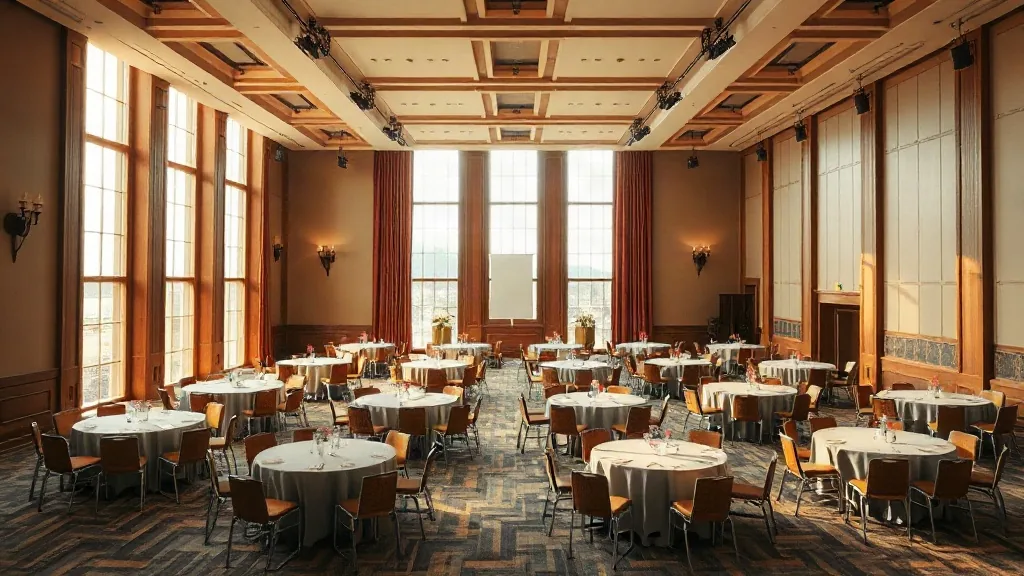
Private track (individual briefing rooms): 45-90 minute private sessions between your account managers and individual partner organizations. These require a separate physical space from the general sessions and are not open to other partners. The content covered in private sessions includes commercial terms, deal registration discussions, co-sell pipeline reviews, and partner tier conversations.
The scheduling logic: public sessions run in the morning. Private briefing sessions run in the afternoon with 45-minute slots staggered across 4-6 briefing rooms. Partners leave the morning general session and move to their scheduled briefing. Partners without a scheduled briefing that afternoon attend optional workshops or use the time for peer networking.
The venue brief
A partner summit for 100-200 channel partners requires a more complex venue brief than most conferences:
General session room: Full attendee capacity, same as any conference. The watch-out for partner summits is the competitive intelligence risk of open general sessions in a hotel. Partner summits often include competitive positioning content that should not be visible to staff in adjacent event spaces or to attendees walking by. Request a room without a windowed corridor view and confirm the venue’s staff NDAs cover event content.
Briefing rooms: 4-6 simultaneous rooms for 4-8 person partner meetings. These rooms need good acoustic separation (not accordion walls), a whiteboard, a display screen for screen-sharing, and a lockable door. A conference table setup works better than a boardroom layout for these discussions because it’s less hierarchical and the partner team can spread out their materials.
Registration and check-in for tiered access. Partner summits often have tier-differentiated access: Platinum partners attend private dinners and executive briefings that Gold partners do not. Your badge system needs to indicate tier level at a glance. This is usually a color-coded badge or a physical credential. Your check-in staff need to enforce tier-based access at session entry. This fails regularly when staff aren’t briefed on the access structure.
NDA signing station. Partners who are accessing private-track sessions need to have signed NDAs. A signing station at registration, staffed by one person with printed copies and a document log, handles this for walk-up signing. Partners who pre-signed digitally receive a “NDA on file” notation on their badge. Do not rely on verbal acknowledgment.
Hotels and resorts with a conference wing work well for partner summits because the residential component allows the relationship-building that happens between sessions. Conference centers work for single-day summits where overnights aren’t part of the program.
NDA logistics
The NDA structure for a partner summit has three layers:
Pre-event NDA. Sent with the registration confirmation, typically 3-4 weeks before the summit. Digital signature (DocuSign or equivalent) required to complete registration. Approximately 70% of partners will sign pre-event if the process is simple. The NDA at this stage covers general summit content.
Session-specific NDA. For sessions covering unreleased product information, forward-looking financial projections, or competitive intelligence, a session-specific NDA is presented at the room entrance before entry. Partners not willing to sign don’t enter. This sounds extreme but is standard practice for publicly traded companies sharing pre-announcement product roadmaps. The session facilitator confirms NDA status at the door.
Document control. Any printed materials distributed in private sessions should be marked with the partner organization’s name or a tracking code. This is not accusatory; it’s standard document control. If information leaks (and it will eventually), you need to know which session it came from. Print tracking codes on all sensitive materials and collect them at session end.
The partner-facing agenda design
Partner agendas for the public track should be structured around the partner’s commercial interest, not your internal communications plan.
What partners attend a summit to learn:
- Where is the market going, and does your company’s direction give them a competitive advantage?
- What are you changing about the partner program, and how does it affect my margins?
- Who else in the partner ecosystem is doing interesting things I can learn from?
- How do I get more out of my relationship with your account team?
What companies tend to put in partner summit agendas instead:
- A 45-minute company retrospective on last year’s achievements
- A product demo that the partners have already seen in a webinar
- A customer case study from a company none of the partners recognize
- A breakout session on how to use the partner portal more effectively
The misalignment is a communication design failure. The fix is to build the agenda around partner needs, not internal communications milestones. If you’re not sure what your partners want, send a 5-question survey 6 weeks before the summit and design the agenda around the top 3 responses.
The executive access structure
Partner summits create expectations around executive access. Partners who travel to a summit expect to meet people more senior than the account manager they already talk to weekly. Meeting that expectation requires deliberate design.
Executive office hours: 20-minute slots with your VP of Sales, CPO, or CEO, available to top-tier partners in 4-6 person small groups. Scheduled in advance. Limited to 8-10 slots per day. These sessions are worth more than any general session content and should be marketed to partners as a tangible benefit of attendance.
Executive dinner: A private dinner for 15-20 top-tier or strategically important partners with 3-4 executives from your company. Invitation only. Not the same as the general evening networking dinner. This is where the relationship-level conversations happen.
Budget
For a 2-day partner summit with 150 attendees at a hotel conference center:
- Venue rental (2 days, general session + 5 briefing rooms + networking spaces): $8,000-18,000
- AV: $12,000-22,000 (general session + briefing room support)
- Catering (2 days, all meals, breaks): $35,000-60,000
- Evening networking dinner (all attendees): $12,000-20,000
- Executive dinner (20 people, private): $3,500-7,000
- Printed materials and document control: $2,000-4,000
- Event staff: $4,000-8,000
Total: $76,500-139,000 for 150 attendees. Per head: $510-927.
What’s the partner count, tier structure, and how much private-track content are you running? Those inputs determine the briefing room count and NDA logistics complexity.


