
The Rise of the 'Anti-Conference' Format — and Why It Works
The anti-conference isn't a conference with the sessions removed. It's a conference designed around the thing everyone agrees is the real product: the conversations that happen between sessions. Here's how it's structured and who it's right for.

I’ve been planning association and policy events in Washington since 2009, and I’ve been to enough traditional conferences to describe the failure mode precisely. It goes like this: a 500-person annual conference with a packed agenda, three simultaneous session tracks, a keynote that everybody photographs and nobody remembers, lunch in a ballroom with six people to a table and name tags nobody reads, and an evening reception where the most interesting conversation you had all day happened in the corner with two people you met by accident near the bar.
The anti-conference format is an attempt to build around that corner conversation instead of treating it as a happy accident.
I want to be specific about what I mean, because “anti-conference” is used loosely by event vendors who are mostly selling a rebrand. What I’m describing has a specific structural logic, specific venue implications, and a specific attendee profile for whom it works extremely well.
What the anti-conference actually is
The format that most precisely earns the name “anti-conference” is the Open Space Technology (OST) model, developed by Harrison Owen in the 1980s and adopted slowly by corporate and association contexts over the past decade. In OST, there is no pre-set agenda. The agenda is created by attendees at the beginning of the event. Anyone can propose a session. Any session with interested attendees runs. The rule of feet: if you’re in a session and it’s not serving you, leave and go find one that does.
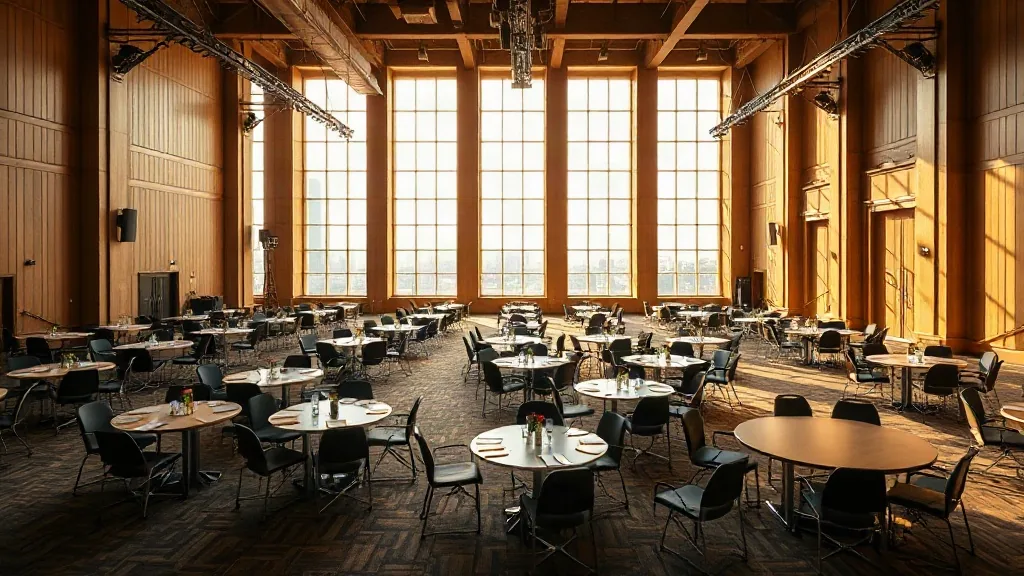
The corporate translation of this is less pure but more practical. What I’m running for association clients in DC looks like this:
-
No more than one plenary session per day. The plenary is used sparingly, for a genuine shared moment — a speaker who is worth the whole room’s attention, or a structured facilitated exercise that requires the full group. Not a welcome address, not a panel of four executives reading from notes. The plenary is earned.
-
The agenda is released 48 hours before the event, not six weeks. This is counterintuitive for planners trained to lock programs early, but it’s deliberate. A fixed agenda six weeks out produces a program built on what seemed important six weeks ago. A 48-hour release lets you read the room — what’s the actual conversation the field needs to have right now — and adjust.
-
Session slots are 45 minutes maximum. Research on adult attention and learning consistently shows that meaningful content absorption degrades sharply after 40-45 minutes. The 90-minute panel that could be a 25-minute presentation with 15 minutes of questions is one of the greatest sources of wasted time in the conference world. The anti-conference format enforces brevity.
-
Hallway time is scheduled. Not “breaks between sessions.” Genuine unstructured time — 45 minutes to an hour — scheduled explicitly as part of the program, with coffee and seating and no competing session track running. The hallway conversation is the product. Treat it as the product.
-
Evening programming is optional. Not mandatory-dinner-and-awards, which produces attendance out of social obligation. An optional evening event, designed well, fills to capacity with people who genuinely want to be there.
The attendee profile this works for
The anti-conference format does not work for every audience. I want to be honest about that.
It works exceptionally well for:
Associations of senior practitioners. People who have been to hundreds of traditional conferences, who know what they need and will create it if given the space. Policy associations, professional regulatory bodies, senior industry groups. These audiences arrive with expertise and leave frustrated by panels that tell them what they already know. The anti-conference gives them room to teach each other.
Small to mid-size leadership gatherings (50-150 people). The format scales best in this range. Below 50, it can feel underpopulated. Above 200, the logistics of a genuinely open agenda become unwieldy and you start compromising the format’s core properties.
Organizations in transition or at decision points. When a field or organization genuinely doesn’t know what it needs next, the emergent agenda of an anti-conference is more valuable than a curated program of sessions designed to answer questions from last year’s planning cycle. The format surfaces what the community actually cares about, not what the planning committee assumed it cares about.
It works poorly for:
First-time or general public attendees. The anti-conference assumes attendees who are active participants and who have enough baseline knowledge to generate sessions. An audience with high first-timer rates needs more structure, not less.
Events with regulatory or accreditation requirements. If your attendees need documentation of specific session content for CE credits or licensure hours, you need pre-set sessions with tracked content. The open agenda is incompatible with that requirement.
Events where stakeholders need to control the message. If the organization sponsoring the conference has a specific message to deliver and needs the program to support it, the anti-conference format is actively counterproductive. The emergent sessions will surface what the community thinks, not what leadership wants to say.
The venue requirements are different
This is the part that most planners miss when they try to run an anti-conference format in a traditional conference center, and it usually doesn’t work.

You need many small rooms, not one large one. The anti-conference generates multiple simultaneous small sessions — not tracks, because the sessions are created on the fly — and they need actual rooms, not table clusters in a ballroom. A venue with eight or ten rooms of 15-30 person capacity is significantly better than a venue with two large breakout rooms. The DC conference centers I use for this format are ones I specifically evaluated for small-room count, not ballroom capacity.
The common space needs to be genuinely comfortable. The hallway is the product. It needs seating, good lighting, reliable coffee service, and space for people to cluster in groups of 5-10 without feeling like they’re blocking a corridor. Most hotel conference levels fail this test. The corridors are corridors. The lounge areas are too far from the session rooms. I’ve found that historic buildings and renovated spaces often have better anti-conference physical geometry than purpose-built conference centers — the irregular floor plans create natural gathering nooks.
The agenda board needs a prominent physical presence. In a traditional anti-conference, the session agenda is written on physical cards posted to a large grid on a wall. Digital versions exist but they’re worse — the physical board creates a focal point and a ritual (adding your session, scanning the day’s schedule) that digital can’t replicate. The venue needs wall space for this. I bring a modular board system to events where the venue can’t accommodate it.
Acoustic separation matters more than usual. When 12 simultaneous sessions are running in adjacent rooms, sound bleed between rooms is a session-killer. I now ask venues for their STC ratings on interior walls before I commit to an anti-conference format at a new location. The Virginia meeting spaces near DC that I’ve been using for smaller association events have better acoustic separation than most DC hotel conference floors, which is part of why I’ve migrated some of my programs there.
What it costs compared to traditional conferences
This is the answer most planners want, and it’s complicated.
The anti-conference format generally costs less in content production — no big speaker fees, no session recording infrastructure for 10 parallel tracks, no elaborate AV for multiple simultaneous presentations. Those savings can be significant.
It generally costs more in facilitation — you need a skilled session host for the opening process, usually two or three facilitators for the day, and the preparation time for designing the opening process correctly is substantial. Good facilitation for an anti-conference runs $3,000-$8,000 per day, which is the primary additional cost line.
The venue cost is roughly equivalent — you’re trading one large ballroom for many small rooms, which typically nets out.
Net result: a well-run anti-conference is usually 5-15% cheaper than a comparable traditional conference of the same headcount, with better attendee satisfaction scores in every format I’ve run it.
See what I expect to happen to the traditional conference format by 2030 in what corporate events look like in 2030 — the anti-conference is one of the formats I think survives and grows.
The directory’s conference centers and meeting spaces are the starting point for finding a venue with the physical properties this format requires. Filter for room count over raw capacity.
Send me the brief. If the audience profile fits, I’ll tell you whether the anti-conference format is right for your next program.


