
The Executive Team Offsite That Was 80% Presentations: What to Replace Them With
An executive offsite full of presentations wastes the one resource that's hardest to get: senior attention in the same room. Three agenda formats produce actual decisions and organizational alignment. Three produce fatigue and the illusion of alignment.

The default executive offsite agenda looks like this: eight presenters, twelve slide decks, two panel discussions, a dinner, and a closing session where the facilitator asks “what are our key takeaways?” and writes them on a flip chart. Three days later, nobody can remember what was decided or who owns what.
This is the most expensive format in corporate events, measured by both direct cost and opportunity cost. Twenty senior leaders away from the business for two days represents roughly $80,000 to $120,000 in fully-loaded staff cost before the venue, catering, and travel. That investment should produce decisions, not recaps of information that could have been shared in an email.
Here are the three formats that produce outputs, and the three that don’t.
Formats that produce outputs
Structured debate. Assign two small groups opposing positions on a real strategic question. Give them 30 minutes to prepare the best argument for that position, even if it’s not the position they personally hold. Then debate for 20 minutes with a facilitator. Then vote (anonymously, on paper) on the decision.
This format works because it separates the exploration of an option from the personal advocacy for it. Senior leaders who might not advocate openly for a contrarian position in a hierarchical room will argue for it effectively when assigned to do so. And the group gets genuine analysis of both sides before committing.
At a two-day conference center offsite with four major strategic questions, two structured debates per day produces more grounded decision-making than eight presentations across the same time window.
Pre-read sessions. Every presentation that is primarily information transfer (here’s what’s happening in our market, here’s the Q2 results, here’s what the product team built) should be sent as a pre-read 5 business days before the offsite. Attendees read the materials before they arrive. The offsite session is used entirely for discussion, questions, and implications, not for walking through slides.
This is uncomfortable for presenters who have spent weeks building the deck and want to present it. The answer: the presentation can be walked through for senior stakeholders who couldn’t make the offsite, or it can be recorded and shared as a video. The time in the room with all 20 executives present is too scarce to spend on information delivery.
Working groups with a decision output. Break the group into three or four cross-functional working groups around a defined decision or recommendation. Give each group 90 minutes and a clear output format: a one-page recommendation, a decision matrix, a prioritized list. Reconvene and present the recommendations to the full group. Vote on adoption.
This format produces a paper trail and distributes ownership of the outputs across the leadership team, which increases execution commitment. It also breaks the plenary dynamic that allows four dominant voices to fill the room while twelve others listen.
Formats that produce fatigue
The status update panel. Three to four senior leaders presenting their division’s status in succession, with the CEO providing brief responses after each. This format produces useful information only if the other attendees couldn’t have gotten it from a quarterly report. In most organizations, they could have. Reserve panels for external speakers, customers, or board members who have a perspective the internal group genuinely can’t access from the room.
The keynote session. An external speaker at an executive offsite is valuable when the speaker has direct experience or data that the group can’t access otherwise. A motivational keynote is not that. A former CEO talking about the three lessons they learned building a $2 billion company is not relevant to your $80 million company’s current strategic question. Bring in an external voice to answer a specific question the group is wrestling with, not to inspire people who are already motivated.
The breakout that doesn’t report back. Small group discussions that don’t produce a formal output and don’t report back to the plenary group feel productive in the moment and leave no trace in the organization. If you’re going to use breakouts, every breakout needs a rapporteur, a defined output format, and a report-back slot in the plenary agenda.
Venue format supports the agenda
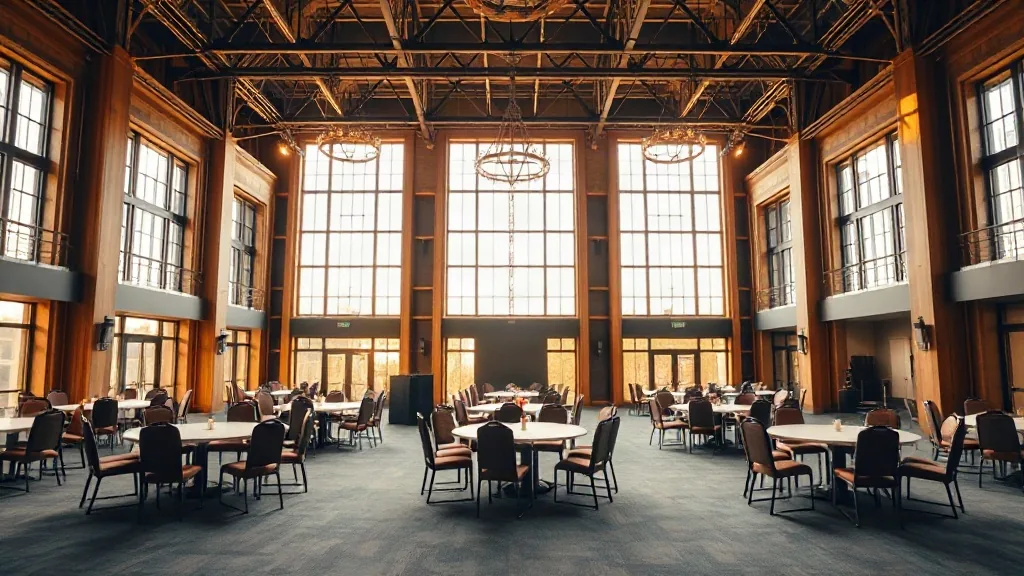
The agenda format shapes the venue requirements. An offsite built around structured debates and working groups doesn’t need a theater-style general session room. It needs round tables, whiteboard space, and the flexibility to reorganize the room between plenary and small-group sessions.

A country club or historic mansion property with a single formal room and fixed seating is not the right format for working-group-based agendas. A breakout-enabled conference center with moveable furniture in the main room, two or three adjacent breakout rooms, and a separate dining space is.
The room communicates the agenda format before a single slide appears. If executives walk into a theater-style room with a stage and a podium, they sit down expecting to receive information. If they walk into a round-table configuration with whiteboard panels along the walls, they expect to produce something.
The output document is not optional
Whatever format you use, the offsite must produce a written output before the group leaves the room. Not a summary emailed two weeks later. A one-page document reviewed and agreed upon by the group before they get in their cars.
The output document for a strategy offsite should list: the decisions made during the two days (specific, time-bound, with an owner named), the questions that were not resolved (with a deadline for resolution), and the next meeting date. That’s three sections. It can be written in 30 minutes by a designated note-taker and reviewed in 20 minutes during the closing session.
Executives who leave an offsite without a written output document reliably disagree about what was decided within 10 business days. The “I thought we agreed” conversation erases the value of the offsite faster than any other outcome. Write it before you leave the building.
For this reason, the room needs a screen or a whiteboard during the closing session. A conference center with a whiteboard and a projector in the main room handles this naturally. A country club dining room where all the AV has been cleared for dinner does not.
What’s the size of your executive team and the primary strategic questions you want the offsite to resolve? Those two variables determine the right agenda format and, therefore, the right room.


