
The Law Partner Controlling the Firm Retreat: Venue Tier, Privacy, and the Billing-Rate Optics
Law firm partner retreats have hierarchy, privacy, and cost-optics requirements that differ from standard corporate offsites. The venue category, the seating protocol, and the per-head spend level all carry signals that law partners read differently than other executive audiences.

Law firm retreats occupy a specific position in the corporate events landscape because the audience is simultaneously the client, the employer, and the evaluator. Partners at a 60-person regional law firm attend the annual retreat with a different set of expectations and a sharper critical lens than most corporate audiences. They bill $400-$900/hour. They negotiate contracts for a living. And they will notice if the venue choice is either below the standard of the firm’s client-facing work or embarrassingly above what a partnership can justify internally.
The person controlling the retreat brief, usually the managing partner or the firm administrator reporting to a partner committee, has to satisfy three groups simultaneously: partners who want a high-quality experience, staff accountants who are watching the per-partner cost, and associates who are noting whether the firm’s culture matches its stated values. It’s a narrow target.
The venue tier decision
Law firm retreats traditionally skew toward country clubs and resort hotels, and there are real reasons for both choices beyond convention.
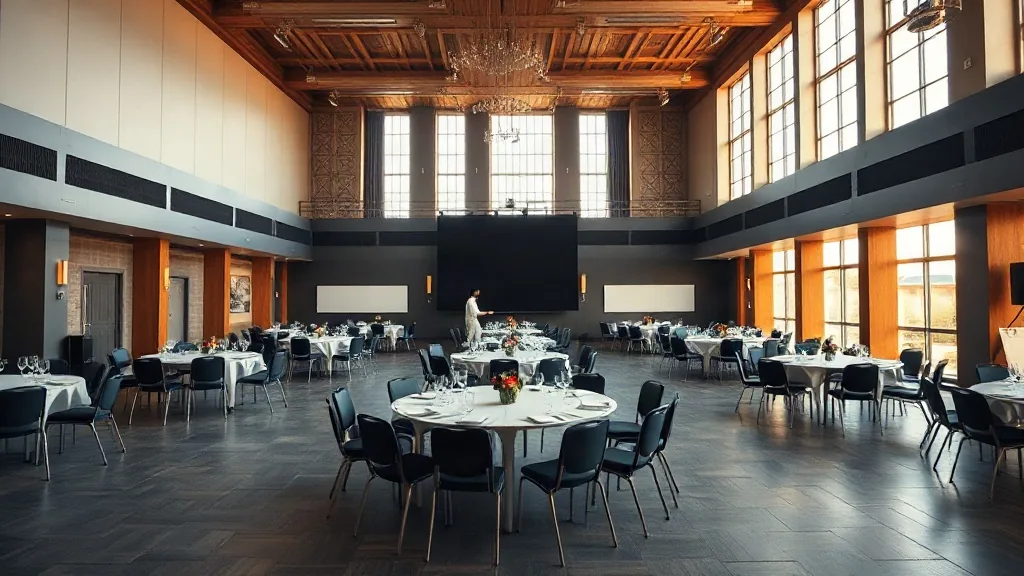
Country clubs signal tradition, governance, and professional hierarchy in a way that law firm culture validates. They also provide physical privacy: club membership means the space is not available to the general public during the retreat, which matters for firms discussing pending litigation, merger negotiations, or partner compensation structures. The limitation of country clubs is AV infrastructure. Most were not built for corporate presentations, and the “boardroom” at a country club often has a single display and no wireless microphone system. Budget for AV rentals if the retreat includes strategic presentations or external speakers.
Resort hotels provide better AV infrastructure, larger rooms for plenary sessions, and accommodation in the same building. For a 60-partner retreat with two days of programming and a formal dinner, a resort property handles the logistics more reliably than a country club that’s primarily a dining and recreation facility. The trade-off is privacy: a resort hotel has other guests, and partners talking in the lobby or the bar are not in a controlled environment.
Historic mansion properties occupy a middle tier that works well for smaller law firms (under 40 partners). They provide exclusivity (the property is booked for the firm alone), a formal aesthetic that reads as appropriate to legal culture, and enough AV flexibility for a small general session. The challenge is catering: historic properties often have exclusive catering arrangements with caterers who specialize in weddings and social events, not corporate working dinners. Confirm catering quality with a reference call to a recent corporate user before booking.
The per-partner cost optics
This is the calculation that most retreat planners handle wrong. A $2,800/partner cost for a two-day retreat is either reasonable or excessive depending entirely on how it’s presented and what the firm’s billing rate suggests about appropriate client-entertainment standards.
At a 200-attorney firm in a major market, $2,800/partner for a two-day retreat is unremarkable. At a 40-attorney regional firm where the average partner bills $350/hour, the same number will generate questions at the partner meeting where the retreat budget is reviewed.
The right framing: present the retreat cost as a per-partner, per-day number. “The retreat costs $1,400 per partner per day, inclusive of accommodation, all meals, and programming” sounds different than “$2,800 per partner.” Partners compare per-day costs to what they already accept as normal (hotel business travel, client entertainment). The retreat day rate should be comparable to what a high-quality client-facing event would cost, not higher.
The seating and hierarchy protocol
Law firms have explicit hierarchy (equity partner, non-equity partner, of counsel, senior associate) and implicit hierarchy (rainmakers vs. workhorses, originating vs. servicing partners). The retreat dinner seating arrangement communicates something about how the firm views these hierarchies.
At most law firm retreats, the managing partner or senior partner does not sit at the “head” position in a way that visually separates them from the group. Legal culture typically avoids the CEO-at-the-head-of-the-table arrangement that signals pure hierarchy. Round tables or a horseshoe arrangement for the dinner session communicates collaborative governance. Rectangular tables with rank-based seating communicate something different.
Consult the firm administrator or the managing partner’s assistant about seating before you build the plan. They know the interpersonal dynamics between specific partners and which seating pairings create friction or productive conversation.
The privacy protocol for working sessions
If any retreat session involves confidential information (pending merger discussions, lateral hire negotiations, compensation restructuring, client conflict analysis), establish a device protocol before the event. Most law firm retreat agreements with venues include a non-disclosure provision. But the bigger privacy risk is internal: a partner taking notes on a phone during a compensation discussion in a semi-public space creates a records problem.

Designate the working sessions as “no-device recording” explicitly in the agenda materials. Provide printed materials for sessions that would otherwise require laptop access. And confirm that the meeting room itself is not accessible to hotel staff, venue employees, or other guests during the session. Most hotel conference rooms are not. At a country club, confirm that the event room is not adjacent to the kitchen or a staff corridor where conversations can be overheard.
The budget approval dynamic at a law firm
Law firm retreat budgets are approved through different channels than corporate event budgets. In most firms, the managing partner or firm administrator presents the retreat budget to the executive committee or the full equity partner group. That review is conducted by an audience of attorneys who will read the line items with the same level of scrutiny they’d apply to a client bill.
Three things that help the approval move faster:
State the cost as cost-per-equity-partner, not total. “The retreat costs $3,200 per equity partner” is easier for the partner group to evaluate than “$192,000 total” for a 60-partner firm. The per-partner frame is the natural comparison unit for a partnership audience.
Compare to the alternative. What would a comparable client-entertainment event cost if hosted at the same quality tier? If the firm regularly takes clients to $350/person dinner events, a $3,200/partner two-day retreat amortizes to $1,600/day, which compares favorably.
Separate the accommodation cost from the event cost in the presentation. Partners staying at a resort hotel or country club property often see their own room cost as a personal expense, not a firm expense. Clarify which portion of the per-partner budget is the firm’s hosted cost (venue rental, meals, programming) and which is the accommodation that partners can see in their own travel statements.
What’s your firm size, approximate retreat budget per partner, and preferred geographic region? Those three variables narrow the venue options considerably and determine whether a country club, resort hotel, or historic property is the right format.


