
The Nonprofit Director With a $30K Event Budget for 120 People: How to Make It Work
University venues, coworking event spaces, and museum member-rate programs give nonprofits 40-60% off standard corporate venue rates. A $30,000 budget for 120 people is workable at $250/head if the venue and catering decisions are made in a specific order.

A $30,000 budget for a 120-person nonprofit conference is $250 per head. That number sounds impossible at a hotel in any major city where catering alone runs $90-$140/head. It’s not impossible. It requires choosing the venue category first, not the venue itself, and it requires understanding which nonprofit relationships produce real discounts versus courtesy price sheets with cosmetic reductions.
Here’s how to build a $250/head event that doesn’t look like it.
Start with the venue category
Three venue categories offer genuine rate reductions for nonprofits, not the 10-15% “nonprofit rate” that most hotels post on their rate cards.
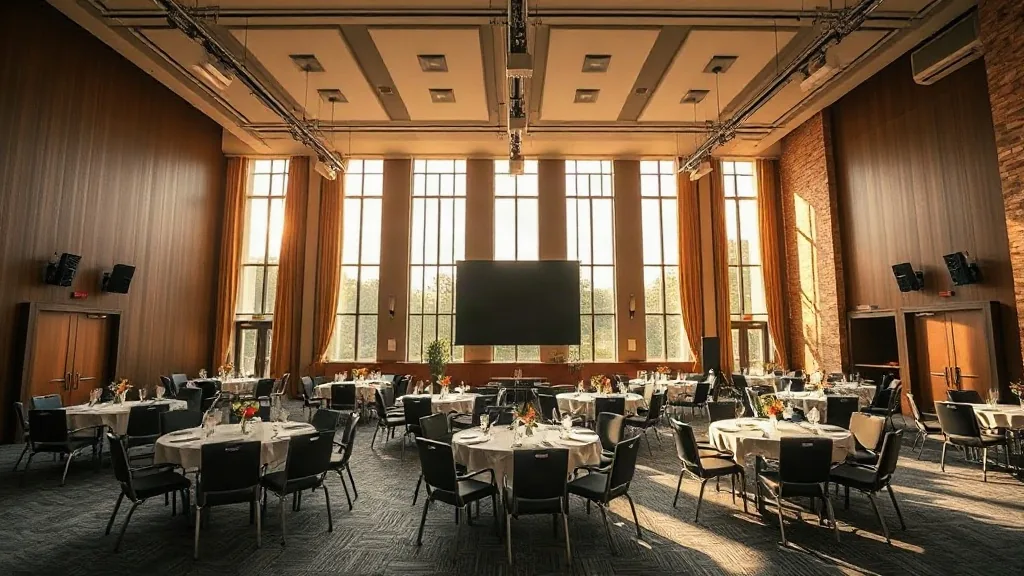
University venues. University event spaces price nonprofits at 40-60% of market rate in most markets because their pricing is governed by institutional policy, not revenue optimization. A university ballroom in Washington DC that charges a corporation $8,000 for an 8-hour rental will charge a registered 501(c)(3) $3,200-$4,800 for the same space. The catch: academic calendar constraints. Most universities restrict external rentals during move-in week (late July through mid-August), finals periods (November-December, April-May), and certain academic conferencing seasons. Book early and ask about the blackout calendar at the first inquiry.
For a 120-person conference, a university conference center or large seminar hall with breakout rooms is often the best value in any market. The catering is typically handled by campus dining services at below-market rates, and AV is often included in the rental.
Museum member-rate programs. Many natural history museums, science centers, and art museums offer nonprofit member organizations or partner nonprofits access to event spaces at member pricing, which is typically 30-50% below public rental rates. In cities like DC, Chicago, and New York, where museum event spaces are genuinely premium, this discount is substantial. A museum event hall in DC that rents for $12,000 publicly may rent for $6,500 under a museum member partnership.
The access requirement varies: some museums require the renting organization to hold an institutional membership (typically $2,500-$5,000/year, which can be offset by two event savings). Others have reciprocal arrangements with peer nonprofits. Ask the museum’s event sales contact whether they have a nonprofit partnership program before you look at the public rate card.
Coworking spaces with event capacity. Many coworking event venues offer nonprofit day-rates at $500-$1,500 for full-day access to a meeting or conference room at capacity, which works out to $4-$12/head for the space. For 120 people, you need a coworking space with an event room at that scale, which narrows the field (most coworking event rooms cap at 80-100). But they exist in most major markets, and the AV is usually included in the room rate.
The trade-off: coworking spaces don’t have the presentation cachet of a museum or university venue. For a donor event or a funder briefing, the venue signal matters. For an all-staff meeting, a grantee convening, or a working conference of peer organizations, a well-designed coworking space is entirely appropriate.
Build the budget in this order
Step 1: Confirm the venue and its included services first.
At $250/head total, the venue rental should be $0-$3,000 (using the nonprofit rates above). That leaves $247/head for everything else. If the university venue includes AV and the museum venue includes tables and linens, those are real savings that open up the rest of the budget.
Step 2: Allocate catering at $75-$95/head.
For a 120-person day-long conference with morning refreshments, a working lunch, and afternoon snacks, $90/head is achievable with a university catering service or an outside caterer at a venue without a catering exclusive. That’s $10,800 for catering, which is 36% of the $30,000 budget.
If the venue has a catering exclusive (required to use their caterer), confirm the minimum per-head cost before booking. Some museum caterers run $120-$150/head for lunch service, which breaks the budget at 120 people.
Step 3: Assign $8/head to AV if not included.
If AV is not in the venue package, budget $960 for a basic AV setup: one wireless mic, one projector/screen, and a laptop connection. For 120 people with a standard presentation program, this is adequate. Do not buy an AV package from a venue’s preferred AV vendor on a nonprofit budget. The markup is 30-80% over what an outside vendor charges.
Step 4: Allocate $12/head to materials and contingency.
$1,440 for printed materials, name badges, signage, and a 5% contingency. That’s tight but workable if you use digital programs (free, via QR code) and standard name badge stock.
The donor event exception
All of the above applies to working conferences, grantee convenings, and staff-facing events. Donor events and funder briefings operate under different logic: the venue signal matters as a proxy for organizational credibility. A museum after-hours reception for 40 major donors at $400/head ($16,000 total) is different from a 120-person working conference. Don’t apply the $250/head constraint to donor events; apply it to programmatic events. Keep those two budget lines separate.

The negotiation point that most nonprofits miss
When booking a university venue or museum, the stated nonprofit rate is a starting point, not a ceiling. Two levers that improve the rate further:
First, multi-year commitment. If your organization holds an annual conference or recurring convening that could be hosted at the same venue for three consecutive years, offer that commitment in writing. A three-year booking agreement at $2,400/year is more valuable to a university event center’s revenue planning than a $3,000 one-time rental. The venue will often reduce the per-year rate to secure the guarantee.
Second, co-branding for the venue. If your event has 120 participants from relevant professional communities, a university or museum event team may value the association with your organization’s brand and programming. Offer to acknowledge the venue as a community partner in event communications, post-event reports, or your newsletter. For venues with a public-programming mission, this has real value and can produce a further $500-$1,000 reduction in the rental fee.
Neither of these levers works at a commercial hotel or conference center. They’re specific to mission-driven institutions that see your event as a programmatic alignment, not just a revenue transaction.
What’s your city and event type? Those two variables determine which venue category has the most availability and the deepest nonprofit discount in your market.


