
When a Protest Decided to March Past Our DC Venue at the Worst Time
At 1:45pm a permitted march of approximately 800 people turned onto our block during our afternoon break. Guests were outside. The march had a sound system. Here's how we managed the next 35 minutes.

I want to start by saying that I have no problem with the march. I want to be clear about that because what I’m about to describe could be misread as a story about a protest being an inconvenience, and that is not the story I am telling. The story I am telling is about the logistics of managing a corporate conference when the public square does what the public square does.
I plan policy and association events in Washington, DC. If you are not familiar with DC as a conference destination, here is something you should know: in DC, a permitted public demonstration on a weekday afternoon is not an unusual occurrence. It is a fact of the city, like the Metro’s unreliability and the way the summer humidity makes your formal event attire feel like a warm towel. You plan around it. Or you plan with it.
What I had not fully planned for, on a Tuesday in October, was a permitted march of approximately eight hundred people that turned onto Pennsylvania Avenue NW at 1:45pm and moved directly past the entrance of the hotel where I was running a two-day government contractors’ conference with 220 registered attendees.
The afternoon break had started at 1:30pm. Approximately 180 of my 220 attendees were outside or in the hotel’s lobby and pre-function area, which opened directly onto the street. They were visible from the street. The march had a sound system.
What I knew and didn’t know
At 1:38pm, my assistant came to me with information she had gotten from the hotel’s security desk: there was a permitted march scheduled to pass our block at approximately 2:00pm. She had the information because she had asked for it during morning setup — a habit I had taught her after a previous conference where a demonstration I hadn’t anticipated had complicated a departure.
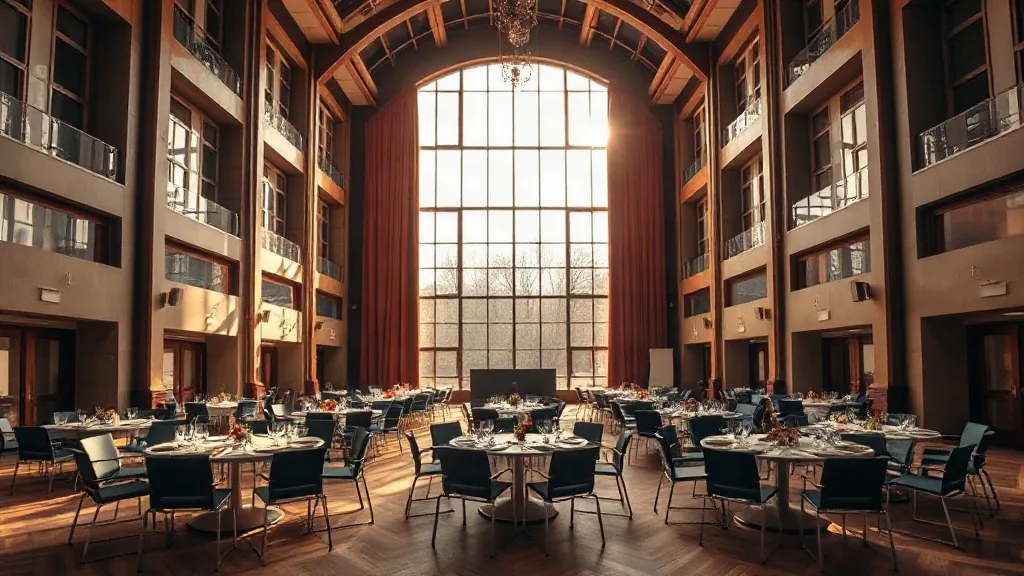
I had twenty-two minutes before the estimated arrival.
What I knew: the march was permitted, which meant law enforcement had reviewed it, it had a planned route, and it was not expected to stop or assemble in front of our venue. It was a pass-through. What I did not know: the exact amplification level of their sound system, whether the timing would shift, and whether any of my attendees had personal or professional relationships to the march’s cause that might create awkward situations if they were standing outside when it passed.
That last concern is specific to DC conference work. When your attendees include government contractors, lobbyists, and policy professionals, the political content of a public demonstration is not neutral the way it might be for, say, a pharmaceutical sales conference in suburban New Jersey. Some of my attendees were in favor of this march’s cause. Some were not. Some were in positions where being photographed adjacent to it was professionally complicated.
The decision I made at 1:42pm
I did not clear the lobby and pre-function area. That would have been heavy-handed, would have communicated alarm where no alarm was warranted, and would have required an explanation that was more disruptive than the march itself.
What I did: I asked my assistant to quietly circulate through the pre-function area and let people know that a demonstration would be passing the block in approximately fifteen minutes, that it was permitted and peaceful, and that if anyone wanted to come inside for the remaining break time, the coffee station was fully replenished. She said: “That last part is funny.” I said: “It’s not a joke — the coffee is actually replenished.”
The coffee line is a crowd movement tool. In DC, people will move for good coffee. Don’t underestimate it.
By 2:00pm, approximately 140 of the 180 outside guests had drifted inside. The forty who remained outside were mostly on their phones or in conversation, and their choice to stay was theirs to make.
1:47pm — the march arrives
The march was loud. Not unreasonably loud for a public demonstration — they had a sound system, there were chants, there were signs, and there were approximately eight hundred people taking up most of the width of Pennsylvania Avenue. The hotel’s main entrance was set back from the sidewalk by about twelve feet, which helped. The noise was present but not overwhelming from inside the lobby.
The forty guests who had remained outside were, almost universally, watching with interest rather than discomfort. A few took photos. One — a woman I later learned was the deputy director of a trade association — was nodding at something she was reading on a sign. Another — a man who I had met at check-in and had the air of someone who found everything slightly irritating — moved inside on his own initiative at approximately 1:49pm.
My afternoon session was scheduled to resume at 2:15pm. The march, moving at the pace of a public demonstration, had passed our block by 2:08pm. The sound faded gradually over the following five minutes.
2:15pm — resuming the session
I had originally planned the afternoon session to start with a panel on procurement compliance — important content, but not the most kinetic way to bring people back into the room after a break that had included an unexpected street-level event.
I made a quick decision to flip the order. The afternoon’s second segment — a case study presentation by one of the firm’s senior project managers — was more narrative and would warm the room faster. I told the program director at 2:10pm and she made the change in the agenda without drama.
The session resumed at 2:16pm with 198 of 220 attendees in the room. The remaining 22 trickled in over the next eight minutes, some still in conversation from the break. The presenter acknowledged the energy in the room with: “I see some of you were paying attention to Pennsylvania Avenue — I was too.” Light laughter. Clean transition.
We lost approximately eleven minutes of scheduled content due to the program reorder and the staggered start. Those eleven minutes came out of the afternoon Q&A, which had been allocated generously and absorbed the cut without issue.
The conversation the next morning
At breakfast, three attendees separately mentioned the march to me as a highlight of the day — not despite its appearance during their conference, but because it was an authentic piece of DC that their home cities didn’t provide. One of them, who ran government affairs for a mid-size defense contractor, said: “We spend all year reading about this city. It’s kind of good to actually see it operating.”
I appreciated this framing. It also reminded me that what I had been managing was not purely a logistical problem — it was a perception problem. A march passing your conference block can be an interruption or it can be context. The difference between those two things is almost entirely how you handle the thirty minutes around it.
What I take from this
One: In DC, the permit calendar is your calendar. The city’s permit database is public. I now review permitted demonstrations scheduled during my event windows for every DC conference. This takes fifteen minutes and has given me advance warning twice since this event.
Two: “Drifting people inside” is gentler than “clearing the area.” The coffee station call was real crowd movement, not theater. Give people a reason to come inside rather than a directive. The outcome is better and the energy is better.
Three: A pivot in program order buys you the room back. The decision to move the narrative case study before the compliance panel was the right call for that moment. Know your program well enough to reorder it in five minutes without the audience noticing the seams.
Four: DC attendees are more sophisticated about public space than most. I plan conferences in cities where attendees have sometimes never seen a public demonstration. DC attendees have context. The woman nodding at the sign was not distracted — she was present in the city she works in. Don’t over-manage what doesn’t need managing.
Five: Forty people staying outside is not a failure. My instinct was to get everyone inside. The right answer was to give people the option and respect their choice. Forty people watched a demonstration from a hotel entrance in Washington, DC on a Tuesday afternoon. Several of them will remember that moment longer than the compliance panel.
DC is a conference city that rewards planners who understand the city’s rhythms. If you’re planning a government contractors’ conference or association summit in the capital, the conference centers in Washington, DC have teams who understand permit calendars, street-level logistics, and the particular texture of DC event work.
Also read the interpreter who quit at intermission — another DC story about an event where the public-facing context became part of the story.
Send me the brief for your DC conference. I’ll review the permit calendar before we confirm the dates.


