
When Two Faith Leaders Showed Up at the Same Time for the Same 8pm Slot
Both had confirmed invitations. Both had 8pm on their calendar. Our 300-person interfaith corporate memorial had one opening slot and two clergy, and I had about six minutes to figure out what to do.

I want to be clear about something before I tell this story: neither of them was wrong. Both had received written confirmations. Both had prepared remarks. Both had set aside their evenings. The error was in the coordination — a miscommunication between the client’s internal team and my office that created two separate invitations without a shared record — and when they arrived within four minutes of each other at the green room entrance at 7:51pm, they both had every reason to expect to be at that podium.
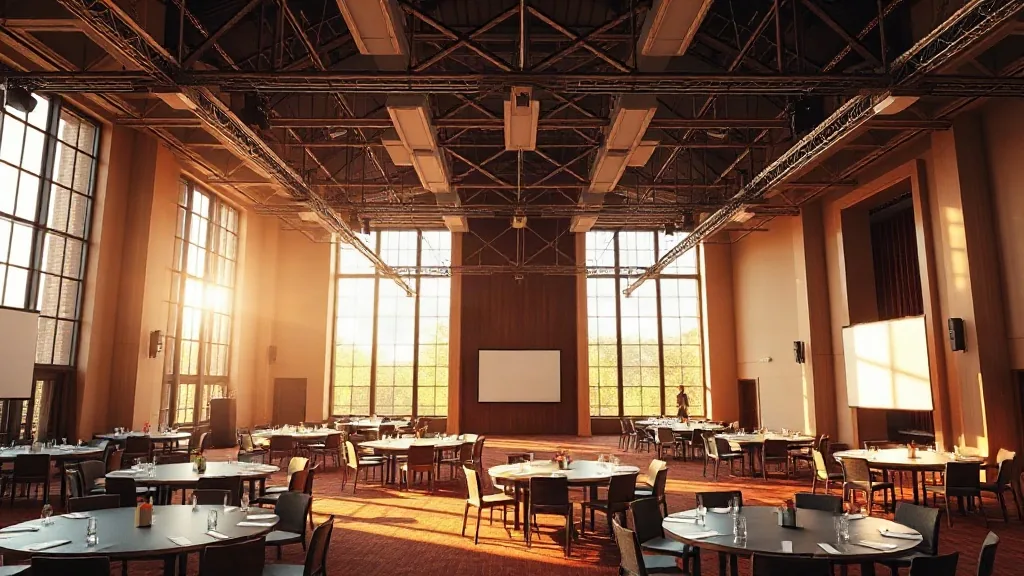
The event was a corporate memorial service — an interfaith ceremony for a regional financial services firm whose CEO had passed away unexpectedly eight weeks earlier. Three hundred employees, board members, and family guests gathered at a downtown Washington DC conference center for what the company called a “Remembrance Evening.” The program included remarks from the board chair, a video tribute, and a closing blessing. The closing blessing was the slot in question.
The CEO had been a man of deep personal faith — Jewish faith, specifically — and his family had asked for a rabbi. The head of the firm’s Maryland offices, who had taken on informal program coordination duties after the CEO’s passing, had separately reached out to the firm’s longstanding relationship with a Catholic parish and arranged for a priest who had known the CEO through his charitable work. Both conversations had happened inside the firm before I was brought in as event producer. Both confirmations had gone out. Neither had been shared with me or with my contact on the client side.
I learned this at 7:51pm.
Seven fifty-one
The green room was a conference room adjacent to the main hall. I was in it reviewing the final program timing when both clergy arrived within the same four-minute window. The rabbi first, then the priest. They knew each other — Washington’s faith community is its own village — and their greeting was warm and genuine. They had no idea there was a conflict.
I introduced myself and excused myself into the hallway, where I called my client contact — the firm’s COO, who was functioning as the evening’s organizational lead — and told him what had happened. He went quiet for about three seconds. Then he said: “What do we do?”
I told him I had an idea and I needed two minutes to speak with the clergy before I could confirm it.
The conversation in the green room
I went back in. I was honest. I told them both: there had been a coordination error, both of them had valid invitations for the same slot, the firm would take full responsibility for the error and both would be compensated for their time regardless of what happened next. Then I said: “I’d like to offer an alternative that I think would actually be more fitting than what either of you were asked to do separately. But I want to hear from you first.”
The rabbi asked what I had in mind. The priest said he was listening.
What I had in mind was this: instead of a single closing blessing from one tradition, we close with a brief interfaith moment — the rabbi offering the Hebrew prayer for the departed, the Kaddish, and the priest offering a brief Catholic blessing of the gathered mourners. Two to three minutes total. Done with intention and in coordination, not as a workaround but as a genuine expression of the CEO’s connections across faith communities.
They looked at each other.
The priest said: “He would have liked that.” I did not know whether he meant it as a reflection on the CEO specifically or as a general theological observation and I did not ask. It didn’t matter.
The rabbi said: “I think we can make it coherent. Do you want us to decide the order?”
I said: “Yes. Whatever feels right to you.”
They spent about three minutes in conversation with each other while I stepped out to update the COO. By 8:01pm, they had agreed on an order and a transition phrase. The rabbi would offer the Kaddish, and the priest would follow with a blessing that incorporated acknowledgment of the rabbi’s prayer.
8:00pm — in the room
The program ran to its planned conclusion at 8:47pm. The closing section — the interfaith moment — began at 8:49pm. The rabbi spoke first, in Hebrew and then in English, the Mourner’s Kaddish, which is not a prayer about death but an affirmation of life and the sanctity of ordinary existence. The room was very still.
Then the priest said: “What we just heard is one of the oldest expressions of grief and faith in human history. I want to add to it, not replace it.” He offered a short blessing — four sentences — that asked for peace for the mourners and honored the memory of a man who had moved in many worlds.
The board chair, who had been the first speaker of the evening, was crying by the time the priest finished. Not conspicuously. Quietly, the way people cry when something lands exactly right.
The evening ended at 8:58pm. The family came to me before they left. The CEO’s daughter said: “The ending was exactly him.”
I don’t know that I have ever been paid a better compliment for a piece of work that started as a mistake.
What happened afterward
I wrote a full incident report to the COO the following week — not as a liability document but because I believe in honest post-event documentation. I identified every point in the coordination chain where the collision had become possible: two parallel invitation processes, no shared calendar, no single point of confirmation ownership, no pre-event briefing document that listed all confirmed speakers and participants.
The firm used that report as the basis for a revised event coordination protocol. I’m told they shared it with their legal team’s pro bono event support committee, who apparently have similar coordination challenges with multi-stakeholder programs.
Both clergy were fully compensated. The rabbi sent a note afterward that said the evening had been meaningful to him personally. I keep that note.
What I take from it
1. A pre-event “confirmed participant” master document is not optional. Every person who will speak, bless, perform, or present at your event should be in a single confirmed list owned by one person — not tracked in two email chains by two different departments. This is the simplest structural solution to the collision I experienced.
2. When a scheduling error creates a duplicate, lead with honesty. I did not walk into that green room and try to manage the situation covertly. I told them what had happened and took responsibility. Clergy in particular — people who spend their professional lives in direct conversation with truth — respond well to straightforwardness and poorly to maneuvering.
3. The error may contain the solution. Two faith leaders in the same room for the same slot is a problem. Two faith leaders offering a coordinated interfaith closing is better programming than either alone. I am not suggesting you engineer conflicts. I am suggesting that when you’re standing in the middle of one, the creative question is: does this error create a possibility that the original plan didn’t have?
4. Give the parties agency in the solution. I proposed the idea. They designed the execution. Their three minutes of conversation in the green room produced something more thoughtful than anything I could have scripted. When you are asking professionals to adapt in real time, give them the framework and then get out of the way.
5. Memorial events require a different kind of attention. They are not conference logistics. The people in the room are grieving, and every element of the program carries a weight that a product launch or a holiday party does not. When you are producing an event where grief is present, your job description expands. You are not just managing timelines. You are managing the container in which people experience something real.
I have produced three corporate memorial services in the past four years. Each one has taught me something that no other event type does. They are among the most demanding and the most meaningful work I do.
If you are navigating a memorial event, a sensitive interfaith program, or any kind of corporate gathering where the stakes are personal rather than just professional — send me the brief. I approach these events differently, and I think it shows.


