
Aerospace-Hangar Corporate Events (Yes, Real — Here's the Playbook)
Aerospace companies occasionally hold corporate events in active or decommissioned hangars, and it works — but the logistics are a completely different animal from a standard conference venue. Here's what I've learned running three of them.

The first time a client asked me to plan a corporate event in an aircraft hangar, I said yes without knowing what I was agreeing to. The hangar was at a general aviation facility in the Bay Area — 18,000 square feet, open steel structure, three aircraft inside, concrete floor, no HVAC, no catering infrastructure, no restrooms within a hundred feet, and a ceiling height of sixty feet that would swallow any sound system that wasn’t specifically designed for the space.
The event was a company milestone celebration — 200 people, an aerospace manufacturer that had just received a significant contract from a defense prime. The client wanted the aircraft as the backdrop. They wanted scale. They wanted something that nobody who attended would ever confuse with a hotel ballroom.
They got all of those things. Getting them required about four times the production infrastructure of a standard 200-person event, and a logistics list I’ve never needed for any other event type. That list is what this post is.
Why aerospace companies do this
Aerospace companies have physical assets that define what they do — aircraft, engines, structures, test equipment — and a significant segment of aerospace corporate events are attempts to connect the company’s professional community (engineers, executives, customers, partners) with those physical assets in a setting that’s not a slide deck or a conference room.
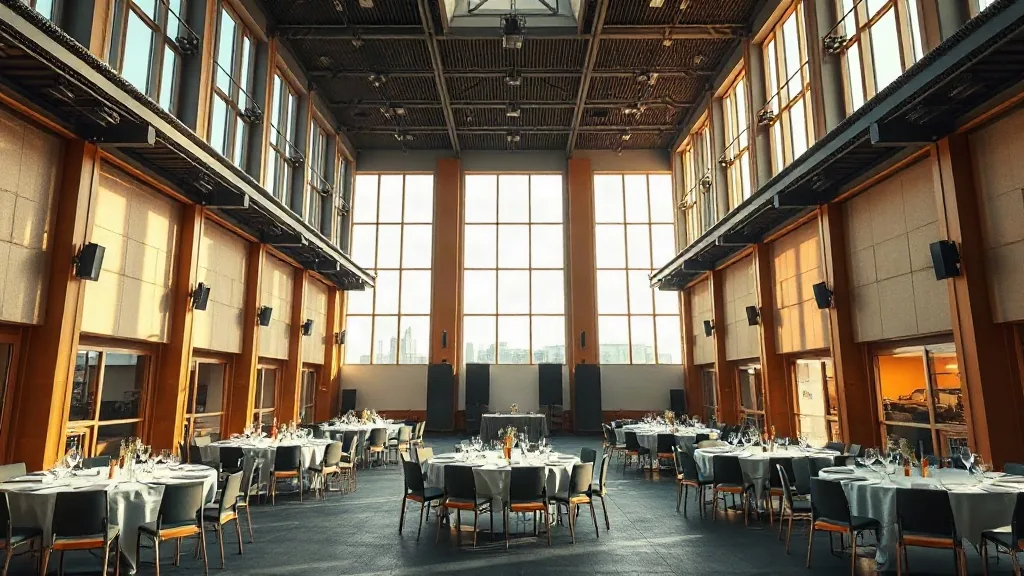
The milestone celebration in a hangar where the aircraft was built reads differently than the same content delivered in a hotel ballroom. The customer appreciation event held next to the product the customer bought is a different experience than a dinner in a private dining room. The all-hands meeting held in the assembly bay where the team has been working for eighteen months is a moment that a conference center cannot replicate.
I’ve run three hangar events — the Bay Area general aviation milestone, a space-launch-company launch celebration at a leased pad facility, and a defense contractor’s annual leadership meeting held in a partially decommissioned maintenance hangar — and all three have produced the specific, irreplicable quality of a setting that’s authentic to what the company actually does.
The logistics list (the actual one)
HVAC
Hangars are not climate-controlled environments. They are designed to house aircraft, not to keep 200 people comfortable at 68 degrees. For an outdoor or near-outdoor event in a mild climate, this is manageable. For a Bay Area event in November or a Florida event in August, it is the first infrastructure challenge.
The solution is rented climate control: industrial spot coolers or propane heaters, depending on the season, staged around the perimeter of the event space. For a 200-person event in an 18,000 square foot hangar, I’ve needed eight to twelve industrial spot coolers for summer events and six to eight propane radiant heaters for winter events. The cost runs $3,000-$6,000 for the equipment rental, plus delivery and pickup.
The placement of the climate control equipment matters: units aimed directly at people create wind blast that’s uncomfortable and that kills conversation. Units aimed at the floor, creating a rising-temperature floor layer, work better for heating. For cooling, ceiling-aimed units that circulate the upper air are more effective than floor-level blast cooling.
Sound
Sixty-foot concrete ceilings and steel structure are an acoustic nightmare. The reverb in an empty hangar can run two to three seconds — every word has a ghost that follows it. The sound system for a hangar event needs to be designed for the space, not pulled from a standard conference AV inventory.
Line-array speakers, aimed at the audience from a lower elevation (not from the ceiling), with a delay-adjusted distribution that prevents the ceiling reflection from arriving before the direct sound — this is the specification. It requires an AV vendor with outdoor-event or concert experience, not a hotel AV vendor. The cost is 3-5x the AV cost for a standard 200-person event.
I bring my own AV vendor to every hangar event. The venue will have no AV. I source a company that does festival or outdoor concert production and scales down to the event.
Power
Hangars have power, but it’s industrial power — the circuits are designed for aircraft maintenance equipment and machinery, not for event production. The amperage is usually there; the distribution is wrong.
I always run a site visit with the AV vendor and the catering team to map the power sources and identify what needs to be tapped versus supplemented with a generator. For most hangar events, I rent a generator to supplement venue power rather than relying entirely on the venue’s distribution. The generator is staged outside the hangar at an opening (most hangars have large door openings that work for generator exhaust ventilation) and cabled in.
Restrooms
Standard hangars do not have restrooms in the event footprint. The hangar’s restrooms are typically in an adjacent office or FBO building, which may be fifty to two hundred feet away from the event space.
For an event under 150 people with a short duration (three hours or less), the walk to the adjacent building is manageable if it’s clearly marked and the path is well-lit. For a 200-person event running four or more hours, I rent luxury restroom trailers — self-contained, climate-controlled, staged adjacent to the hangar opening. The cost runs $2,000-$4,000 for the rental and service for an evening event.
Flooring
Concrete floors are hard, loud (heels on concrete create noise that accumulates across 200 people), and cold underfoot. For a reception or dinner event, I install carpet or event flooring over the concrete in the primary event footprint. The flooring also defines the event space within the larger hangar — it creates a visual boundary that says “the event is here” rather than “the event is… somewhere in this very large building.”
For a standing reception, 8,000-10,000 square feet of event flooring covers the footprint for 200 people comfortably. The rental cost is $4,000-$8,000 depending on the flooring type and market.
Catering
There is no kitchen in a hangar. The catering is produced off-site and transported, which means the food logistics are a catering-out problem rather than a venue-catering problem. I work with a catering company that has outdoor or offsite event experience and that owns its own hot-holding equipment.
For a 200-person dinner in a hangar, I require: on-site hot-holding capability for the entrees (cambros or hot-box transport), a staging area adjacent to the event footprint (one of the hangar’s side bays, if available, or a tent erected adjacent to the hangar opening), and a service team that understands the longer carry time from staging to tables than in a standard catering setup.
The aircraft as event design element
The aircraft in the hangar are both the point of the event and a logistical variable. They cannot be moved casually — an aircraft in a hangar is either secured to the floor with tie-downs or chocked, and repositioning it requires a ground crew and a tow vehicle. If you want the aircraft positioned to serve as a backdrop for the event’s main focal point, you need to plan that repositioning in the site visit and confirm it with the hangar operator.
For the Bay Area event, we repositioned three aircraft to open the center of the hangar for the event footprint, moving two to the back of the bay and one to a side position. The repositioning took about ninety minutes with the FBO’s ground crew. The cost was a few hundred dollars in ground-crew time. Worth it: the centerline view of the hangar with aircraft framing both sides was the single most-photographed element of the event.
Venue sourcing
Finding an aerospace hangar for a corporate event is a different search than any other venue category. The directories don’t have a “hangars” filter. The search requires direct outreach to:
- Fixed Base Operators (FBOs) at general aviation airports. Most FBOs have hangar space that can be rented for non-aviation purposes during off-hours or in lightly used bays. The search for GA airports near major metro areas yields a usable list for most markets.
- Aerospace company facility managers at companies that own or lease hangar space and occasionally permit event use.
- Airport authority commercial development offices, which sometimes manage event rentals of airfield-adjacent facilities.
For the California market, conference centers in California doesn’t capture hangar venues directly, but the aerospace museum buyout category — covered in the aerospace museum corporate buyout guide — is adjacent and sometimes offers the same visual scale with better logistics infrastructure. For Bay Area aerospace events specifically, meeting spaces in San Francisco California has the broader event venue inventory for the pre- or post-hangar dinner component.
For Florida, where space industry events cluster around Cape Canaveral and the Titusville/Melbourne area, the commercial spaceflight facilities near the Kennedy Space Center have event space that captures the hangar aesthetic with better logistics infrastructure. Conference centers in Florida covers the broader category. For Texas-based aerospace and defense manufacturers — particularly in the Houston/Clear Lake area near NASA’s Johnson Space Center — conference centers in Texas is the relevant directory, and the Wichita aerospace-industry venues guide covers the Wichita market, which is the densest concentration of aerospace manufacturing in the country.
What this costs
A fully produced aerospace hangar event — climate control, AV, flooring, restroom trailers, off-site catering, security, generator, and venue rental — runs roughly twice the all-in cost of an equivalent hotel ballroom event. For 200 people:
- Hotel ballroom event, all-in: $40,000-$70,000
- Hangar event, same headcount and food quality, all-in: $80,000-$130,000
The delta is almost entirely logistics infrastructure. If the client understands the delta and wants the experience, the hangar event is worth every dollar. The people who attended my three hangar events remember them specifically and permanently. The hotel ballroom events from the same period are less distinct in their memories.
That’s the honest case for the format: it’s expensive, it’s complicated, and it’s unforgettable. For the right milestone, that math works.
Send me the specific event — milestone, leadership meeting, customer event — headcount, and the hangar facility you’re considering or the metro where you’re searching for one, and I’ll tell you whether the production infrastructure works for that venue and that budget.


