
AI Moderators Are Coming for Corporate Events — Here's What I'm Seeing in 2026
I've spent 14 years on AV and production. I've watched three technology cycles promise to transform corporate events. AI moderation tools are different. Here's what's actually working right now and what's still vendor hype.

I’ve watched three technology cycles promise to transform corporate events, and I’ve been wrong about which ones to dismiss twice. I thought audience response systems were a gimmick in 2014. They weren’t. I thought livestreaming to a concurrent audience would plateau around 5,000 attendees. It didn’t. I’m trying not to make the same mistake with AI moderation tools.
I’ve been on the production side of corporate events since 2009 — AV vendor first, consultant since 2018. I’ve now been in rooms where AI-assisted moderation tools were deployed at three events in the past six months. Two were Bay Area tech conferences. One was a financial-services leadership summit in San Francisco. Here’s my honest read.
What AI moderation actually means right now
Let me separate the technology from the sales pitch, because the sales pitch is ahead of the technology by a meaningful margin.
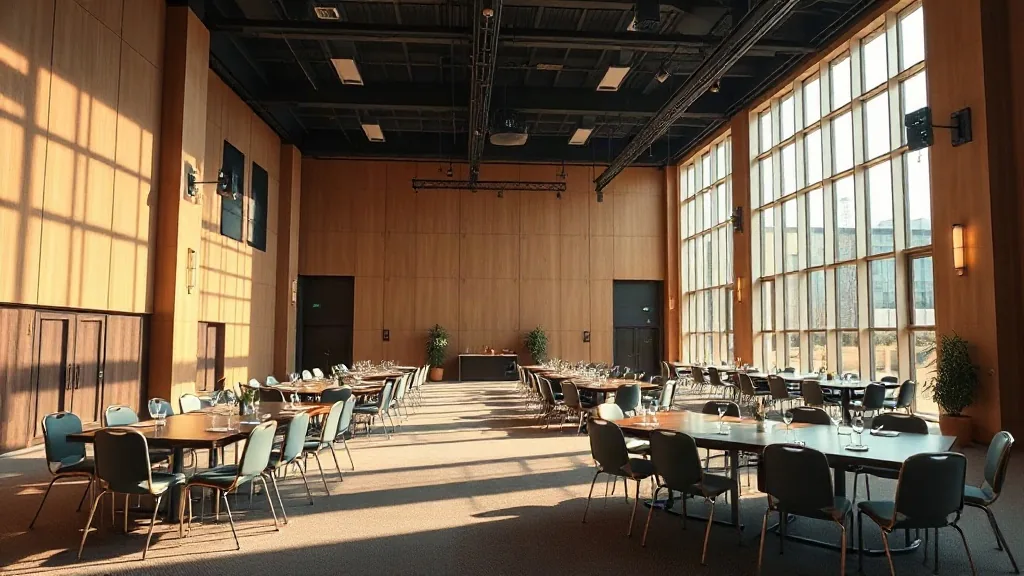
The sales pitch: an AI moderator that can run your Q&A, synthesize audience sentiment, summarize sessions in real time, manage virtual and in-person attendees simultaneously, and flag off-topic or disruptive questions before they reach a panelist.
The reality in 2026: the tools that are actually deployed and working well are doing two things reliably — question aggregation and real-time translation — and one thing inconsistently: sentiment analysis. Everything else is still mostly demo-stage.
Question aggregation is the most mature application. An audience of 200 submits 180 questions via an event app. A human moderator trying to read, sort, and select questions in real time while also managing panelist dynamics is doing four jobs badly. An AI system that clusters 180 questions into 8-10 thematic groups in under two minutes and presents the human moderator with “here are the top three themes and the best-phrased question for each” is doing one job well. I’ve seen this work. It works.
The tool we used at a finserv summit in San Francisco in March 2025 clustered 214 attendee questions into 11 clusters, identified three redundant themes, and flagged two questions as potentially off-topic for the session focus. The human moderator reviewed the output in under 60 seconds and selected from it. Total time saved versus traditional Q&A moderation: my estimate is 8-12 minutes of on-stage time per session, which in a packed conference agenda is significant.
Real-time translation is the other area where the technology is ahead of where most planners think it is. Simultaneous AI translation into 12 or more languages via attendee earpiece or mobile device is commercially available now, at a fraction of the cost of a human interpreter team for simple informational content. I want to be careful here — for nuanced policy discussions, legal proceedings, or high-stakes diplomatic content, human interpreters are still the right answer. For a product launch, a company all-hands, or a technical training session? AI translation is close enough to be the right trade-off for most events. See the interpreter who quit at intermission for a story about what happens when human interpreter logistics go wrong — the AI alternative doesn’t have that failure mode.
What’s still oversold
Sentiment analysis. The vendors showing you dashboards where the system reads room-wide emotional tone in real time based on audience body language are showing you demos, not products. The sensor infrastructure required to do this at a 200+ person event — camera coverage, processing, real-time inference — is not commercially packaged in a way that works outside a controlled lab environment. If you’re being sold sentiment-from-cameras at a live event, ask for references. Specific past events where this ran. You probably won’t get them.
AI-generated session summaries delivered instantly. Summaries can be generated. Instant delivery of high-quality summaries to all attendees within minutes of a session ending is still unreliable for content that’s technical, jargon-heavy, or discussion-based. The transcription layer is good; the summary quality varies a lot with content type. Great for a 20-minute product presentation. Not great for a 60-minute panel on regulatory frameworks.
The fully automated moderator. There is no commercially available tool I am aware of that can replace a skilled human moderator for a live corporate event session. The human moderator’s job is not just question selection and time management — it’s reading the room, managing panelist dynamics, pivoting when the conversation opens up an unexpected direction, handling the awkward moment when a panelist says something that needs a graceful redirect. AI cannot do that. Not yet. The “AI moderator” products that exist are AI-assisted human moderation tools. That’s a meaningful distinction.
What this means for the venues and AV setups we’re booking
The AI tools that are working require a specific technical infrastructure that not every venue has. Specifically: high-quality distributed microphone coverage, a reliable high-bandwidth internet connection, and a production control setup that can run an additional software layer alongside your existing AV chain.
The conference centers in San Francisco and Bay Area venues that are already running AI-assisted event tech have generally invested in the AV infrastructure that makes it work. The ones that haven’t will charge you setup time to get there. When I’m booking for a client who wants to use AI moderation tools, I now include in my venue evaluation: “What’s your existing AV infrastructure, and can it support an additional software layer on the mixing chain?” The good venues know exactly what you’re asking. The venues that don’t are the ones that will cause problems at rehearsal.
The full AV walkthrough checklist covers what to check at a venue walk-through — if you’re adding AI tools, add “dedicated internet circuit for production use” and “mixing chain API access” to that list.
The production budget math
AI moderation tools typically run $500-$2,500 per event day in licensing costs, depending on attendee count and features. That’s in addition to your human production team — you are not replacing your AV technicians or your human moderator. You’re augmenting them.
Against that cost, the honest return is: better Q&A curation, reduced on-stage time lost to poor question selection, potentially better remote-audience inclusion if your event is hybrid, and a more professional attendee experience around the interactive portions of your program. For a 300-person conference at a California conference center where the Q&A portions are a meaningful part of the program, that’s a justifiable add. For a 60-person team offsite where the Q&A is informal, it’s overkill.
My actual recommendation for 2026
Test it once, at a medium-stakes event, before you depend on it for your highest-profile program.
Pick an event with 150+ attendees where the Q&A portion is important but not mission-critical. Add one of the question-aggregation tools — Slido’s AI layer is the most mature and widely deployed right now, though the market is changing fast. Run a proper technical rehearsal with the production team. Use the output live. Debrief afterward on whether it improved the moderator’s job or added friction.
If it works for you, you’ll know where to deploy it next. If it doesn’t, you haven’t risked your most important program on the experiment.
The venues worth calling for this kind of test event are the ones with strong in-house AV or established preferred AV relationships — they’ve already worked through the integration questions. The directory’s conference centers and meeting spaces let you filter by city. Call the catering or event manager, ask who their preferred AV vendor is, and then ask that vendor if they’ve deployed AI-assisted moderation tools before.
The technology is real. The transformation is measured, not total. Plan accordingly.


