
BEO Line-by-Line: What Each Section Means and What to Push Back On
Banquet event orders contain pricing traps in setup fees, labor charges, and equipment rentals that most planners never question. Walking through each section with standard industry ranges shows you exactly where the negotiation lives and which charges are manufactured margin.

The first BEO I signed without reading cost me $1,400 in setup fees I didn’t know were there. They were in a line item called “Room Preparation and Standard Setup,” which I assumed was included in the rental. It wasn’t. It covered the chairs, the rounds, and the tablecloths. I had already paid a $4,200 rental fee for the room.
That was 2017. Now I read every BEO line by line before I let anyone on my team initial anything.
What a BEO is and what it controls
A banquet event order is the operational document that governs everything that happens during your event. The venue contract covers financial terms and legal exposure. The BEO covers what food arrives, when it arrives, how the room is set up, what equipment is included, and who pays for what. In most venues, the BEO supersedes verbal agreements, so the room setup you discussed on a site visit doesn’t exist unless it’s in the BEO.
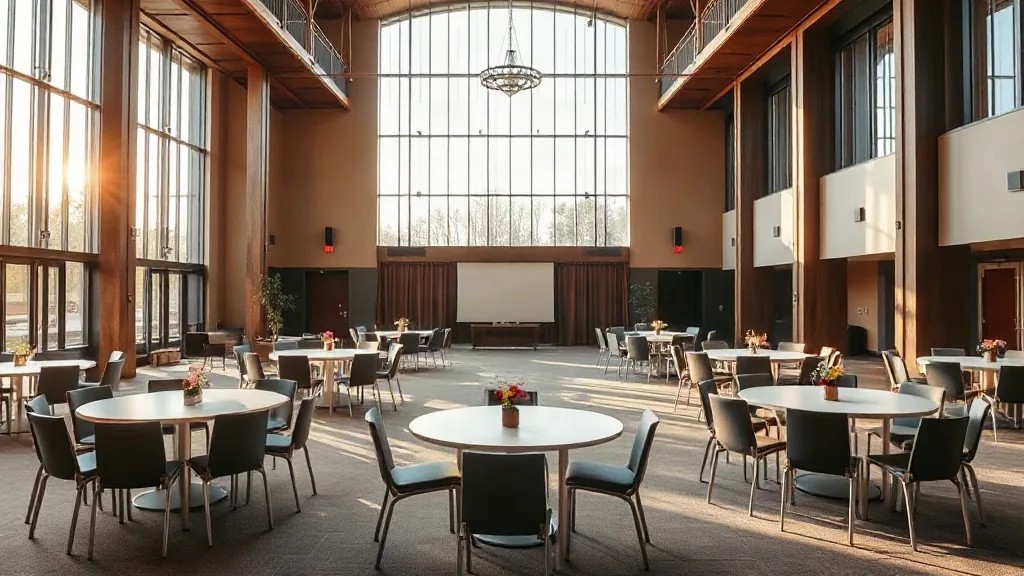
Most BEOs run four to eight pages. The sections below appear in roughly this order in every major hotel and banquet hall format.
Section 1: Event details header
Name of the event, your organization, the date, start time, end time, and setup/strike windows. This section looks administrative and mostly is. But check two things.
First, confirm the setup time matches what you negotiated with the sales manager. If you were promised a two-hour setup window and the BEO shows one hour, that discrepancy will not fix itself on event day.
Second, confirm the end time. Venues charge overtime in 30-minute increments, typically $500-1,500 per increment for a 200-person event, and the clock starts when the BEO end time passes. If you know dinner typically runs long, negotiate a 30-minute buffer now. It’s easier before signing than at 9:47pm.
Section 2: Room setup
Lists the room name, the setup style (rounds of eight, classroom, theater, reception), and any staging or risers. Also lists specific furniture: highboy tables, bar placement, cocktail rounds, etc.
What to push back on: any line that says “per your request” without specifying the number. If you requested a 20-foot head table and a six-panel staging riser, those should appear as discrete line items with dimensions. Vague language becomes a dispute when the 16-foot table shows up and the staging is four panels.
Also check whether the room diagram is attached. Most BEOs reference a diagram as Exhibit A. If there’s no exhibit, ask for it before signing.
Section 3: Food and beverage
This is the most important section and the longest one. It lists every menu item, quantities, service style, and per-head pricing. It also contains the minimum.
The minimum is the revenue floor. If your group eats $18,000 of food and drink and the minimum is $20,000, you owe $20,000 regardless. Some venues apply the service charge to the gap amount; some don’t. Ask which applies at your property before the BEO is drafted.
Common negotiation points in this section:
- Menu substitutions. If a menu item doesn’t work for your group’s dietary profile, ask for a direct substitution at the same price point. This request succeeds about 70% of the time if you make it before the BEO is finalized. After signing, the same request often triggers a “custom menu” surcharge.
- Guaranteed count vs estimated count. The BEO will specify a guaranteed guest count, usually due 5-7 business days before the event. The venue prepares food for 105% of that guarantee. If your actual headcount exceeds the guarantee by more than 10-15%, you may not get served. If it comes in below, you pay for the guarantee. Know your attendance pattern before you set this number.
- Alcohol service. Open bar pricing is typically per person per hour. A four-hour open bar at $35/person/hour for 150 people is $21,000 before service charges. On-consumption bar is charged per drink poured. For a short cocktail hour with a mixed crowd, on-consumption often saves $3,000-6,000.
Section 4: Rental equipment and setup fees
This is where the hidden charges live.
Standard setup fees cover the basic room configuration: chairs, standard rounds or banquet tables, basic tablecloths. A $2,500-4,500 setup fee for a 200-person event is typical at hotel venues. What’s not typical is paying setup fees on top of a room rental that already exceeds $5,000 for the same 200-person room. Challenge that. In my experience, venues will fold the setup fee into the rental for events above $15,000 in total F&B if you ask before the contract is drafted.
Equipment rental charges appear for: risers, podiums, pipe-and-drape, specialty linens, lounge furniture, highboy tables, bars, and dance floors. Each of these is individually negotiable. A riser that costs $400-800 to rent is often waived if your F&B is strong. A dance floor runs $1,200-3,500 depending on size; that’s rarely included and rarely waived. Know what you actually need before the BEO arrives so you’re not negotiating under time pressure.
Section 5: Audiovisual
If the venue has an in-house AV provider, this section will list their quote. If it’s a preferred vendor relationship, the BEO may include a line that says “AV by [company name]; see attached quote.” If it’s truly open to outside vendors, this section will be blank.
For hotels and resorts, in-house AV is almost always marked up 35-50% over market rates. A basic presentation setup (one screen, one projector, one wireless mic, one podium mic) that runs $800-1,200 through an independent vendor will often appear at $1,800-2,400 in a hotel BEO. A four-screen setup with IMAG for a 300-person general session that an outside vendor quotes at $18,000 may appear at $28,000 in the hotel’s in-house quote.
If you can bring outside AV, always do it for events above $10,000 in AV scope. If you cannot, use the outside quote as a negotiating lever. Ask the in-house vendor to match within 15%.
Section 6: Service charges, tax, and gratuity
This section is where the ++ notation resolves into actual dollars. The standard structure is:
Per-person food cost + service charge (22-24%) + applicable sales tax (varies by state and county).
On a $75/head dinner for 150 people:
- Food: $11,250
- Service charge at 23%: $2,587
- State tax (say 7%): $787
- Total before gratuity: $14,624
Some venues add a separate “gratuity” line on top of the service charge. These are not the same thing. The service charge is venue revenue. Gratuity goes to the service staff. A venue that adds a 3% gratuity on top of a 23% service charge is charging 26%, and only 3 points of that reaches your servers. If you care about tipping your staff fairly, ask whether the venue distributes any portion of the service charge to servers. Many don’t.
For banquet halls, service charge structures vary more widely than hotels. Some charge 18%; some charge 25%. Get the actual percentage before you build your budget.
Section 7: Payment schedule and billing authorization
Lists when payments are due and who is authorized to approve additions on the day of the event. This is the section that can turn a $22,000 event into a $27,000 bill if you’re not specific.
The “on-site additions” authorization line names who can order additional food, drinks, or services the day of the event and bind your organization to pay. If that person is anyone other than you or your designee, change it. Venue staff will upsell additional bar service, passed apps, and room extensions to anyone who looks like they’re in charge. You want one named person with spending authority.
What to do before initialing
Read every line. Cross-reference the room setup against the diagram. Verify the guaranteed count is your agreed number, not a venue assumption. Check the service charge percentage against what you negotiated. Confirm the end time matches your contract.
Then send one email with a numbered list of requested changes. Don’t accept a revised BEO over the phone. You need the changes in writing.
Conference centers produce tighter BEOs than hotels on average because their events director produces dozens of them per month. Hotel BEOs are often drafted by junior sales coordinators working off a template. Either way, the same review applies.
What’s your event format and your guest count? Tell me those and I can tell you which sections of the BEO need the most attention for your specific event type.


