8 Decommissioned Power Plants and Foundries That Took the Corporate Pivot
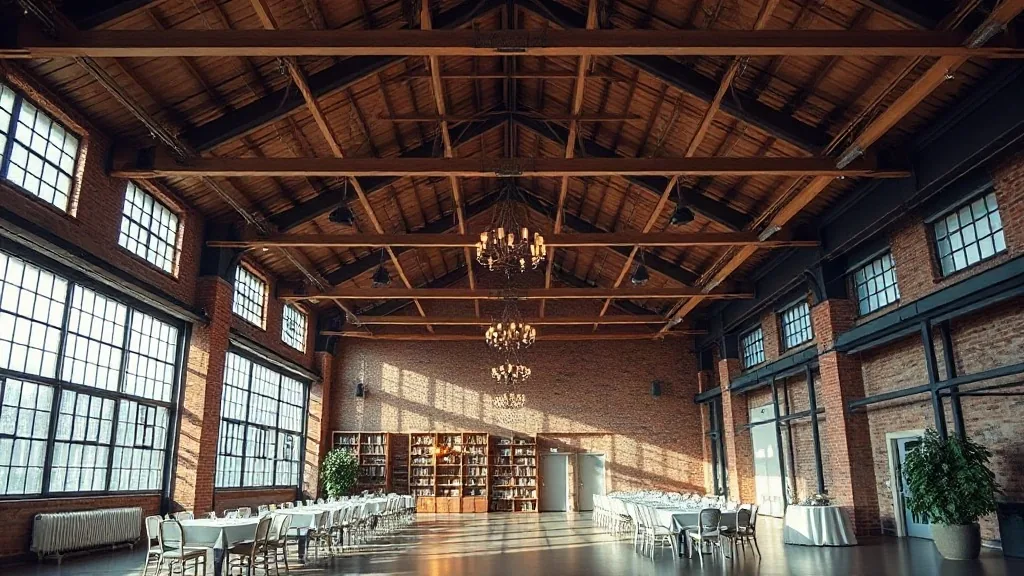
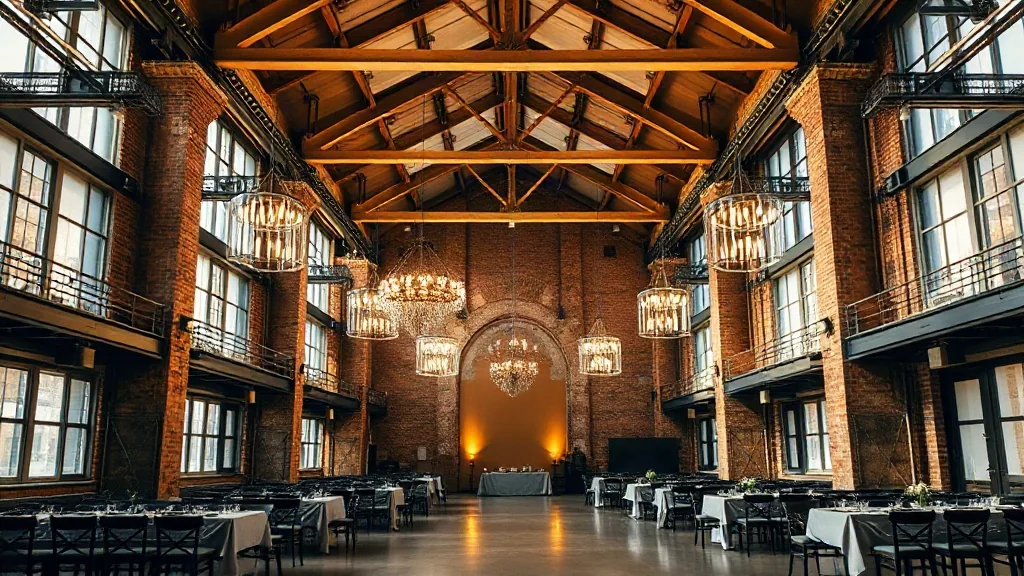
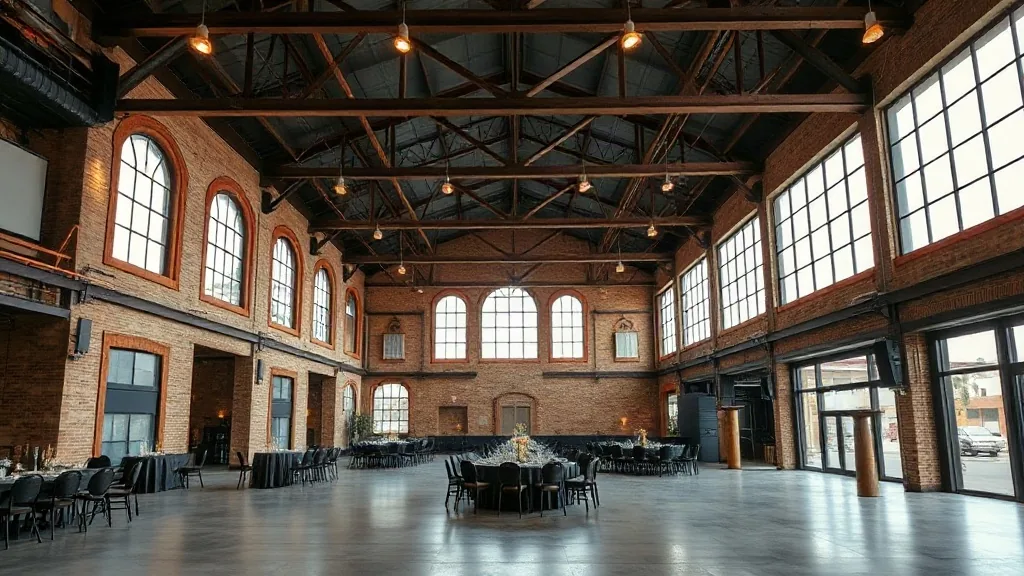
Decommissioned industrial buildings — power plants, steel foundries, rail yards — are the highest-drama corporate event spaces in the country. These eight made the pivot and handle large groups professionally.

There is a category of building that exists nowhere else in the world at the scale that America built it: the 19th and early-20th century industrial power plant, steel foundry, rail facility, and factory complex. Structures that required 80-foot ceilings to house their turbines, that were built to last 200 years with reinforced brick and steel, that employed thousands and then were abandoned in the economic restructuring of the late 20th century. These buildings are extraordinary and most cities have one or two of them sitting at the edge of their revitalized downtowns, now converted to event spaces, arts venues, or mixed-use developments.
I’ve been planning corporate events in Atlanta long enough to have watched several of these conversions happen in real time. The industrial-to-event-space pivot is not new — it’s been happening since the 1980s in New York and has now spread to every former-manufacturing city in the country. The buildings that have survived the conversion best are the ones that found operators who understood corporate events: that you need real loading dock access for production trucks, that 80-foot ceilings require line-array sound not point-source, that the romance of exposed steel and brick requires thoughtful lighting to convert from factory floor to gala.
I’ve run corporate events in four of these eight buildings. Here are the ones that made the pivot correctly.
If you want the full set, the full lofts and industrial venues directory is long. This is the slice I trust.
What I’m filtering for
- The industrial character is genuine, not a theme-park recreation. Original machinery, original structure, original materials — the building should be the real thing, not a new build with rustic-industrial decor applied.
- Event infrastructure at the scale the building implies. An 80,000-square-foot power plant that can host 800 people needs to have the load-in, power, and AV infrastructure for that scale. I’m only naming venues where the operations match the ambition.
- A professional event team with corporate references. These buildings attract a lot of interest from planners who’ve never done an event in one. The operators that have been doing this for 10+ years know things the newer ones don’t — like where the acoustics pool, which power circuits to avoid for sensitive AV, and how long load-in actually takes through an industrial-scale door.
The list
1. Tobacco Road / The Power House at Pullman (Chicago)
The Pullman National Monument complex on Chicago’s South Side includes the Market Hall and Greenstone Church — some of the most significant industrial architecture in the United States. The redevelopment includes event spaces in restored buildings within the complex. Capacity varies by space, 200-800. For a Chicago corporate event that wants to say something specific about American industrial history, Pullman is the most serious option in the region.
2. The Grand Hall at Power & Light (Kansas City, Missouri)
Built in 1915 as the Kansas City Power and Light building’s annex, the Grand Hall is an extraordinary industrial conversion — steel and glass, soaring arched windows, original structural elements preserved. Capacity ~700. This is the Kansas City room for a large corporate event that needs architectural drama: galas, product launches, company-wide celebrations. The event team is experienced and the room has strong production infrastructure.
3. The American Steel Studios (Oakland, California)
A massive former steel fabrication plant in West Oakland, converted to an arts and events space. Capacity 500-2,000 depending on the configuration. The raw industrial space is the most genuinely un-edited of any venue on this list — this is not a polished conversion but a working artists’ building that also takes event bookings, and it shows in both the price (lower than comparable finished venues) and the character (higher). For Bay Area tech companies and creative agencies that want maximum industrial authenticity, American Steel is the option. Budget for full production — this space does not meet you halfway.
4. The Foundry at Puritan Mill (Atlanta, Georgia)
One of Atlanta’s best corporate event venues full stop, not just in the industrial category. A 19th-century textile mill in West Midtown — brick, exposed steel, original wood floors — converted to a first-class event space with full production infrastructure. Capacity ~600. I’ve run multiple corporate events here and the team handles the format professionally. The West Midtown location positions it well for Atlanta’s tech and media companies. Load-in access and power are both well-managed.
“We’d been doing our annual company celebration at the same downtown hotel for six years. The year we moved to The Foundry, attendance went up 15% and the post-event survey scores went up 40 points. The building did something the hotel couldn’t.” — Chief People Officer at an Atlanta SaaS company.
5. The Baltimore Museum of Industry (Baltimore, Maryland)
The Baltimore Museum of Industry occupies an 1865 oyster cannery and several attached industrial buildings on the waterfront. It takes corporate event buyouts — the museum spaces, the waterfront tent, the cannery hall — and the combination of industrial authenticity and harbor views creates an event environment that is genuinely hard to replicate. Capacity ~600. For DC-adjacent groups that want a Baltimore option with character, this is the strongest proposal in that market.
6. The Torpedo Factory Art Center — private event use (Alexandria, Virginia)
The Torpedo Factory in Old Town Alexandria is a former naval torpedo manufacturing facility converted to an arts center. Private event buyouts in the main hall and gallery spaces are available for corporate groups. Capacity ~400. The building’s character — the industrial bones of a former munitions plant, now full of working artists’ studios — creates an event atmosphere unlike anything in the DC/Northern Virginia market. For DC policy and association groups doing client events in Virginia, this is the most distinctive room available at a reasonable price.
7. 701 Whaley (Columbia, South Carolina)
A former commercial laundry facility converted to an event space in Columbia’s Vista neighborhood. Capacity ~500. Columbia is an underbooked corporate event market — state government, healthcare, university research — and 701 Whaley is the room that handles large events with genuine industrial character. For Southeast corporate events that don’t need to be in Charlotte or Atlanta, this is the most distinctive option in that geography.
8. The Powerhouse (Pittsburgh, Pennsylvania)
I saved Pittsburgh for last because Pittsburgh has the most legitimately extraordinary industrial building stock of any city in the country — the steel heritage is real, the buildings are real, and the conversion history runs deep. The Powerhouse at Kennywood Park (used for off-season corporate events) and the Station Square complex both offer industrial-building event spaces. For a Pittsburgh corporate event that wants to lean into the city’s actual history rather than approximating it, the options in this market are among the best in the country, at prices that reflect Pittsburgh’s persistent value advantage over comparable East Coast markets.
A note on production complexity in industrial spaces
These buildings require more production planning than a hotel ballroom, and the cost difference is real. Power: industrial buildings often have unusual electrical configurations — confirm your AV and lighting vendor has done a site visit and understands the power distribution before the event day. Sound: ceiling heights of 40-80 feet require distributed speaker arrays or line-array systems, not the point-source boxes a vendor might default to. Lighting: the ambient light in a large industrial space is often zero — you’re building the entire lighting scene from scratch, which takes longer than a hotel room with existing house lighting. Load-in: industrial doors and freight elevators were not designed for the timing constraints of an event production day — build in more time than you think you need.
None of this is prohibitive. It’s a different set of calculations than a hotel ballroom. The reward is an event environment that a hotel ballroom cannot produce at any price.
Picking from this list
- Chicago, maximum industrial history → Pullman Complex
- Kansas City, polished large-format production → Grand Hall at Power & Light
- Atlanta, best all-around industrial conversion → The Foundry at Puritan Mill
- Bay Area, raw maximum authenticity → American Steel Studios
- Baltimore/DC adjacent, harbor view plus industry → Baltimore Museum of Industry
- Pittsburgh, best value in the category → The Powerhouse
If none fits, the wider lofts and industrial venues directory has more options. Or explore corporate event venues by city and state to find the right industrial conversion in your market.
Send me the headcount, the date, and the production brief — and I’ll tell you which of these buildings can actually support the program you’re building.