10 Detroit Auto-Heritage Venues — and How They Pair With Auto-Industry Brands
Detroit's auto-industry past left behind extraordinary event venues. Booked right, the building's heritage can do real brand work for an auto-adjacent client. Booked wrong, it's a costume. Here's the line.

There’s a specific move available in Detroit that isn’t available anywhere else, and most planners either miss it or overplay it. The move: matching an auto-industry or auto-adjacent client to a venue with genuine automotive heritage, so the building itself reinforces the brand story. Done right, it’s the cheapest piece of production design you’ll ever buy — the room is already saying what your client wants said. Done wrong, it tips into theme-park, and a senior automotive audience can smell a costume from the parking lot.
The line between the two is the whole skill, and after enough Detroit events I can describe where it sits. Heritage works when the building has a real, documented connection to the industry and you let it sit in the background. Heritage fails when you bolt on car props, checkered flags, and a “Motor City” centerpiece to a venue that has nothing to do with cars. The venue’s authenticity is the asset; your job is to not bury it under theme.
I’m Atlanta-based and Detroit is a steady work city for me — manufacturing, supplier, and yes, auto-OEM-adjacent clients. This is the list of ten Detroit venues with real heritage, plus, for each, an honest read on which kind of client it pairs with.
I’ve run events at seven of these. Detroit’s comeback is real but uneven block to block; I’ll flag location and parking.
If you want the full set, the Detroit meeting-venue directory is long. This is the slice I trust.
What I’m filtering for
- Documented heritage, not decorated heritage. The venue’s connection to the city’s industrial story has to be real. Real heritage you can underplay; fake heritage you have to oversell.
- A room that works for the auto-industry event format. Auto-adjacent events skew toward product reveals and supplier conferences — I note which venues handle a real reveal moment.
- A pairing read. For each venue, which client it flatters — and which it would feel like a costume for.
The list
1. The Henry Ford Museum / Lovett Hall (Dearborn)
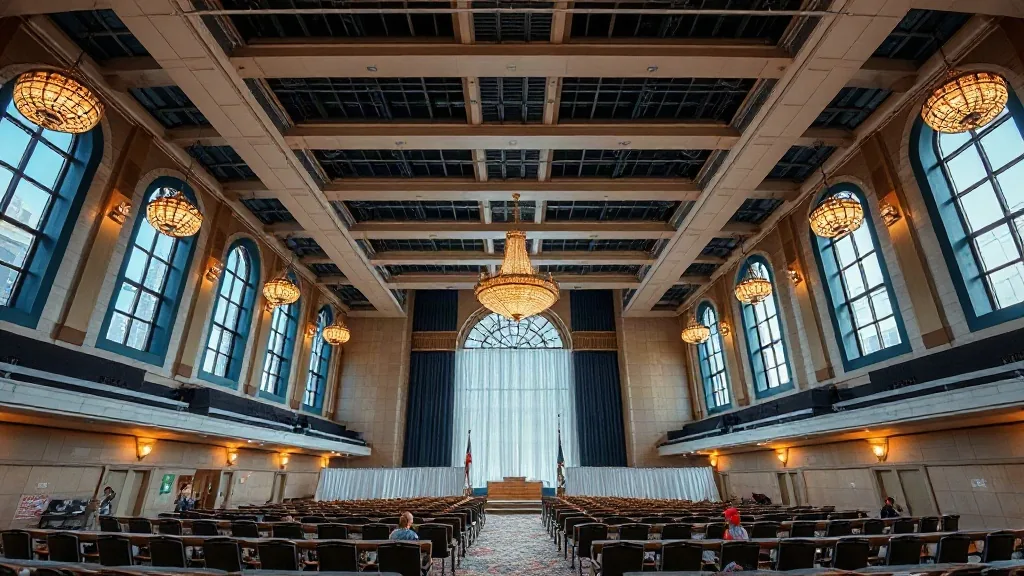
The deepest automotive heritage venue in the world, essentially — and Lovett Hall is a genuinely elegant ballroom, not a gimmick. Capacity ~500. Pairs with: an auto-OEM or major supplier flagship event; the heritage is so foundational it never reads as costume. Best for milestone celebrations and reveals.
2. The Factory at Corktown / Michigan Central (Corktown)
The restored Michigan Central Station and the surrounding mobility-innovation district — Detroit’s past and its declared future in one place. Event spaces vary. Capacity scales large. Pairs with: an EV, mobility-tech, or forward-looking auto brand — the venue’s whole narrative is heritage-into-future, which is the exact story those clients want.
“Our client is an EV supplier. We booked in the Michigan Central district and the brief basically wrote itself — old auto city, new auto future. We didn’t add a single themed prop. Didn’t need to.” — Creative Director at an event agency.
3. The Fillmore Detroit (Downtown)
A restored 1925 theater that does corporate buyouts — real stage, real production capacity. Pairs with: any client wanting a reveal or a concert-format event; the heritage here is entertainment, not auto, so it’s a neutral, flexible pick. Capacity ~2,000+.
4. Eastern Market Shed venues (Eastern Market)
The historic public-market sheds — industrial, raw, flexible, very Detroit. Capacity scales large in the sheds. Pairs with: a client wanting authentic Detroit texture without the auto-specific read — a supplier event, a manufacturing-sector conference. Underplay it and it’s great; theme it and it fights you.
5. Detroit Foundation Hotel (Downtown)
A boutique hotel in the former Detroit Fire Department headquarters — heritage that’s civic, not automotive. Capacity ~200 in event space. Pairs with: a smaller leadership event or board offsite where you want Detroit character and a room block in one building, without committing to the auto narrative.
6. The Whitney (Midtown)
A Gilded Age lumber-baron mansion — ornate, formal, no auto connection at all. Capacity ~250 across the rooms. Pairs with: a gravitas dinner or an executive event where Detroit’s pre-auto wealth is the note. The honest call: don’t book this for an auto-heritage brief — it’s the wrong heritage. Book it when you want grandeur.
7. Garden Theater (Midtown)
A restored 1912 theater, mid-size, characterful. Capacity ~400. Pairs with: a launch or celebration for a mid-size client; entertainment heritage again, so it’s flexible. Best for events with a stage moment.
8. Ford Piquette Avenue Plant (Milwaukee Junction)
The actual birthplace of the Model T — a preserved early auto factory that hosts events. Capacity ~250. Pairs with: an auto client wanting the most literal possible heritage — but a warning, because it’s a working museum, this one tips toward costume fastest. Book it for an intimate, reverent event; do not book it for a loud party.
9. Two James / Detroit City Distillery-style — settle. Final: The Eastern (Eastern Market)
A brick event venue in the Eastern Market district with a rooftop and skyline views. Capacity ~300. Pairs with: a relaxed team event or a supplier reception; neutral heritage, good rooftop, easy to brief.
10. The Anchor Bar-adjacent — no. Final: Roostertail (Detroit Riverfront)
I added this one last because it’s a different register entirely — a riverfront venue, mid-century, with a genuine Detroit-society history and a view across to Canada. Capacity ~600. Pairs with: a large celebration or gala where the river, not the auto story, is the feature. For an auto-heritage brief specifically, pick The Henry Ford or Michigan Central instead.
A note on the heritage-versus-costume line
Since this is the whole reason to book Detroit deliberately, here’s the rule I give every client. Authentic heritage venues only need to be lit and staged well — the building does the narrative work, and your production should be restrained enough to let it. The failure mode is additive: themed props, slogan signage, a “Motor City” everything, layered onto a venue until the real heritage is buried under the fake. A senior automotive audience — engineers, executives, lifelong industry people — reads that instantly and it reads as condescending. Trust the building. If you booked a real heritage venue, your job is mostly to get out of its way. And if your client has no auto connection at all, don’t force the auto angle — Detroit has civic, entertainment, and society heritage too, and the wrong heritage forced is worse than no theme.
Picking from this list
- Auto-OEM flagship / milestone → The Henry Ford (Lovett Hall)
- EV / mobility-tech brand → Michigan Central / The Factory at Corktown
- Reveal or concert-format launch → The Fillmore Detroit
- Authentic Detroit texture, no auto theme → Eastern Market sheds or The Eastern
- Gravitas dinner (pre-auto heritage) → The Whitney
If none fits, the wider Detroit meeting-venue list has more, and Detroit corporate event venues across all categories covers conference centers, hotels, and lofts. Or zoom out to meeting spaces across Michigan.
Send me the client’s industry and the headcount — and I’ll tell you which heritage to lean on.