F&B Minimum, Decoded: What I Wish Someone Had Told Me On My First Holiday Party
F&B minimums are the most misunderstood line in venue contracts. They're not the price. They're the floor. Here's how they actually work, with eight real contract excerpts from my files.

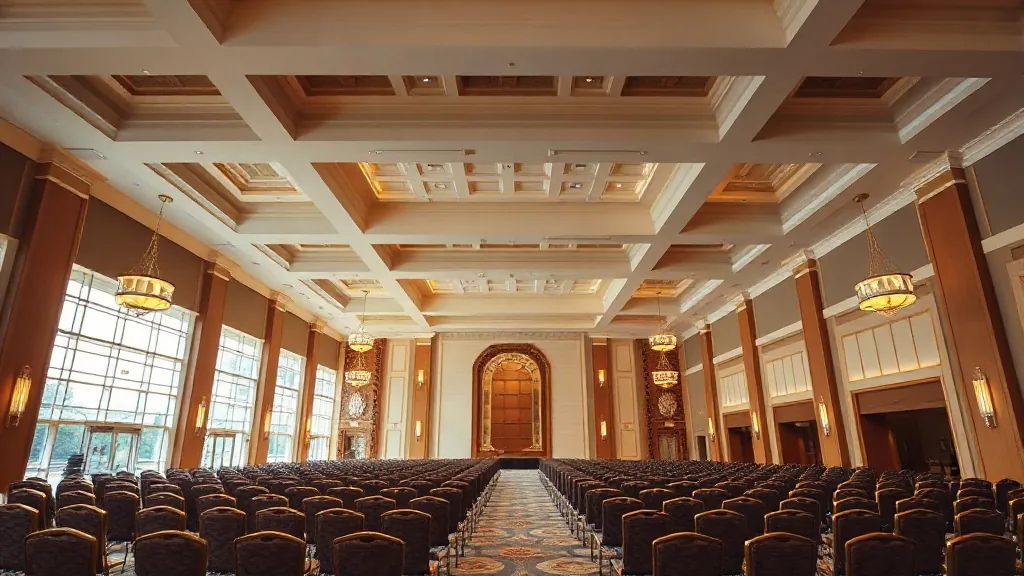
The first corporate event I ever planned was a 90-person holiday party in 2012. My boss handed it off to me three weeks before and said “have fun.” The venue was a hotel ballroom in Coral Gables. The contract said “F&B minimum: $14,000.”
I did not understand what that meant. I thought it meant the food would cost $14,000. So I budgeted $14,000 for food.
What it actually meant: $14,000 was the floor below which we’d pay the difference as a “rental” line item, and food would be billed separately on top of consumption. We ended up at $19,400 for food, plus 22% service charge, plus 6% sales tax, plus an “administrative fee” of 3%. Total food bill: $26,200. The party was great. My budget conversation with the CFO three weeks later was not.
I’ve been writing about this for fourteen years and people still get caught by it. Let me break it down properly.
What an F&B minimum actually is
A food and beverage minimum is the contractual amount you commit to spend on food and drink at the event. It is not the cost of food and drink at the event. Those are different numbers.
If your minimum is $14,000 and you actually spend $14,000 on F&B, you pay $14,000 in F&B charges. Done.
If your minimum is $14,000 and you spend $19,000, you pay $19,000 in F&B charges (you exceeded the floor, so the floor doesn’t matter).
If your minimum is $14,000 and you spend $11,000, you pay $11,000 in F&B charges PLUS $3,000 as a “shortfall” or “rental” or “minimum guarantee” line. Most contracts charge service and tax on the shortfall too.
That’s the basic mechanic. The complications come from everything that gets layered on top.
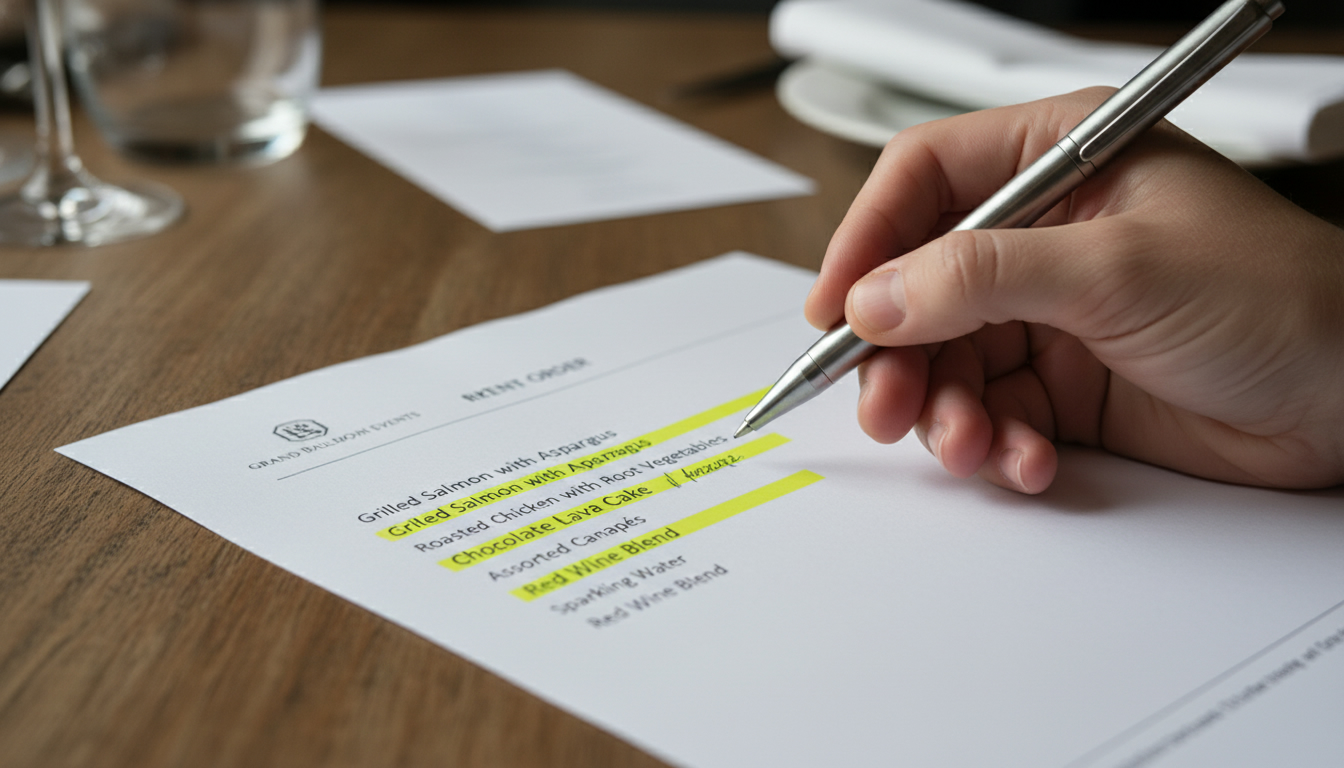
The five things that get added to your “F&B” total
This is where a lot of planners get into trouble. The F&B “subtotal” on a contract is rarely the final F&B bill. The layers:
1. Service charge
Almost universal. Usually 20-26% in the U.S. market. Some venues call it “service,” some “administrative service charge,” some break it into “service” (which goes to staff, sometimes) plus “administrative” (which goes to the venue). Read the contract.
Service charge is calculated on the F&B subtotal pre-tax.
2. Sales tax
State-by-state. Florida is currently 6% state plus up to 1.5% county. New York City is 8.875%. California varies by city. Always calculated on F&B subtotal post-service.
3. Administrative fee
Some venues charge this on top of service. Common in the 2-4% range. Be aware: if your contract has both a “service charge” and an “administrative fee,” that’s two charges, not one.
4. Cake-cutting / corkage / outside food fees
If you bring outside food (cake, dessert, specialty items), most venues charge a cutting / handling fee. Standard: $3-7 per person. Corkage on outside wine: $15-35 per bottle.
5. Tray pass / cocktail labor / coat check / etc.
Some venues bundle. Some itemize. If your contract has a “labor” line in the F&B section, that’s not part of the F&B minimum — it’s an addition.
A real worked example
Here’s a contract I negotiated last fall for a 200-person sales kickoff dinner in Atlanta. I’m anonymizing the venue but the math is real.
F&B minimum: $42,000 Per-person plated dinner: $145 Headcount: 200 Estimated F&B at 200 × $145: $29,000
Wait — that’s UNDER the minimum. So we’d pay $42,000 plus service + tax + admin? Almost. Here’s how we actually closed:
Add: 90-minute open bar (
$32/person consumption estimate): $6,400 Add: passed bites for cocktail hour ($18/person): $3,600 Add: dessert station: $2,400 Estimated F&B at all-in: $41,400
Still $600 under the minimum. We could either eat the shortfall or upgrade something. We upgraded to a wider passed-bites menu, hit $42,800, and paid the actual consumption. Then service (24%), admin (3%), tax (8.9%) layered on top:
$42,800 × 1.24 × 1.03 × 1.089 = ~$59,560 final F&B bill
If I’d budgeted “$42,000 F&B minimum” and that’s it, I’d have been $17,560 short.
What to ask before signing
Five questions. Get the answers in writing.
1. “Is the F&B minimum inclusive of service, tax, and admin, or in addition to?”
99% of the time it’s in addition to. Always confirm. The 1% case is real and changes the math entirely.
2. “What is the total all-in cost per person at the price quoted?”
Force them to write the number. Not the per-person F&B figure. The per-person all-in figure.
3. “What counts toward the minimum and what doesn’t?”
Some venues count outside food handling fees toward the minimum. Most don’t. Some count cake cutting fees, some don’t. Get specifics.
4. “What happens if our headcount drops below 90% of guaranteed?”
Most contracts have a “guarantee” provision. You give a final headcount 72 hours before; the venue charges you for whatever’s higher (the guarantee or the actual). If your guarantee was 200 and 175 show up, you pay for 200. Plan accordingly.
5. “What’s negotiable on the minimum?”
Almost everything is negotiable. Service charge less so, but the minimum itself, the per-person rate, the included items, the date — all are. Off-peak dates: easy 10-20% reduction. Lower headcount than usual: easy negotiation. New venue trying to fill calendar: very negotiable.
When you’re tempted to game the minimum
A pattern I see all the time: planner has a $40K minimum, planner’s actual F&B will be $30K, planner panics and starts adding “free” things to hit the minimum. Don’t.
If you’re $10K under minimum, the right move is one of:
- Add a real upgrade that the team will appreciate (premium bar, better dessert, late-night snack station). This is genuinely value-positive.
- Negotiate the minimum down. Tell the venue your real F&B forecast is $30K and ask if they can adjust. Sometimes the answer is yes.
- Pay the shortfall and move on. If the venue is otherwise great, eating $10K of overage on a $300K event is fine. Don’t bend the event around the minimum.
What you should NOT do is order things you don’t actually want, force-feed the guests, or add hidden gratuity to your team to “use up” the minimum. That last one I’ve literally seen. It ends in a tax compliance conversation you do not want.
What I tell first-timers
Read every line of the F&B section twice. Run the math. Add 30% to whatever you think the F&B will cost. If the result still fits the budget, you’re probably fine. If it doesn’t, either renegotiate or pick a different venue.
The F&B minimum is the line that destroys budgets. It’s also the line venues are most willing to discuss before you sign. Use that.
Some places where minimums tend to be fairer
Not naming venues, but as a general rule: smaller independent venues, off-strip hotels, and corporate-event-focused spaces (versus general hospitality) tend to have minimums that more closely match realistic spend. Big convention hotels in major metros have the harshest minimums.
If you’re shopping right now, browse hotels with meeting space or conference centers across the country and ask each prospective venue the five questions above. The ones that answer plainly are the ones to take seriously. The ones that hand wave or say “we’ll work with you” without specifics — be careful. “Work with you” sometimes means “you’ll work with us” once the contract is signed.
A real testimonial about getting it right
I worked a 140-person leadership summit at a small hotel in Tampa last year where the GM looked at our F&B forecast and said, unprompted, “Your minimum is too high for what you’re describing. Let me restructure.” She knocked $7K off the minimum on her own initiative because she didn’t want to charge a shortfall fee on a corporate client she wanted to keep.
“I’d rather you book us for the next three years than win this one with a shortfall fee. Long game.” — that GM, who I now send everyone to who has a Tampa event
Venues like that exist. Find them. Reward them.
Quick checklist
Before you sign:
- Total F&B minimum number
- What’s included (service, tax, admin: in or out?)
- What can be added to count toward minimum
- Per-person all-in cost at quoted rate
- Shortfall behavior + 90% guarantee math
- Cake/corkage/outside food fees
- Cancellation tiers and penalties
- Force majeure language
If any of these aren’t in the contract clearly, ask. If the venue won’t put it in writing, that’s the answer.
Sign the contract knowing what it costs. Don’t be 22-year-old me, $12K over budget on her first event, learning the hard way.
Email me a contract if you want me to red-flag anything before you sign. I’ll do it for free for first-time planners. Pay it forward to the next one when you’re ready.