
The Corporate Hackathon Playbook: Power Access, Overnight Coverage, and the Judging Format
Corporate hackathons need 24-hour venue access, one power outlet per attendee, whiteboards in every room, and a judging format with IP ownership language that your legal team can sign off on. Most venues can't provide all four without advance negotiation. This playbook covers the full venue brief, overnight logistics, and the judging format that produces actual product outcomes.

The corporate hackathon I remember most vividly ran for 32 hours at a coworking space in San Francisco. By hour 14, we had 40 engineers competing across 8 teams, 3 blown fuses (the circuit breakers were shared with the adjacent office suite), and a catering situation that involved someone ordering 60 pizzas to an address that turned out to be around the corner. We finished. Three of the projects built that weekend are now in production. The power and pizza problems were completely avoidable.
Corporate hackathons are the only event format where the venue infrastructure genuinely affects the output quality. An engineer who loses power to their laptop at hour 20 loses 2 hours of work. A team that can’t hear itself think because of the HVAC system in the adjacent room loses the thread of what it was building. The venue brief for a hackathon is more technical than the brief for any other corporate event.
The venue brief
For a 24-48 hour corporate hackathon with 30-80 participants:
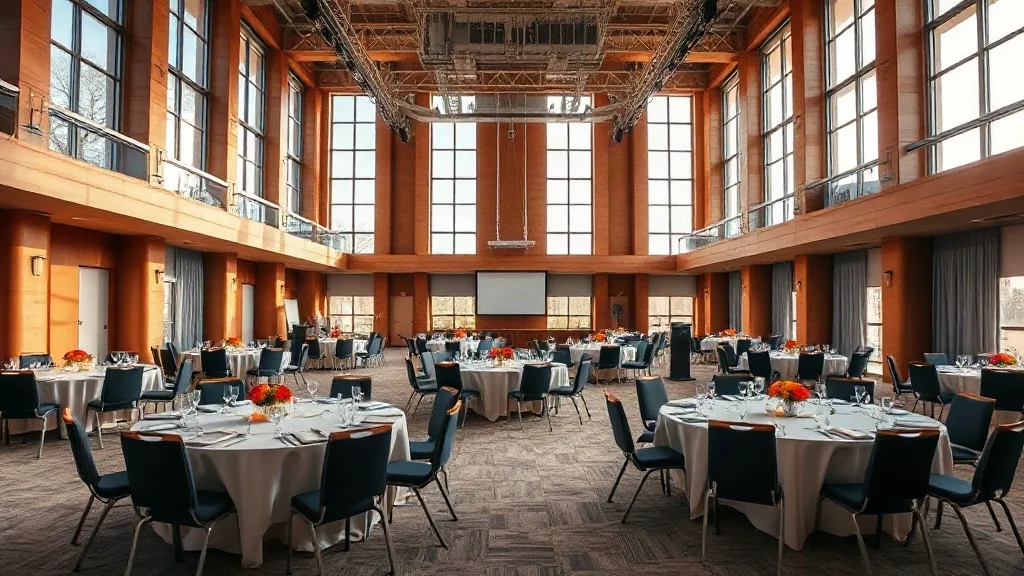
Power infrastructure: The single most important venue requirement. You need dedicated electrical circuits that are not shared with the rest of the building. The rule I use: one 20-amp circuit for every 6 participants, with circuits dedicated exclusively to the hackathon space. For 60 participants, that’s 10 circuits. Most developers run 2-3 high-draw devices (laptop, monitor, external drive, sometimes a GPU workstation), and the load adds up faster than standard office electrical planning accounts for.
Confirm with the venue electrician, not the sales coordinator, that the circuits are dedicated and that the panel can sustain continuous load for 24-48 hours. Coworking spaces built for tech tenants are the strongest option here because they’re designed for high device density. Warehouse venues can work but require careful electrical planning.
Physical whiteboards in every team space. Not digital whiteboards. Not projected surfaces. Physical wall-mounted or freestanding whiteboards. Teams working on architecture and system design need to be able to draw in real time. Every team space needs at least one 4x6 foot board. Dry-erase markers full, replacements available.
24-hour access. The venue must allow vendor access and participant access around the clock. This eliminates most hotel conference centers (they lock common areas at midnight), most restaurant event spaces, and many coworking spaces that lock the building overnight. Confirm in writing that staff will be on site or that participants will have key-card access through the full hackathon duration.
Adequate Wi-Fi for high-concurrency development traffic. Developer traffic is not the same as presentation Wi-Fi usage. A team running cloud deployments, pushing to GitHub, and streaming video from 3 different services simultaneously generates 10-15x the bandwidth of a typical conference attendee. For 60 participants, the minimum usable bandwidth is 500 Mbps with low latency. Ask for documented bandwidth capacity, not a brochure claim.
Temperature control. Buildings with HVAC that shuts off overnight become uncomfortable by 3am. Confirm the venue maintains temperature control through the full duration. A room at 78 degrees at 2am with 60 laptops running is not a productive working environment.
Overnight logistics
The overnight component is what separates a hackathon from a long workshop, and it’s where operational planning breaks down most often.
Sleeping options: For a 24-hour hackathon, you need a dedicated resting room. Not the main work area. A separate room with air mattresses or cots where participants can sleep for 2-4 hours without disrupting the teams still working. The resting room should have blackout curtains or equivalent, earplugs available, and a clear no-phone-calls-in-the-room protocol posted at the entrance.
For 60 participants, a resting room of 600-800 square feet with 15-20 sleeping spaces is sufficient. Most people will not sleep. But the option matters for the 20% who need a 90-minute recovery window.
Overnight catering: This is not the same as event catering. You need:
- Dinner at hours 4-6 of the hackathon (typically 8-10pm for an event starting at 2pm)
- Midnight snack service: simple, high-protein options, no elaborate setup
- 3am coffee station, self-service, kept continuously stocked
- Breakfast at hours 16-18 (6-8am for a 2pm start)
The dinner and breakfast can be catered. The midnight and 3am services should be pre-set self-service with no catering staff required. Having a caterer arrive at 3am to set up a snack station adds complexity and cost that isn’t justified.
Security: A 24-hour event in an occupied building requires on-site staff continuity. Even if participants have key-card access, you need at least one event staff member on site at all times. This is partially a safety requirement and partially a practical one: someone needs to be able to call maintenance if a circuit trips at 2am.
The judging format
The judging format determines whether your hackathon produces outcomes that get used or outcomes that get celebrated for a week and then shelved.

IP ownership language first. Before you design the judging format, your legal team needs to produce a clear IP ownership statement. The standard corporate hackathon structure: work produced during the hackathon using company resources is company property. Participants who use their personal equipment and prior developed code retain ownership of what they brought in; work built during the event is company property. Get this language reviewed, posted in the pre-event brief, and acknowledged by participants at registration. This is non-negotiable for publicly traded companies and should be standard everywhere.
The judges: 3-5 judges produces better decisions than 1 or more than 7. Include one technical judge (who evaluates feasibility and code quality), one product judge (who evaluates user impact and alignment with roadmap), and one executive judge (who evaluates strategic value). Calibrate the judges before the first presentation: 15 minutes together before judging begins, discussing evaluation criteria and scoring weights.
The presentation format: 5-minute team presentation plus 3 minutes of judge Q&A per team. Enforce the time limit strictly. With 8 teams, judging takes 64 minutes, which is manageable. With 15 teams and 10-minute presentations, you’ve created a 2.5-hour judging session that exhausts everyone.
The winning category structure: Avoid a single winner. The hackathon produces better energy and broader participant investment when there are 3-4 categories: best technical implementation, best user impact, best product alignment, and a wildcard “most creative” category. This allows 4 different teams to feel like they won, and it produces 4 projects that leadership can evaluate seriously rather than one.
The path to production: The most important judging question is not “what was best at the hackathon?” It’s “what can we actually ship?” The judging panel should include an explicit step where the top 3 projects are evaluated for production feasibility: Is the code base ready for review? Does it require external dependencies? What’s the estimated implementation timeline? Projects that clear this bar should be assigned a product owner within 30 days of the hackathon.
Budget
For a 24-hour hackathon with 60 participants at a coworking event space:
- Venue rental (24-hour access): $2,500-5,000
- Electrical upgrade if required: $500-2,000
- Catering (dinner, overnight snacks, breakfast, all-day coffee): $4,500-8,000
- Supplies (whiteboards if not included, markers, power strips, cables, first aid): $800-1,500
- Event staff (2 people, 24-hour coverage in rotation): $1,200-2,400
- Prizes for winning categories (gift cards, tech devices): $2,000-4,000
- Total: $11,500-23,000 for 60 participants, or $190-385 per person
What’s the participant count, hackathon duration, and primary tech environment (cloud-heavy, hardware, mobile)? Those inputs drive the electrical and connectivity requirements.


