How to Book a Coworking Space for a Corporate Event
Coworking spaces with event capabilities are the fastest-growing segment of the corporate venue market, but the format has hard limits: most cap at 150 guests, AV infrastructure is minimal, and catering policy varies dramatically by operator. This guide covers pricing models, what to verify before booking, and when coworking beats a hotel.

Coworking spaces started renting their event areas as a secondary revenue stream around 2015, and by 2020 it was a distinct business model. WeWork, Industrious, Convene, and hundreds of independent operators now actively market their event spaces to corporate planners. The format has genuine advantages for the right event size and type. It also has specific limitations that make it the wrong choice for events that need significant AV infrastructure or food and beverage service.
What makes coworking spaces work for corporate events
The core appeal is flexibility and price. A coworking event space in a major city rents for $150 to $800 per hour depending on the market and the space size, compared to $5,000 to $15,000 for a full-day hotel meeting room rental. For a 4-hour workshop for 30 people, that’s a meaningful cost difference.
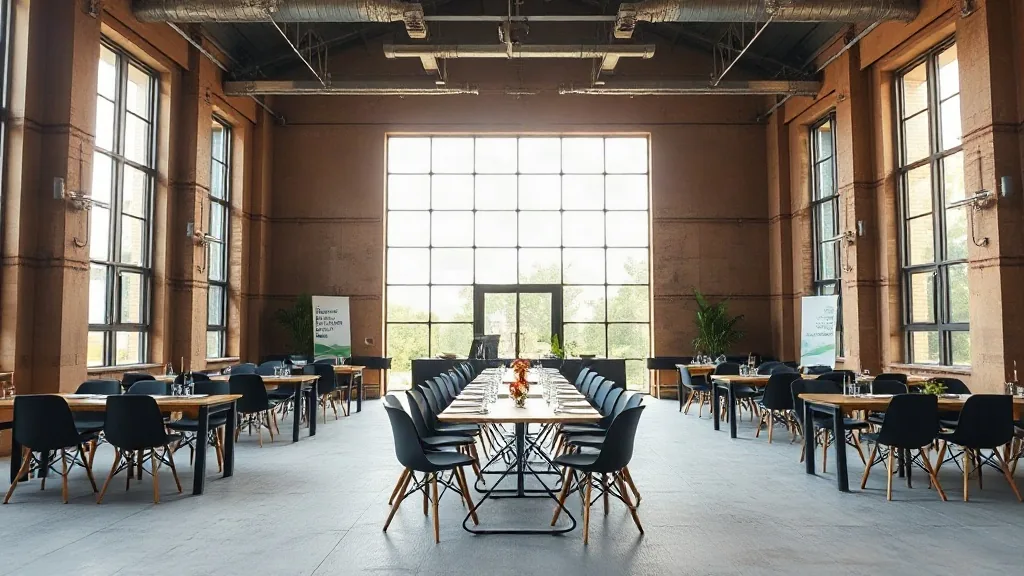
The format works well for: half-day and full-day workshops, team off-sites for 20 to 80 people, product demos, networking events, training sessions, and company meetings that don’t require the prestige of a hotel ballroom. The aesthetic (open, modern, designed for collaboration) also sends a specific signal about the organizing company’s culture that some clients actively want.
The physical environment is usually better equipped for working sessions than a hotel meeting room. Whiteboards are standard. Post-it walls, collaborative furniture, and flexible seating configurations are common. These are things hotels charge extra for or don’t have at all.
Hard capacity limits
Most coworking event spaces cap at 80 to 150 guests for standing receptions, and substantially less for workshop or seated configurations. A coworking event space marketing itself as “capacity 120” will comfortably seat 60 in classroom or workshop format.
Above 150 guests, the coworking venue category stops being relevant. The spaces aren’t physically large enough, the restroom infrastructure can’t support larger groups, and the load-in logistics don’t scale.
For events under 50 people, coworking spaces are often the best option. For events between 50 and 150, they’re competitive with smaller hotel meeting rooms. For anything above 150, look at a conference center, hotel ballroom, or event venue.
AV infrastructure: what to verify
This is where coworking spaces vary most dramatically. Some operators (Convene in particular) have invested in purpose-built AV infrastructure that approaches conference center quality. Most have basic AV: one or two displays, a Bluetooth speaker, and a web conference setup. Some have nothing built-in.
Before you confirm the booking, ask for the AV spec sheet or confirm the following specifically:
- What is the display size and resolution? (A 55-inch TV is not adequate for a 60-person presentation.)
- Is there a projection system or just a display?
- What audio amplification is available? (Built-in room speakers vs external speaker system.)
- What video conferencing setup is supported natively? (Zoom Room, Google Meet hardware, or laptop-only?)
- What internet bandwidth is dedicated to events vs the shared coworking tenant pool?
A coworking space that can’t tell you the internet speed during event hours is a risk for any event with streaming, video conferencing, or significant web-based content. The shared broadband infrastructure in many coworking facilities has adequate bandwidth at 8am but struggles at 2pm when 200 members are in the building.
If the built-in AV isn’t adequate for your event’s needs, you’re renting a room and bringing all your own AV production. That changes the economics significantly and may eliminate the cost advantage over a hotel.
Catering policy: the three models
Coworking event spaces fall into three catering models:
BYOC (Bring Your Own Caterer): Most common. You bring in whatever caterer you want, subject to the space’s approval and the caterer carrying appropriate COI. This is the most flexible option and allows competitive pricing on food.
Preferred caterer list: The operator has 3 to 8 approved catering partners and requires you to use one of them. Usually reasonable quality and priced fairly because the caterers want to maintain the relationship with the operator.
In-house food and beverage: A few larger operators (Convene is the main example) run their own food and beverage program. Quality is generally good; pricing is more controlled.
Ask specifically which model applies at the location you’re considering, and ask for menu and pricing samples from the preferred caterers if applicable.
Pricing models: hourly vs day rate
Coworking event spaces price in two models:
Hourly: $150 to $800 per hour depending on market, space size, and operator. Good for half-day events. Watch for minimum hour requirements (often 4 hours) and setup and breakdown time charged at the same hourly rate.
Day rate: $800 to $3,500 for a full day (8am to 6pm or similar). More economical for full-day events and events that need significant setup time.
Add-on charges to ask about: AV tech support (often $150 to $400 per day if the operator provides it), catering setup fee, parking validation, and any cleaning fee.
Minimum booking lead times
Most coworking event spaces can book with 1 to 4 weeks of lead time, which is much faster than hotels or conference centers. This makes them a practical option for events that come together quickly.
However, the most popular spaces in major cities (especially Convene in New York, Chicago, and San Francisco) book out 4 to 8 weeks in advance for Fridays and Saturdays. Weekdays have more availability.
What coworking spaces can’t do
Before you commit to a coworking venue, be clear on the format’s ceiling:
Seated dining: Most coworking event spaces are not set up for plated dinner service. The open-plan furniture doesn’t reconfigure into dining tables easily, and the catering infrastructure (if any) supports buffet or grazing formats, not seated service with clearing and coursing.
Large-format presentations to 100+ guests: A 55-inch display and a Bluetooth speaker don’t work for 100 people. If your event has a main presentation to a seated audience of more than 40, most coworking event spaces can’t deliver it without bringing in a full AV setup. That’s possible but it changes the economics.
Events requiring significant guest dwell time: Coworking spaces are optimized for 4 to 8 hours of daytime programming. Evening events that run past 9pm or 10pm may conflict with building access hours or create tension with neighboring tenants.
Events requiring a sophisticated F&B experience: Coworking catering, even from preferred vendor lists, tends toward healthy-casual: grain bowls, sandwich platters, charcuterie boards. If your event requires a fine-dining standard or a plated dinner service, a coworking space can’t execute it.
For the event types where coworking spaces genuinely excel (workshops, half-day strategy sessions, small product demos, company stand-ups, internal training), the format is hard to beat on price and turnaround speed.
Browse coworking spaces with events capabilities by city, or compare to conference centers for larger events that need more AV and catering infrastructure.
For the direct comparison that answers the most common planning question, Coworking vs Hotel Meeting Room for a One-Day Workshop covers the AV and catering cost comparison directly. For understanding where coworking spaces compete on a different axis, Coworking Event Space vs Private Club for a Startup Demo Day covers the signaling question.
What’s your headcount and AV requirement? Those two variables will tell you whether a coworking space is viable or whether you need more infrastructure.