How to Book a Hotel or Resort for a Corporate Event
Hotels and resorts are the default venue for multi-day corporate events, but the pricing model is designed to obscure the real cost. This guide covers room block math, concession trade, AV markup, resort fee negotiation, and the critical difference between talking to hotel sales and convention services.

Hotels are the most common corporate event venue in the country, and they’re also the most negotiation-dense booking process in the industry. The pricing model is intentionally complex: room rates, F&B minimums, AV packages, resort fees, service charges, parking, and internet are all separate revenue lines that the hotel manages independently. Understanding how the pieces connect gives you leverage. Going in without that understanding means you’ll pay standard rates across the board.
The room block and how it drives everything
For any multi-day event at a hotel, the room block is the primary negotiating lever. Hotels don’t make money on meeting room rental; they make money on sleeping rooms and food and beverage. The meeting room becomes free or heavily discounted when you’re putting a meaningful number of room nights on the books.
The standard concession trade: block 100 room nights per night for a 2-night conference (200 room nights total), and you can typically negotiate:
- Meeting space at no charge or significantly reduced rental
- Reduced F&B minimum
- Complimentary room upgrade for the lead planner
- Complimentary suite for the keynote speaker
- Reduced AV rates (sometimes)
- Waived or capped internet fees
- Resort fee waiver or reduction for group rooms
The math on the room block determines what concessions you can realistically ask for. A 20-room-night block at a 500-room hotel doesn’t move the needle. A 150-room-night block at a 300-room hotel gives you meaningful leverage.
The pickup rate reality: planners overestimate how many attendees will book within the room block. Typical pickup rates for corporate events are 60 to 75 percent of the blocked rooms. If you block 100 rooms and only 65 book within the block, you owe attrition on the difference. Block conservatively, negotiate a generous attrition clause (80 percent of block at minimum, or negotiate it down to 75 percent), and have a plan to release unsold rooms at the 30-day mark before the event.
The in-house AV markup
This is the single largest hidden cost in hotel event planning. Hotels partner with an in-house AV company (PSAV, Encore Event Technologies, and similar companies dominate this market) and present them as the venue’s AV department. They are not the venue’s employees. They’re a contracted vendor with an agreement that gives them preferred or exclusive access to the property.
In-house hotel AV is typically priced at 40 to 80 percent above what an outside vendor would charge for the same equipment and staffing. A projector that rents for $350 per day from an outside company appears on a hotel AV quote at $600 to $900. A sound system that costs $1,500 from an outside vendor is quoted at $2,800 in-house.
Your options: negotiate the AV quote down by asking for a line-item breakdown and challenging each component, bring in an outside AV vendor (most hotels allow this with a fee for patching into the house system, typically $500 to $1,500), or accept the in-house pricing in exchange for better concessions elsewhere.
If your event has a significant AV budget ($15,000 or more), bringing an outside AV company is almost always cheaper even after the patch fee. If your AV needs are minimal (one screen, one microphone), the in-house pricing differential is small enough to accept.
Resort fees: the number that doesn’t go away
Resort fees ($25 to $75 per room per night) are added on top of the negotiated group rate at most full-service resort properties. They cover amenities the hotel claims all guests use: pool access, fitness center, beach chairs, wifi.
For corporate groups, most of these amenities are irrelevant. Your attendees are in meetings. The resort fee is pure margin for the hotel.
Resort fees are sometimes negotiable in group contracts. The lever is simple: make the resort fee waiver a specific ask in your initial RFP response. Some hotels will waive it entirely for large groups; others will reduce it; others won’t move at all. You can’t get a waiver you don’t ask for.
I’ve been wrong about this in specific situations. Some resort properties have genuine contractual restrictions that prevent resort fee waivers regardless of group size. Those situations are less common than hotels would have you believe, but they exist.
Hotel sales vs convention services
This distinction affects the quality of your event more than most planners realize. Hotel sales is the department that books your event: they handle the contract, the room block, the concession negotiation. Hotel convention services is the department that runs your event once it’s booked: they coordinate the BEO, manage catering delivery, handle setup and room changes.
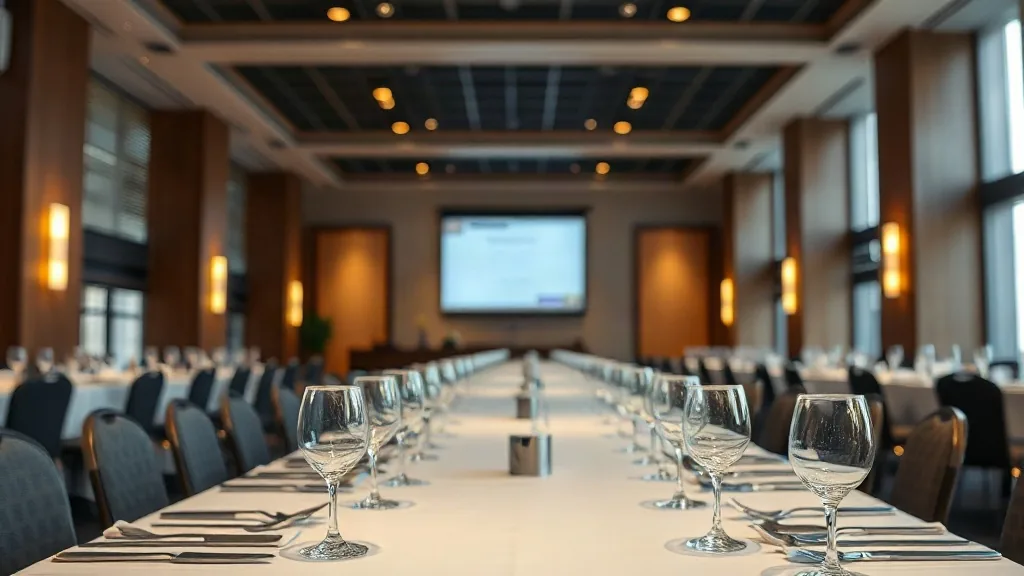
Convention services staff are your actual day-of partners. Before you sign with a hotel, ask to meet your convention services manager. A 30-minute call tells you a lot: are they organized, do they know the property, are they managing 30 events at once or do they have capacity for yours?
Large convention hotels (1,000+ rooms) may have convention services managers carrying 15 to 25 simultaneous groups. Your event is one of many. Smaller conference hotels (200 to 400 rooms, event-focused) tend to have convention services teams with lower client loads and more attentive service.
Comparing proposals accurately
Hotel proposals look very different from each other and can’t be compared at face value. Normalize:
- Convert room rate to net rate (before fees): subtract resort fees from the quoted room rate.
- Build a per-person all-in cost: room, F&B minimum, AV estimate, service charges, taxes.
- Confirm the attrition exposure at the 70 percent, 80 percent, and 90 percent pickup scenarios.
- Confirm what’s included in the meeting space rental (AV, linen, tech support, internet).
When to walk away from a hotel proposal
Most hotel negotiations end in a signed contract. But there are specific situations where the right answer is to decline and find a better option.
Walk away when: the hotel’s convention services team is carrying more than 20 active groups simultaneously and can’t confirm who your dedicated contact will be before two weeks out. Walk away when the in-house AV package is non-negotiable and the quote is 3x what an outside vendor would charge for the same scope. Walk away when the attrition clause requires 90 percent room block pickup with no release provision and your historical pickup rate is 65 percent.
The signal that tells you a hotel wants your business versus needs your business: how quickly they respond and how flexible they are on the first counter-proposal. A hotel that takes 2 weeks to respond to your RFP and offers no flexibility in the first counter is not a venue that will be easy to work with when you have a problem at 6pm on event day.
The comparison to make before signing is not just against other hotels. Compare the hotel’s all-in per-head cost to a purpose-built conference center in the same city, especially if you’re not generating a large room block. You may find a conference center at $140 per person beats a hotel at $175 per person with no additional service quality trade-off.
Browse hotels and resorts available for corporate events by city and state, or compare to conference centers if you want purpose-built meeting infrastructure without the room block complexity.
For room block math in detail, Room Block Math for a Three-Day Conference covers pickup rates, attrition, and the concession trade formula. For what happened when I assumed resort fees were always negotiable, I Was Wrong About Resort Fees for Three Years covers the specific contract conditions where they genuinely aren’t.
What’s your headcount, number of nights, and whether you have a meaningful room block? Those three variables define your negotiating position before you send a single RFP.