
How to Brief a Caterer for a Corporate Event: the 6-Field Document That Gets Accurate Quotes
Vague catering briefs produce quotes ranging from $40 to $100 per head for the same event. The gap is not price discrimination; it's different assumptions about service style, staffing model, and kitchen access. Six specific fields collapse that range to under $15 per head. Here is the document and how to fill it out.

I sent the same event brief to three caterers in 2022. The event was a 120-person corporate awards dinner. I described it as “a seated dinner for 120, with awards presentations between courses.” The quotes came back at $52, $78, and $94 per head. All three were for dinner.
After I called each caterer to understand the gap, I found out the cheapest quote assumed a buffet, the middle quote assumed plated service with two servers, and the expensive quote assumed a four-course plated dinner with wine service and a dedicated sommelier. I had not specified any of that. They all guessed.
The six-field brief prevents this.
Field 1: Service style (required, single choice)
Caterers build staffing models around service style. It’s the biggest driver of per-head cost variation.
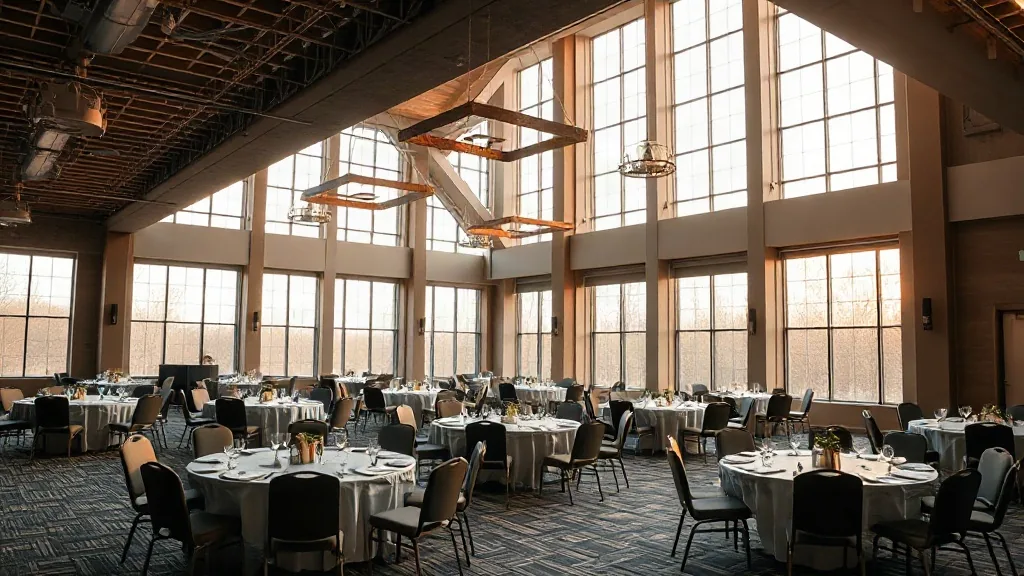
Your options:
- Buffet / stations: guests serve themselves or are served by station attendants. Lowest labor cost per head. Works for 80-400 guests. Requires 30-45 minutes of service time.
- Plated service (1 course): typically an appetizer or entree only. 2-3 servers per 30 guests. Works for receptions and light dinners.
- Plated service (2-3 courses): appetizer plus entree, or appetizer, entree, and dessert. 1 server per 20 guests standard; 1 per 15 for an upscale event. Requires a kitchen with hot-holding capacity.
- Family style: shared platters at each table, guests pass and serve. Lower labor than plated, higher food cost than buffet. Builds community at the table.
- Reception / passed: servers circulate with passed appetizers and drinks. Works for standalone cocktail receptions or pre-dinner programming.
Specify which service style you want. If you’re flexible between buffet and family style, say so; it gives the caterer room to optimize on cost.
Field 2: Meal count with dietary bands
This is not the same as your RSVP number. Give the caterer:
- Total confirmed guests (use your current hard count, not the invitation list)
- Estimated dietary restriction breakdown (see the three-field method in how to collect dietary restrictions)
- Bar format: open bar, beer-and-wine only, or non-alcoholic only
The dietary breakdown matters because it changes prep complexity. If 15% of guests are vegan, the caterer needs separate prep stations and may charge a premium. If 3% are vegan, they can often accommodate with minimal adjustment. Tell them which situation they’re pricing.
Field 3: Bar format
Open bar affects staffing and cost more than most planners realize. A standard open bar with full spirits, beer, and wine at a 4-hour event adds $25-$45 per head in tier-2 cities. Beer and wine only is $15-$25 per head. Non-alcoholic runs $8-$12 per head.
Specify: full open bar, beer-and-wine only, hosted bar (specific dollar limit per guest), cash bar, or non-alcoholic.
Also specify: bar service duration. A 4-hour open bar costs 40% more than a 2-hour open bar. If the event has a cocktail hour followed by a dinner program, specify whether the bar remains open through dinner or closes at the transition.
Field 4: Staffing model and service ratio
If you have preferences on service ratio, state them. If you don’t, the caterer will choose the model that protects their margin, which may not align with your quality expectations.
Standard corporate dinner: 1 server per 20 guests Formal or executive dinner: 1 server per 12-15 guests Reception: 1 server per 25 guests for passed service
Also specify: do you need a dedicated bar captain? A floor captain? A banquet manager on-site through teardown? Those are separate line items in most caterers’ proposals. If you don’t ask for them explicitly, they’ll often be excluded from the quote and added to the final invoice.
Field 5: Kitchen access at the venue
This is the most overlooked field. Caterers quote differently based on what kitchen infrastructure they’re working with.
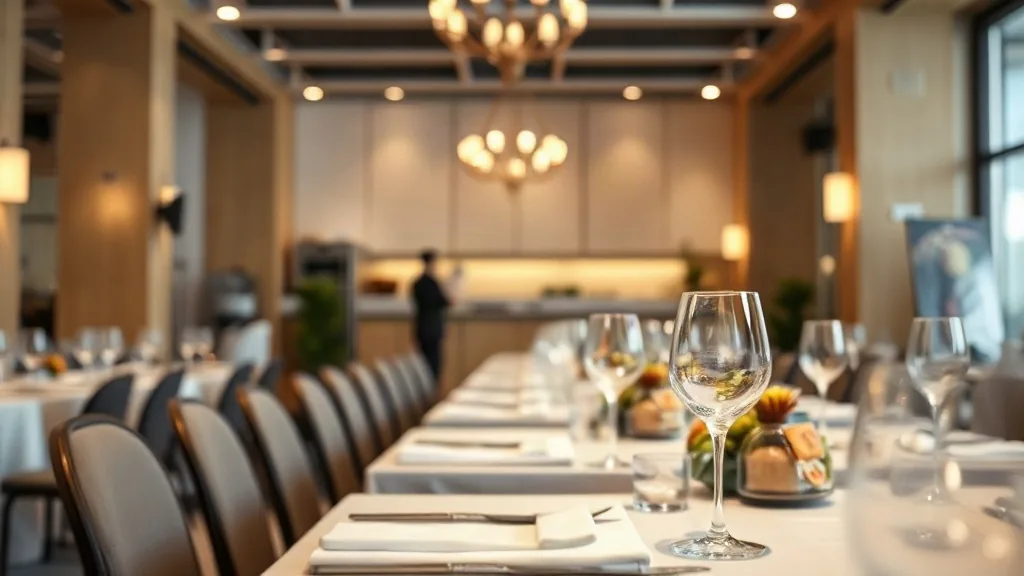
Three scenarios:
- Full commercial kitchen: caterer uses the venue’s kitchen for hot prep and plating. Lowest production cost.
- Partial kitchen / warming only: caterer does cold prep off-site, uses the venue kitchen for hot-holding and plating. Moderate production cost.
- No kitchen access: caterer does all prep off-site and delivers finished food. Highest production cost, lowest quality control.
If you don’t know what the venue’s kitchen configuration is, ask during the site visit. Or call the venue’s event coordinator before you send the catering brief. Banquet halls typically have full commercial kitchens. Event venues and raw spaces often do not. Hotels have full kitchens but frequently require you to use their in-house catering, making this field moot.
Field 6: Deadline and delivery logistics
When does setup begin? When does service start? When does breakdown need to be complete?
Give the caterer: venue access time (when they can begin load-in), service start time (first plate to the table or first dish at the buffet), and venue out-time (when all catering equipment must be off the premises).
If there’s a tight load-in window or a specific service start time that’s constrained by the program run-of-show, say so. A caterer who finds out day-of that they have 45 minutes instead of 90 for setup either has to rush or can’t deliver the menu they quoted. Neither is your preferred outcome.
Sending the brief and evaluating the quotes
Send the six-field brief to three caterers with a hard deadline: quotes due in 5 business days. Ask each quote to break out: food cost per head, labor cost per head, rental cost per head (linen, china, glassware if applicable), and service charge percentage.
When the quotes arrive, compare those four lines, not the per-head total. A quote that bundles everything into a single per-head number is hiding something. It’s usually the service charge. Service charges of 20-24% on top of food and labor are standard; 28% or above is worth a conversation.
For events at a hotel or resort, you’ll typically be working with the hotel’s in-house catering department rather than an outside caterer. The six-field brief still applies; use it to force the hotel’s catering team to quote specifically rather than presenting a package rate that bundles every option at maximum price.
What’s your service style preference and your current dietary breakdown? Those two fields alone will tell you which catering model fits the event.


