
Hurricane Season and Corporate Events in the Southeast: the Force-Majeure Language That Actually Works
June-October bookings in FL, GA, SC, and TX need specific force-majeure language. Here's what most venue contracts say versus what offers real cancellation protection.

I booked a client’s 200-person financial services conference in Tampa for the last week of September. The contract was signed in April. In September, a Category 2 hurricane tracked toward Tampa and made landfall 80 miles north of the city. The event didn’t cancel outright. It was significantly disrupted. And the venue contract, which had a force majeure clause, didn’t cover it.
We got out of the room rental. We didn’t get out of the $18,000 F&B minimum, which we had already guaranteed in the contract.
That was the event that made me read force majeure clauses carefully before signing for any Southeast booking.
What Standard Force Majeure Actually Covers
A standard venue force majeure clause covers events that make performance of the contract impossible. The legal standard is “impossible,” not “inadvisable” or “unsafe” or “significantly disrupted.”
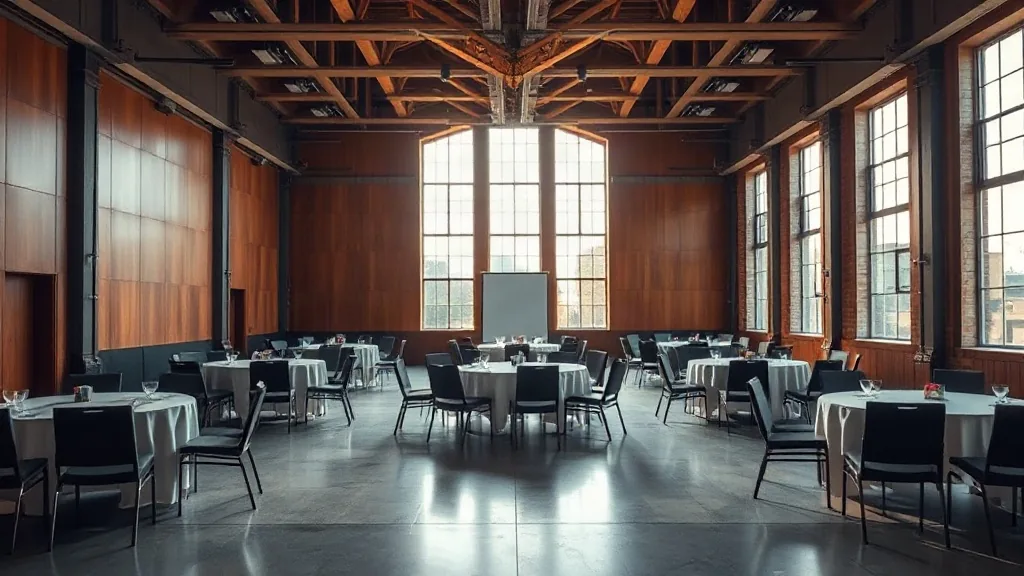
A hurricane that makes direct landfall at the venue location falls within standard force majeure. The venue is physically compromised. Performance is impossible. Contract excused.
A hurricane that tracks within 150 miles and causes evacuation orders for parts of the metro area is more ambiguous. The venue itself may be standing. The force majeure clause may not trigger. But your attendees can’t fly in because the airport is closed. Your catering staff can’t show because they’re under evacuation orders in neighboring counties. Your event is effectively impossible to run. And the contract may not protect you.
This is the gap. Standard force majeure is drafted for the direct-hit scenario. Real hurricane disruption lives in the near-miss and preparation-zone scenarios, which are far more common and far less clearly covered.
The Language That Works
Here is the clause language I’ve had added to venue contracts for Southeast events booked during hurricane season. I’ve used versions of this in Florida and coastal Georgia:
“Force majeure as defined herein includes but is not limited to: any named tropical storm or hurricane that is classified Category 1 or above and whose projected path at 72 hours prior to the event includes any portion of the metropolitan area in which the Venue is located; any mandatory or voluntary evacuation order affecting the county in which the Venue is located or any county through which 30% or more of confirmed attendees would travel to reach the Venue; or any government-issued travel advisory that restricts flight operations at any major airport within 150 miles of the Venue for a period extending into the event dates.”
This language is more specific than standard force majeure and it’s more useful. The 72-hour projected-path trigger gives you a decision point that aligns with how people actually make travel decisions. The evacuation-order language covers the near-miss scenario. The airport-restriction language covers the attendee-travel disruption scenario.
Not every venue will accept this language verbatim. Hotels with in-house legal review often push back on the breadth. But most venues, when presented with specific language that is clearly reasoned and presented professionally, will negotiate around it rather than reject it outright.
What to Do If the Venue Won’t Accept Modified Language
The first alternative is cancellation insurance. Event cancellation insurance policies that specifically cover weather events, including named storms, are available and should be standard for Southeast events booked from June through October. A 200-person conference with $40,000 in contracted commitments can get cancellation coverage for roughly $600-1,200 depending on the insurer and the covered scope.
The policy is not a substitute for contract language, but it covers what the contract leaves out. If the venue won’t agree to the modified force majeure clause, get the insurance and confirm with the insurer that named tropical storms and hurricanes are explicitly covered, not excluded as “known events” if the policy is purchased after a storm is named.
The second alternative is a sliding-scale deposit structure that limits your financial exposure in the first half of hurricane season. Instead of paying 50% of contracted minimums at 90 days out, negotiate to pay 25% at 90 days and 40% at 45 days. This reduces the amount at risk if a late-developing storm forces a cancellation in the 60-90 day window before the event.
The Seasonal Risk by Month
June and July are lower-probability months for major hurricane events affecting Florida and the Southeast corridor, though not zero. The Gulf Coast has seen June storms.
August through October is the genuine high-probability window. August and September are statistically the peak hurricane months in the Atlantic basin. October has produced multiple catastrophic storms in Florida in recent years. This three-month window is when the force majeure language matters most.
The cities where this risk is most acute for corporate event planning: Tampa-St. Pete, Miami, Fort Lauderdale, Jacksonville, Savannah, and Houston. These are all excellent markets for corporate events, but a September booking in any of them without specific weather protection in the contract is a financial risk that most planners don’t price in advance.
What I Tell Clients
For any conference centers in Florida or Southeast coastal cities for events booked between August 1 and October 15, I present two numbers: the contracted cost assuming the event runs, and the maximum financial exposure if the event cancels due to weather. The second number includes deposits paid, non-refundable vendor commitments, and any F&B minimums that aren’t covered by the force majeure clause.
If the maximum exposure is above $15,000, I recommend event cancellation insurance as a standard line item in the budget, not an optional add-on.
Hotels and resorts in Southeast markets with significant convention business are generally experienced with hurricane season bookings and their sales teams understand the force majeure conversation. The pushback is rarely hostile. It’s negotiation. Go in with the specific language and a willingness to work through the details.
The Vendor Chain Problem
One more layer that most planners don’t account for: when a hurricane disrupts a Southeast event, the venue isn’t the only contract at risk. Your AV vendor, caterer, floral supplier, and transportation company all have their own cancellation terms. None of them are covered by your venue’s force majeure clause.
AV vendors in hurricane-prone markets typically have weather-cancellation language in their own contracts that returns equipment deposits minus a mobilization fee if the event cancels more than 48 hours before setup. But if you cancel within 48 hours of setup start, you may owe 50-75% of the contracted AV cost regardless of whether the hurricane caused the cancellation.
The practical protection is coordination. Every major vendor for a hurricane-season event should have the same weather-cancellation threshold you’ve negotiated with the venue. If the venue clause triggers at 72 hours prior with a named storm projected to hit the metro, your AV and catering contracts should have the same trigger, or as close to it as the vendors will agree to.
Most experienced Southeast event vendors have dealt with this before. They know the hurricane season contract language conversation and many of them have standard language they use. Ask early in the contract process, not two weeks before the event.
Conference centers in Florida that serve the corporate market regularly have developed their own hurricane-season protocols and can point you to preferred vendors who are already calibrated to the same weather-decision framework. Using a venue’s preferred vendor network in this specific context has a practical advantage that overcomes the usual reasons to go outside the list.
What month and city is your Southeast event? I can tell you how to approach the force majeure conversation for that specific context.


