
The Industry Awards Ceremony Playbook: Table Sales, Run-of-Show, and the Acceptance-Speech Clocks
Industry awards ceremonies are revenue events disguised as recognition events. Table and sponsorship sales fund the program; the run-of-show determines whether guests leave satisfied or exhausted. A 4-minute cap on acceptance speeches, a countdown clock visible from the podium, and a pre-roll video strategy are not optional elements. This playbook covers the full lifecycle from table pricing to post-event reporting.

I’ve chaired two industry awards committees and been the hired planner on 7 more. The single most reliable predictor of whether an awards ceremony is good is whether the program ran on time. Not whether the food was great. Not whether the venue was impressive. Whether the people who won awards felt celebrated and whether the people who didn’t win went home at a reasonable hour.
An awards ceremony that runs 3.5 hours when it was scheduled for 2.5 hours produces uniform negative feedback, regardless of everything else that was done well. Getting to the venue, catering, and production quality questions only matters if you’ve solved the timing problem first.
The revenue model
Industry awards ceremonies for associations, trade publications, and chambers of commerce run on table and sponsorship sales. The awards themselves generate prestige and nominations; the revenue comes from organizations paying to be in the room and on the program.
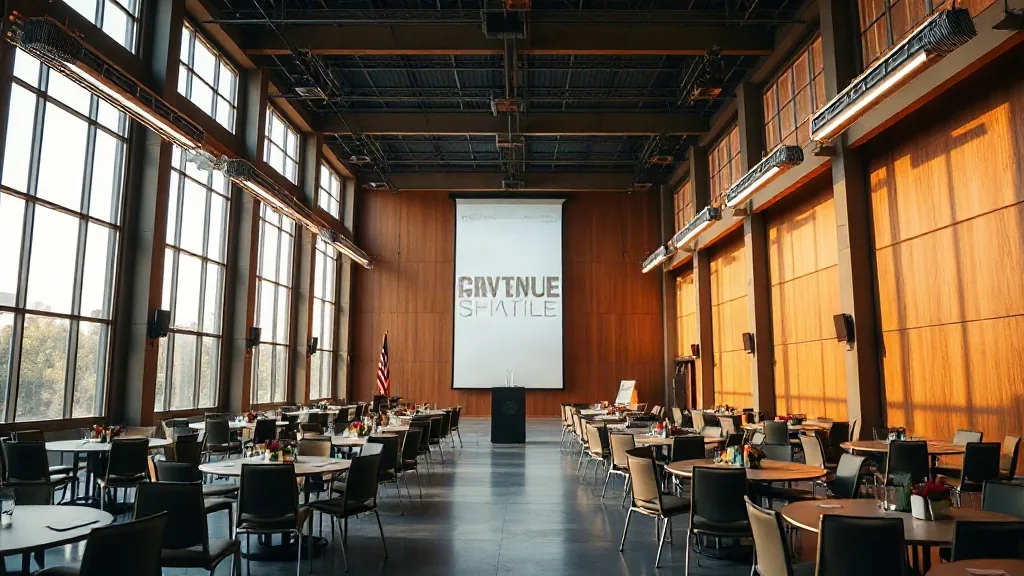
Table pricing structure:
For a 300-person awards dinner with 10-seat tables:
- Standard corporate table: $2,500-4,500 per table
- Premier table (front 3 rows, preferred sightlines): $4,000-7,500 per table
- Award sponsor table (inclusion in specific award presentation): $6,000-12,000 per table plus award naming rights
- Individual seat (for smaller organizations that can’t fill a full table): $275-495 per person
For a 30-table event at standard pricing, table sales generate $75,000-135,000. Sponsorships layer on top.
Sponsorship levels:
- Title sponsor: $15,000-35,000. Name in event title (“The [Sponsor] Industry Excellence Awards”), branded cocktail reception, recognition in all event communications, logo on all materials and screens.
- Presenting sponsor (specific award): $5,000-15,000. Name on that award (“The [Sponsor] Rising Star Award”), introduction of the award category by a sponsor representative.
- Reception sponsor: $5,000-12,000. Branded cocktail hour, company name on all bar napkins and signage during reception.
- Lanyard / program / badge sponsor: $2,000-5,000. Logo on all physical materials.
For a mid-tier industry event, combined table and sponsorship revenue often lands between $120,000 and $250,000. Venue and production costs for a 300-person awards dinner run $65,000-120,000. The margin is the program’s operating revenue.
The venue brief
Awards ceremonies require a venue that separates the reception from the dinner:
Cocktail reception area: A separate pre-function space where guests can arrive, network, and collect their table assignments before the dinner begins. The reception should run 45-60 minutes. Separating it from the dinner space allows the dinner room to be set and staffed before guests enter.
Dinner and awards room: A banquet hall or theater configuration depending on headcount and whether a keynote format or a traditional gala format is more appropriate. For traditional gala formats with round tables and dancing: a ballroom layout. For theater-style awards with a strong production component: a theater with food service capability.
The key venue requirement that most awards planners understate: sightlines from every table to the stage. Round-table banquet formats in ballrooms frequently have tables behind pillars or at angles where guests can’t see the stage clearly. Every person in the room who paid $300+ for their seat deserves a clear view of the podium. Request a floor plan before signing and verify sightlines across the back third of the room.
AV infrastructure: An awards ceremony needs a teleprompter (for presenters reading award citations), a countdown clock visible from the podium but not from the audience, a playback system for award category videos, and a professional PA that reaches all corners of the room without echoing. This is not a “basic AV” situation. Budget $8,000-18,000 for a 300-person awards ceremony production.
The run-of-show
For a 6:30pm arrival dinner and awards program targeting an 10:30pm close:
6:00-6:30pm (staff only): Final room check, AV test, production briefing. All event staff, venue coordinators, and production team assembled and briefed.
6:30-7:15pm: Cocktail reception in pre-function space. Welcome remarks by MC (5 minutes, delivered in the reception space). Table assignments distributed.
7:15pm: Doors to dinner room open. Guests seated. First course pre-set at tables.
7:30pm: Welcome dinner remarks (5 minutes from host organization chair). First course service begins.
7:45-9:15pm: Awards program. 8-10 award categories, each running 8-12 minutes maximum.
Per-award timing allocation:
- Pre-roll video (nominee highlight reel): 90 seconds
- Presenter introduction of category: 60-90 seconds
- Announcement and winner walk to stage: 45 seconds
- Acceptance speech: 3-4 minutes maximum (countdown clock from 4:00)
- Return to table: 30 seconds
- Category total: 8-10 minutes
9:15-9:30pm: Dinner service completion. Dessert.
9:30-10:15pm: Dancing or networking, depending on program format. Program MC available for photos.
10:30pm: Event close.
The acceptance-speech clock
The countdown clock is the non-negotiable element that event committees resist and planners must enforce. Here is how it works and why it works:
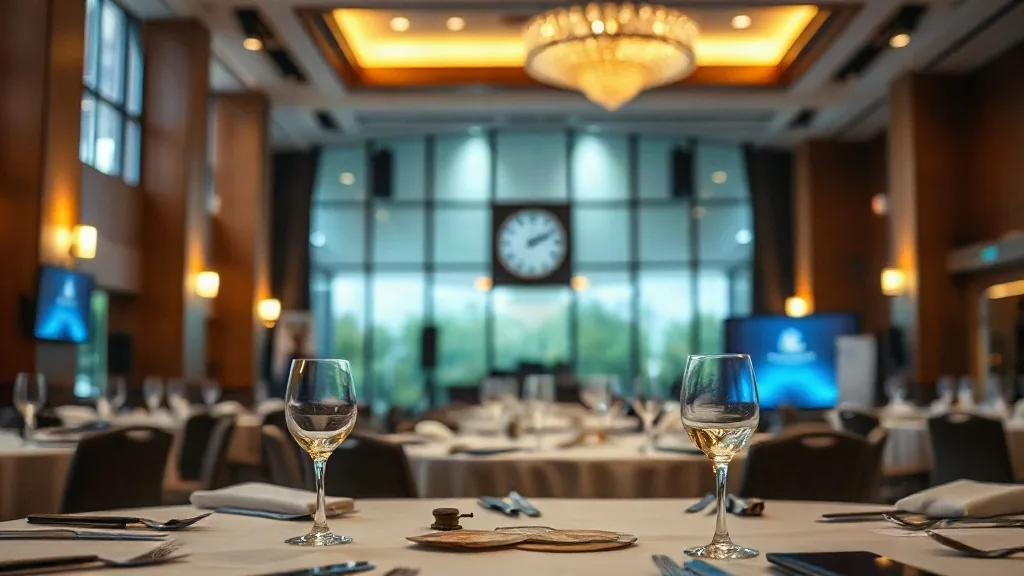
A countdown clock (typically a small display at the base of the podium, facing the presenter only) starts at 4 minutes when the winner reaches the microphone. At 3 minutes, the music begins to fade in at low volume (audible to the presenter and to guests near the stage, not overwhelming). At 4 minutes, the music rises to full. The presenter finishes and exits. The MC returns to the microphone.
This is the format used at the Academy Awards, the Grammys, and every major awards program that runs on time. It works because the visual clock is a commitment device: the winner knows when they will be removed from the spotlight and it concentrates their remarks.
What committees resist: they believe their industry winners deserve more time. What the data shows: acceptance speeches above 4 minutes produce net audience disengagement. The speaker is frequently less compelling after the first 3 minutes. The room’s attention drifts. The next award suffers.
Enforce the 4-minute cap. Communicate it in the winner notification letter, in the pre-event briefing, and in the MC’s introduction of each award. The clock is visible and there are no surprises.
The winner notification protocol
Winners should be notified 5-7 business days before the ceremony with:
- The category they won
- Their table assignment
- Guest-limit confirmation (if winners receive complimentary tables, confirm the count)
- Acceptance speech guidance (4-minute limit, suggested content: personal acknowledgment, organizational recognition, industry connection)
- Photography guidance (a photographer will meet them at stage exit; family/guests can gather at the designated photo area after the ceremony)
- Media release authorization (whether their name and company can be publicized in post-event coverage)
Do not publicly announce winners before the ceremony. The announcement moment in the room is a significant part of the value proposition for guests who paid to attend.
Budget
For a 300-person awards dinner at a mid-tier banquet hall with full production:
- Venue rental: $5,000-12,000
- Catering (reception + 3-course dinner, full bar): $35,000-65,000
- AV production (full awards ceremony package): $10,000-20,000
- Award trophy fabrication (10-12 awards at $150-350 each): $1,500-4,200
- Video production (nominee highlight reels, 90-second each): $6,000-14,000
- Printing (programs, signage, table cards): $2,000-4,500
- Event staff: $2,500-5,000
- Total: $62,000-124,700 for 300 guests
On a $150,000 table-and-sponsorship revenue structure, the margin is $25,000-88,000 before overhead and award committee costs.
What’s the industry, attendee count, and award category structure? Those three inputs drive the table pricing model and production scope.


