
Law-Firm Holiday Parties — Politics, Hierarchy, the Partners' Table
Law firms run on hierarchy, and their holiday parties are a direct expression of it. Getting the room layout, the seating logic, and the partner dynamics right is half the job. Here's what I've learned.

I have planned sixteen law firm holiday parties since 2015. I have planned them for small boutiques of thirty people and for firms with four hundred attorneys. I have planned them in DC, in Maryland, in Virginia, in New York when a client relocated. And the single thing I have learned — the thing that matters above every logistical detail — is that a law firm party is not a party. It is a managed social expression of an organization with an explicit, multi-tiered hierarchy that the attorneys are acutely aware of at all times, including when they are drinking a $16 glass of wine and pretending not to think about it.
The partner-to-associate dynamic, the equity-partner-to-counsel distinction, the managing-partner’s visibility, the practice-group politics — all of it is present in the room, and the event planner who treats a law firm holiday party like any other 200-person corporate celebration will produce an event that, technically speaking, went fine, and that people remember for the wrong reasons.
This is what I check for, and how I approach each piece.
The hierarchy question before you book anything
Before I touch a venue, I ask the firm contact — usually the executive director or office manager — to walk me through the firm’s seating logic. Not the full org chart; the seating logic. Specifically:
- Will equity partners expect to be at a designated table or area, or does the firm have a culture of mixing?
- Is the managing partner expected to have a visible position in the room — a head table, a defined area — or does the firm signal egalitarianism and actually mean it?
- Are there practice groups with significant political tension this year? (There almost always are.)
- Are spouses and partners included, and if so, are there individuals whose plus-ones complicate the seating geometry?
That last question is the one executive directors sometimes hesitate on. I keep asking gently. The information always matters.
Venue selection for law firms
Law firms have an image they maintain, and the holiday party venue is part of that image — for staff, for lateral hires who weren’t at the last one, and for senior associates evaluating the firm’s culture as they approach partnership decisions. The venue should feel like the firm’s self-image, not like what a hotel catering sales manager thought would impress a law firm.
What reads right
- Historic or architecturally significant spaces. Law firms have a long time horizon — the institution matters — and a venue with history reads as on-brand. Historic mansions in Virginia and historic venues in Washington DC are the two directories I work from most for DC-area firms.
- Private clubs. A city club, a bar association facility, or a museum’s members-only space. The exclusivity reads as appropriate rather than showy.
- Hotel ballrooms — but the right hotel. Not every hotel. The property that houses the firm’s client dinners and visiting-lawyer accommodations. There’s a specific hotel in every city that the legal community considers the default serious hotel, and the firms that use it for the party are not trying to impress anyone; they’re reinforcing the known.
What often misses
- Breweries, distilleries, trendy loft spaces. A thirty-attorney boutique with a young, lateral-heavy partnership might want this. A 200-attorney AmLaw firm with a traditional equity-partner culture almost certainly does not. When I receive a brief like this, I confirm the intended signal explicitly before I start searching.
- Restaurants with communal seating. Law firms need defined tables. Communal seating removes the ability to manage the room’s hierarchy, and someone will notice.
Room layout and the partners’ table
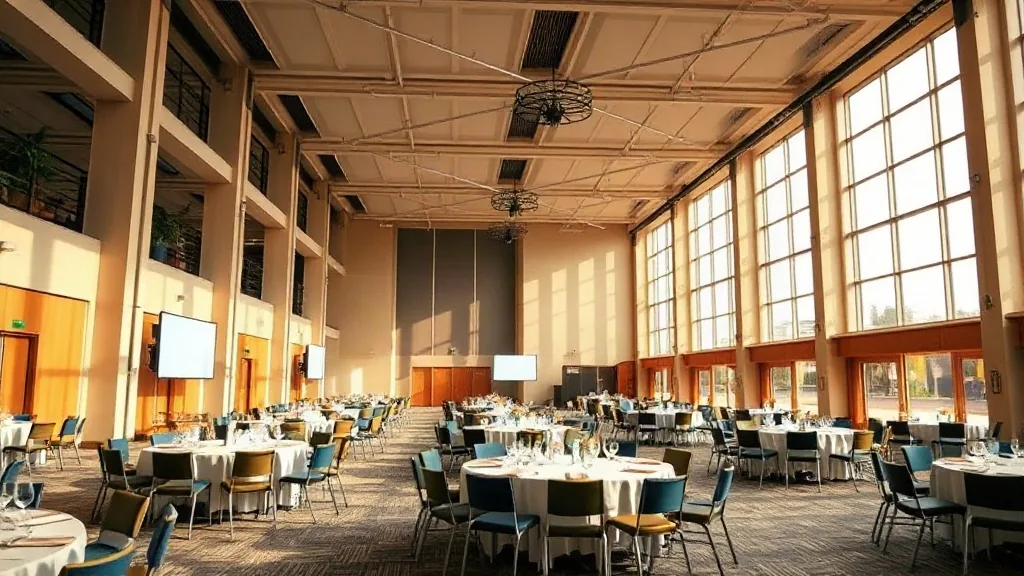
Every law firm I have worked with has some version of a partners’ table — a table or section where senior partners gravitate, whether or not it’s designated. My job is to understand whether the firm wants this formalized or not.
Formalized means a head table, a premium section, or a firm-assigned seating chart where equity partners share a defined area. This reads as traditional and is appropriate for firms with a traditional culture. If this is the approach, I work with the executive director to build the seating chart in full — not just the partners’ table, but the whole room — and I have a printed copy at the venue manager’s station for the night.
Not formalized means open seating with the expectation that partners will find each other anyway — they always do — but without the visual of a designated head section. This is the egalitarian signal. Even in this model, I make sure there are enough large tables that the senior partners can anchor one without displacing anyone.
The mistake I see from planners who haven’t done many law firm events is treating “open seating” as meaning the firm doesn’t care about seating. They care. They just want it to appear organic.
The associates’ experience
Here is the part that most law firm holiday-party briefs underspecify: the junior associates’ experience.
Associates — first through fourth year — attend the holiday party because it is expected. Many of them do not know the partners well. The room is full of people with more power than them in an institution where power is explicit. The event, if poorly designed, is a professional-obligation cocktail hour in a nice room.
What makes it different: programming that creates natural, low-stakes interaction across levels. I push for structured but light activities early in the evening — a game at cocktail tables, a photo moment, something that gives people a reason to talk that isn’t “tell me about your practice.” It lowers the activation energy for associates to approach partners, and it gives partners a social hook that isn’t evaluative.
I also recommend placing the food stations in locations that encourage movement across the room. Partners who fill plates at a station inevitably encounter associates doing the same, and those two minutes of proximity over a carving station produce more genuine conversation than a structured networking segment.
The managing partner’s remarks
Every firm does this differently, but most managing partners give brief remarks at some point in the evening. My default recommendation: before the meal, not after. Before-meal remarks set a tone and allow everyone to move into dinner with the formality discharged. After-meal remarks — especially after two hours of an open bar — carry more risk and more variable audience attention.
I always ask in advance: how long, and does the MP want a microphone or prefers to be heard without one? The answer tells me room configuration. For 60 people, no mic usually works. For 150, it rarely does, and a managing partner who insists on no microphone at 150 people is setting up a moment where half the room misses the remarks and the other half strains to hear. I make this case early and clearly.
Venue examples that work
For DC-area firms, the National Press Club’s event space has a seriousness and a legal-professional adjacency that firms in the policy world respond to. Meeting spaces in Washington DC covers the full category. For a smaller firm (under 80 people), the Hay-Adams has long been the capital’s unimpeachable choice for a law-firm dinner.
In New York, the Bar Association’s facilities on 44th Street are worth investigating for firms with a strong litigation culture — the institutional-legal setting is doing a lot of work. Meeting spaces in New York has the broader range.
For law firms with a national presence holding a retreat-style holiday dinner rather than an office party, the dynamics are different — the hierarchy is more geographically distributed, and the managing partner often prefers a resort or estate setting over a city venue. That’s a different brief, and I treat it as such.
The holiday party is performance, not celebration
I say this to every law firm client in our first meeting: the holiday party is not, primarily, a celebration. It is a managed social performance that the firm puts on every year to signal what it thinks of itself and its people. It can also be enjoyable — genuinely, memorably so — but only if the performance infrastructure is solid enough that people can stop thinking about it and actually relax.
The firms whose parties I hear about positively for years afterward are the ones that got the hierarchy logistics right so thoroughly that nobody had to think about them, and then added something memorable: a band that was surprisingly good, a venue that nobody expected, a moment in the remarks that was honest. The hierarchy is the floor. Everything enjoyable is built on top of it.
The DC corporate event venue directory is a good starting place for venue options, and the holiday party planning guide covers the logistics pressure that makes December so particular.
Send me the firm’s headcount, its culture read (traditional/egalitarian/somewhere between), and the year’s political context if you’re willing to share it — and I’ll tell you which venues and formats fit.


