
Holiday Party Month: A Survival Playbook for the People Who Plan Them
Every year, the seven weeks between Halloween and New Year's swallow the corporate events industry whole. Here's how I've stopped letting it swallow me, with the timeline, vendor list, and venue tactics I actually use.

The first holiday party I ever planned was the disaster I still tell new planners about. December 12, 2012, 90 people, a Coral Gables ballroom that was double-booked the morning of the event because the hotel’s salesperson had quit two weeks prior and nobody had picked up his accounts. We found out at 9am. The event was at 7pm. I will not tell you what I felt at 9:03am that morning but I will say it informed every holiday party I’ve planned since.
This is what I’ve learned. The version of this post for clients is much shorter. This is the long version, for planners who are about to walk into the seven-week stretch where the corporate events industry tries to kill you.
The shape of the season
Roughly: 200,000 corporate holiday parties get planned in the US between Halloween and New Year’s Eve. The peak is December 5-19. The valley is December 20-26 (then a small spike again Dec 27-30). The post-NYE return-to-office events cluster Jan 8-22.
Inside that, every venue, every caterer, every AV company, every parking lot, every transportation company, every florist, and every photographer is over-subscribed. The question is whether you booked early enough to be the over-subscriber’s priority client, or late enough that you’re the third-string contingency.
The answer depends on when you started.

My seasonal calendar
This is the timeline I work backwards from. Print it.
June — confirm headcount range with leadership. Set budget envelope. Send the “save the date” memo to your team’s calendars.
July — venue research begins. Pull the directory short list (3-5 candidates). Schedule walk-throughs for August.
August — walk-throughs. Send brief to top 2-3 venues. Lock the venue with deposit by August 31. Yes, August. If you wait until September, you’ve already lost.
September — caterer locked (if outside catering). AV company locked. Photographer locked. Save-the-date emails out to attendees.
October 1-15 — invitation design + RSVP system live. Menu tasting (yes, you should taste).
October 15-31 — RSVPs starting to land. Decor + entertainment + photographer details locked. Day-of timeline drafted.
November 1-15 — RSVP follow-ups. Final menu count discussions with caterer (don’t lock count yet). Run-of-show drafted with internal stakeholders.
November 15-30 — final-week vendor calls. Logistics walkthrough at venue (don’t skip this). Arrival/parking communications drafted.
Week of event — day-of timeline final. Vendor day-of contact list. Backup contingency for weather, no-shows, AV failure.
Day before — venue walk-through. Vendor confirmation calls. Day-of run-of-show printed and distributed.
Day of — survival mode. The plan you made in October is the plan that runs.
If you’re reading this in October or November and you don’t have a venue locked yet, the rules change. Skip to the “If you’re already late” section below.
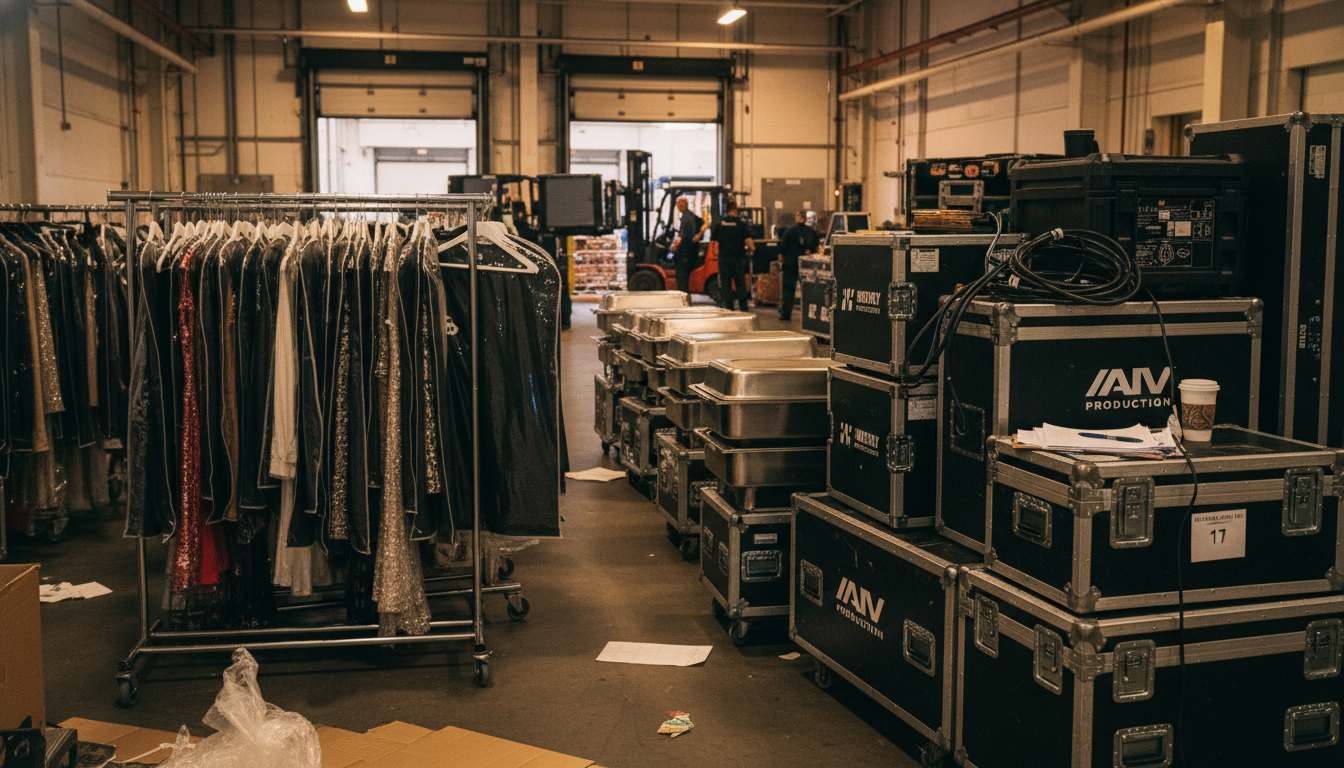
The vendor short list (build it now, use it forever)
The single biggest survival tool I have is a vendor list of people I trust who answer the phone. Here’s how I built mine:
One caterer per metro I work in regularly that I know will fit me in even when they’re booked. (You build this by giving them off-season business.)
One AV company per metro that has worked the venues I tend to use, so they don’t lose 2 hours figuring out the load-in.
One photographer per metro who’s done corporate events specifically and won’t try to art-direct your CEO into a candid laughing pose.
One transportation company per metro that handles charter buses and sedan service. Knock-on benefit: they often have weather contingency built in.
One florist or decor person per metro. Same logic.
One emergency-fix person. Hard to define until you need them. Mine in Miami is a guy named Carlos who has run venue ops for three different hotels and now does freelance event production. When the AC died at a venue in 2019, I called Carlos at 2pm, he was there at 4pm with a portable cooling unit and a backup plan.
You cannot build this list in November. You build it in February-September of the prior year.
The venue conversation that saves Q4
In August, when you call your top-3 candidates, ask the same three questions of each:
- “What’s your busiest week of December and how many other events are you running that week?” (You want to know if you’re event #1, #4, or #9 the night you’re booking.)
- “Who is the dedicated event manager for our event, and is there a backup?” (You want a name, not “the team.”)
- “What’s your weather contingency? If we contracted for outdoor and it rains, what’s the indoor backup and what’s the cost?” (Some venues charge for the contingency; some don’t. Find out before you book.)
The venue’s answers to these three questions will tell you which one to book. The venue with the cleanest answers — even at a slightly higher price — will save you money on day-of in chaos avoidance.
The vendor cascade
Here’s the failure mode I’ve learned to plan for:
- Venue is the first thing you book. Lock it August.
- If you wait on caterer, caterer fills up and you get stuck with venue’s preferred which is mediocre.
- If you wait on AV, AV fills up and you get stuck with the venue’s $$$ preferred.
- If you wait on photographer, you get the new one whose work is fine but who hasn’t shot 200-person corporate before.
- If you wait on transportation, you get a 2-hour pickup window because the company has to triple-stack you.
Each of these stack. By the third week of November, every vendor below tier-1 in your metro is booked. The tier-1 vendors fill earlier. If you’re not in the system by September, you’re fighting for tier-2.
The internal coordination conversation
This is the one that nobody warns you about. Internal stakeholders treat the holiday party as their personal canvas in October-November and start asking for changes you cannot make:
- “Can we add 30 people?” → After menu count locked, this is a 20-30% cost increase, not a 15% increase.
- “Can we move it forward an hour?” → Vendors don’t all have flex. One yes can break three.
- “Can we add a band?” → AV redesign, additional rental, additional staffing, additional load-in time.
- “Can my team’s plus-ones come?” → Headcount creep is the silent budget killer.
Your job in October is to put the run-of-show in writing, get sign-off, and then refer to the sign-off when changes come up in November. Polite, immovable.
My personal rules
After fourteen years of this:
- Never plan a holiday party for my own employer in the same year I’m planning client parties. I did this in 2018. It almost killed me. Now I outsource my own company’s party to another planner.
- Block a full week off the first week of January. I cannot do another event for at least 7 days after the last December event. This is non-negotiable.
- Walk every venue in person between September and November. Photos lie. People lie. The room is the room.
- Day-of, eat lunch by 11am. You will not eat dinner at the event. You will be working dinner. Eat now.
- Day-of, find one quiet corner of the venue early and identify it as your fallback regroup point. If something blows up, you need a place to think for 90 seconds.
If you’re already late
Reading this in mid-November and you don’t have a venue?
- Open the directory’s city × category landing page for your city. Filter for capacity bands that match your headcount.
- Send the same brief — date, time, headcount, budget — to ten venues at once. Don’t customize.
- Reply within 4 hours to anyone who responds. Speed matters more than charm at this point.
- Accept that you may end up at a venue that wasn’t your first choice. It’s December. You’re booking what’s available.
- For caterer, AV, and other vendors, call your tier-2 list directly. Email is too slow.
The good news: every year, some events cancel or rebook. There are usually 1-2 venues per metro that have 1-2 December weeknight slots open as late as November 20. Find them.
What I wish someone had told me on day one
Holiday season is a logistics season, not a creative season. The “creative” decisions all need to happen in August. From October on, you’re executing what you decided.
The planners who survive November-December well are the ones who treated July-September like the busy season. The ones who didn’t are the ones eating cold catering at 8pm on a Tuesday in mid-December and whisper-arguing with a venue manager about the AC.
Make the calendar. Use the calendar. Build the vendor list. Use the vendor list. The rest is execution.
For more on how F&B minimums work (relevant for every holiday party negotiation), see F&B Minimum, Decoded. For contract red flags I scan for, see 11 Contract Red Flags. And if you want a holiday venue short list for a specific city, send me the brief.


