Miami vs Orlando for a Corporate Conference: What Changes Between 200 and 800 Attendees
Miami's hotel and venue scene wins at 200-300 attendees. Above 500, Orlando's convention infrastructure takes over and the per-head cost gap justifies the trade.

I’ve booked both cities more times than I can count, and the one thing I’ve learned is that headcount is the only variable that actually matters. Not industry, not vibe, not which city has better restaurants. Headcount.
Below 300 attendees, Miami wins. Above 500, Orlando wins. Between 300 and 500, you’re doing math.
Why Miami Works Below 300
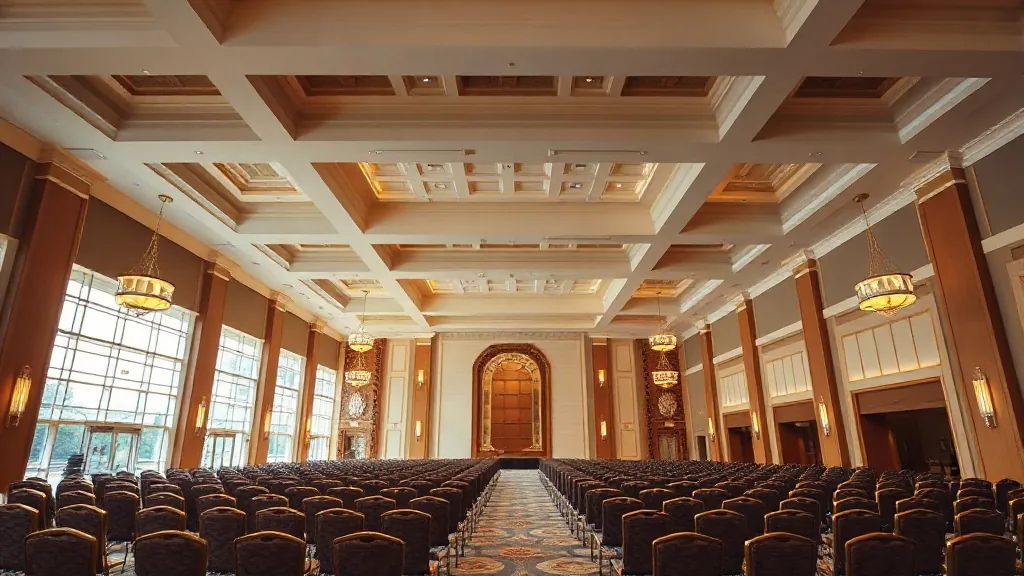
Miami’s hotel conference inventory is built around the 150-300 person sweet spot. Properties like the Brickell City Centre hotels, the EAST Miami, and the Four Seasons Brickell all have ballroom space for 200-300 in theater setup, built-in AV infrastructure, and the kind of social programming (rooftop bars, South Beach access, waterfront restaurants) that makes a conference feel like a reward rather than an obligation.

The negotiated group rate at a full-service Brickell or Midtown Miami hotel runs $249-$349 per night for a January or March event. Room block attrition protection is typically 80% of the blocked rooms, which is standard.
For a 200-person conference at these properties, you’re looking at a single hotel venue that handles general session, breakouts, and room block in one property. That single-property setup is worth $12,000-$20,000 in coordination savings because you’re not managing a convention center contract separately from a hotel contract.
Miami’s weakness is scale. Above 350 attendees in a single general session, your options thin out fast. The Loews Miami Beach can handle 500 in a ballroom, but you’re now at a beach resort that prices accordingly, and the beach crowds in the Fontainebleau area make transportation between the hotel and Brickell a friction point.
Why Orlando Takes Over Above 500
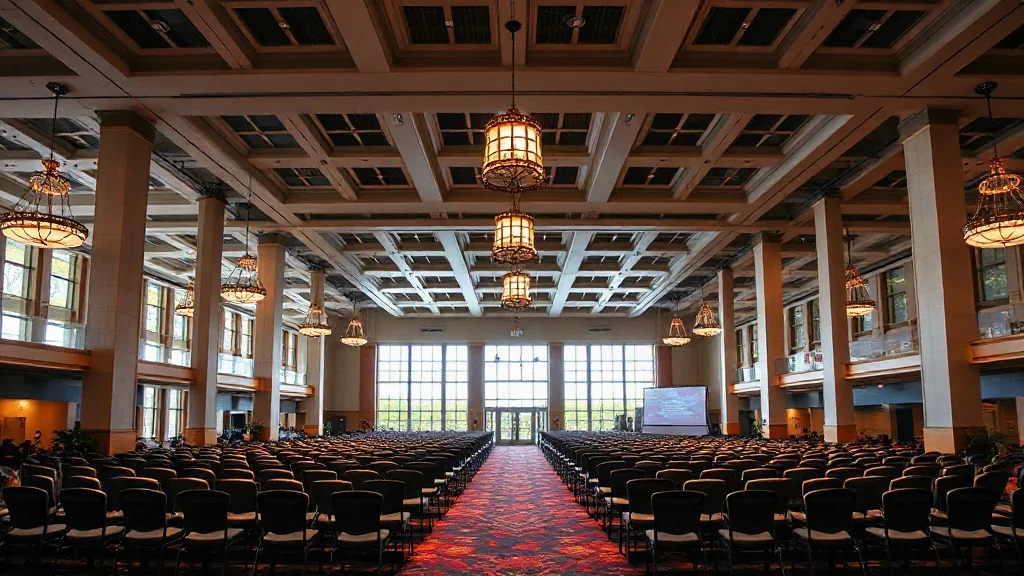
The Orange County Convention Center is one of the five largest convention facilities in the United States. Its North-South Concourse alone handles 10,000 people for a general session. At 500-800 attendees, the West Concourse gives you a purpose-built conference environment with rigging capacity, multiple breakout rooms, and a service contractor ecosystem that runs smoothly because they set up 200 events a year in the same space.
Convention centers have a fixed-cost structure that produces lower per-head cost as headcount grows. The Orange County Convention Center’s rental rate for a basic three-day event at 500-800 attendees runs $35,000-$65,000 for the physical space. That sounds high until you compare it to getting a Miami hotel ballroom large enough for 600 people, which doesn’t exist at reasonable prices.
Orlando’s hotel room block rates also run below Miami’s. A negotiated group rate at a convention-adjacent full-service hotel (the Marriott World Center, the Hilton Orlando, the Hyatt Regency Orlando) for a corporate conference in the 500-800 person range runs $189-$249 per night. That’s $50-$100 per room per night below comparable Miami rates.
Room Block Math at the Breakpoints
| Headcount | Rooms needed (70% booking rate) | Miami rate (2 nights) | Orlando rate (2 nights) | Difference |
|---|---|---|---|---|
| 200 attendees | 140 rooms | $69,720-$97,720 | $52,920-$69,720 | $17K-$28K in Orlando’s favor |
| 400 attendees | 280 rooms | $139,440-$195,440 | $105,840-$139,440 | $34K-$56K in Orlando’s favor |
| 800 attendees | 560 rooms | $278,880-$390,880 | $211,680-$278,880 | $67K-$112K in Orlando’s favor |
At 200 attendees, the $17,000-$28,000 room block difference may not justify giving up Miami’s atmosphere. At 800 attendees, the $67,000-$112,000 difference is a real budget decision.
What Miami Gives You That Orlando Can’t
Miami signals aspiration. Your conference attendees from the Northeast or Midwest will book Miami with less friction than they’ll book Orlando. The hotel brand, the city name, the proximity to South Beach, the food scene: all of it reads as destination in a way that Orlando’s convention corridor doesn’t, unless your attendees are bringing their families to Disney.
For a conference where attendance is voluntary and competition for registrants is part of your market position, Miami can add 10-15% to registration. At $1,500/registration, that’s $30,000-$45,000 in additional revenue at 200 attendees. That math changes the breakeven point.
What Orlando Gives You That Miami Can’t
Operational simplicity at scale. Convention center staff at OCCC know the exact loading dock sequence for a 600-person general session. They have the service contractors on speed dial. You don’t reinvent anything because they’ve run the same event 300 times.
Orlando also has the hotel room inventory to avoid attrition risk at large headcounts. Asking 600 people to use 480 rooms in a single Miami hotel is a capacity problem. In Orlando, you can split the block between two adjacent Marriott properties connected by a walkway, which I’ve done. It works.
The Recommendation
Under 300 attendees: Miami. The atmosphere earns the premium and the single-property setup saves coordination cost.

300-500 attendees: run actual proposals from both cities. The breakeven is in this range and it depends on your specific dates, room block requirements, and whether your audience values the destination.
Above 500 attendees: Orlando. The convention infrastructure scales, the room block cost is materially lower, and the single-property or adjacent-property setup at the convention center hotels makes the operation manageable.
The F&B Minimum Difference
Miami’s hotel F&B minimums are set against the city’s restaurant economy. A full-service Miami hotel’s F&B minimum for a 200-person conference at $28,000-$38,000 per day is supported by catering quality that is genuinely competitive with Miami’s restaurant scene.
Orlando’s convention-adjacent hotels have F&B minimums in the $22,000-$32,000 range for 200 people, and the catering is good but volume-focused. For a conference where the seated dinner is a program highlight, Miami’s catering quality justifies part of its premium. For a conference where lunch is fuel and dinner is an off-property restaurant buyout, the quality difference disappears and Orlando’s lower minimum is pure savings.
Convention Services Staff: the Operational Depth Factor
Convention services staff run your conference from the venue’s side. They set rooms, coordinate catering timing with AV, and handle the operational details that keep a multi-day conference running. Orlando’s OCCC convention services staff have run hundreds of events identical to yours. They have templates and institutional knowledge built over decades of convention operations.
Miami’s hotel convention services teams are smaller because the event scale is smaller. Ask any Miami hotel venue coordinator how many 300-person conferences they’ve handled in the past 12 months. That number tells you more about operational confidence than any site visit.
Search conference centers in Florida for current availability in both markets. If you’re comparing the two cities for a specific date, get proposals in hand for both before committing to either.
For the room block and attrition mechanics that drive this math, see room block math for a three-day conference and attrition clauses explained for non-lawyers.
Tell me your headcount, target date, and whether your attendees are coming from inside or outside Florida. The answer is almost always in those three facts.