I Made a Microclimate Map of NYC Rooftop Venues — and 4 Are Wrong All Year
After three rooftops in two years where the wind, the heat, or both made the event a mess, I started keeping notes. Two years and 41 walk-throughs later, here's what I found.

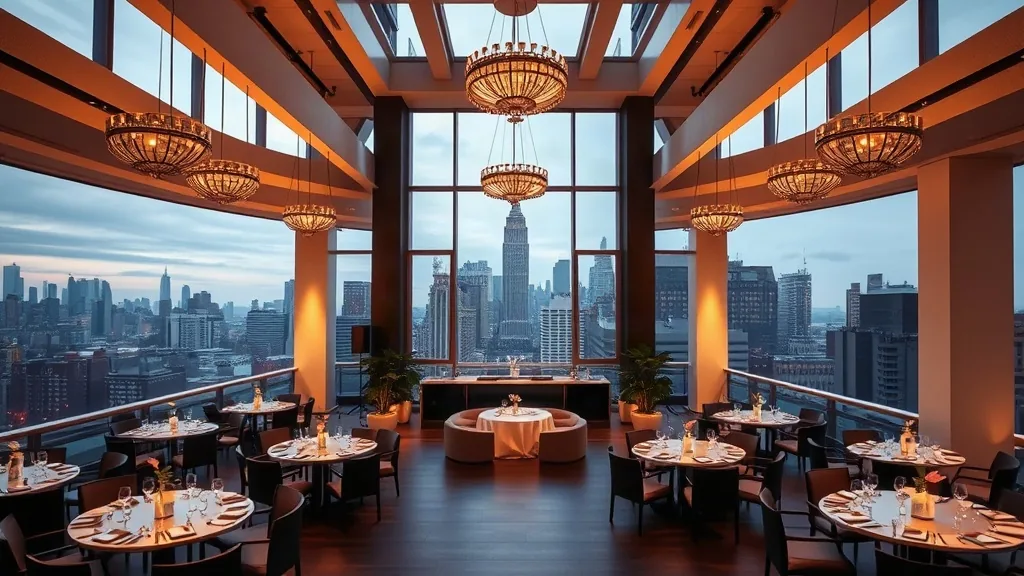
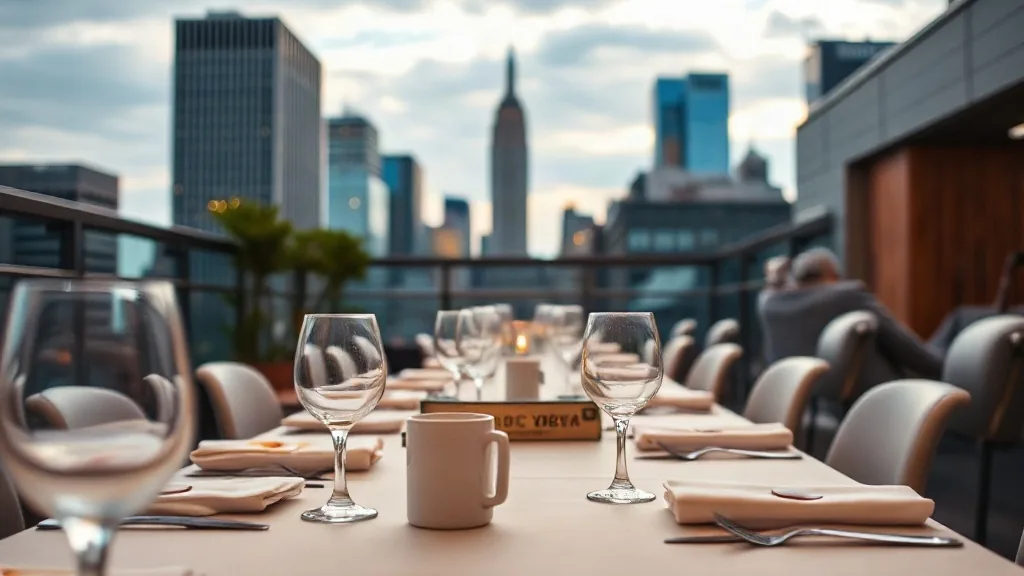
The first one was a financial-services holiday party in November 2022. Midtown rooftop, 200 guests, the venue had photos of cocktail tables under string lights and a clear view of the Empire State Building. Looked perfect. The night of the event, the wind was hitting that building at 19 mph sustained and gusting to 31. The string lights stayed up. The cocktail napkins did not. The host’s hair did not. The photographer’s lens went sideways for half the event. We stood in 35-degree wind chill for 45 minutes before the COO finally said “let’s just go inside.”
The next year a different client booked a Lower Manhattan rooftop for a June kickoff. Same logic — looked great in photos, sunset view, all the right boxes. June 14, 4pm, 91°F on the street. Up on that roof it was 103° because of the urban heat island effect plus the radiant heat from the Hudson-side glass building right behind it. Six people had to leave before the keynote. Two needed cold compresses.
By the third one in a row I started keeping notes.
This is the result of two years of those notes — 41 NYC rooftops walked, weather-checked, and (in a few cases) thermometer-verified. Some of the conclusions surprised me. Four of these venues are wrong almost any time you’d actually want to use them, and the planners who keep booking them are working from photos, not from the actual roof.
If you want the broader inventory, the full list of NYC rooftop venues we track has hundreds. This post is the microclimate framework I use to filter that list — and the venues I’d specifically avoid because the rooftop they show you isn’t the rooftop you’ll actually be standing on.
The four microclimate effects that matter
After enough walk-throughs you start seeing patterns. There are four distinct effects that will mess up an outdoor event in NYC, and most planners don’t think about any of them at booking time.
1. The West Side Highway updraft
Buildings on the West Side, roughly West 30th through West 59th, that face the Hudson get a sustained updraft from the river-cooled air pulled up the building face. On a 78°F summer evening that updraft is genuinely refreshing. On a 62°F October evening it’s a steady 12-15 mph wind that turns a cocktail event into a hold-onto-your-napkin situation.
Venues to be cautious about: anything along 11th Avenue from Hudson Yards north to about 57th, and a couple of West 44th/45th Street properties whose rooftops face west. Walk those venues between 5 and 7pm in the actual season you’re planning the event for. If the staff are wearing windbreakers, you have your answer.
2. The Midtown urban heat island
Midtown between 38th and 59th, especially east of 6th Avenue, is one of the hottest microclimates in any major US city in summer — the dense glass buildings retain and re-radiate solar heat well into evening. Rooftop temperatures up there in July and August can be 8-12°F warmer than the official airport reading at 6pm.
You don’t notice this in May. You notice it in late June. By mid-July a Midtown rooftop event at 6pm is 96-98°F when the weather app says 86°. People sweat through suit jackets in the first hour. I now refuse to book Midtown rooftops for sit-down dinners between June 15 and September 5, full stop.
3. The Brooklyn waterfront wind shear
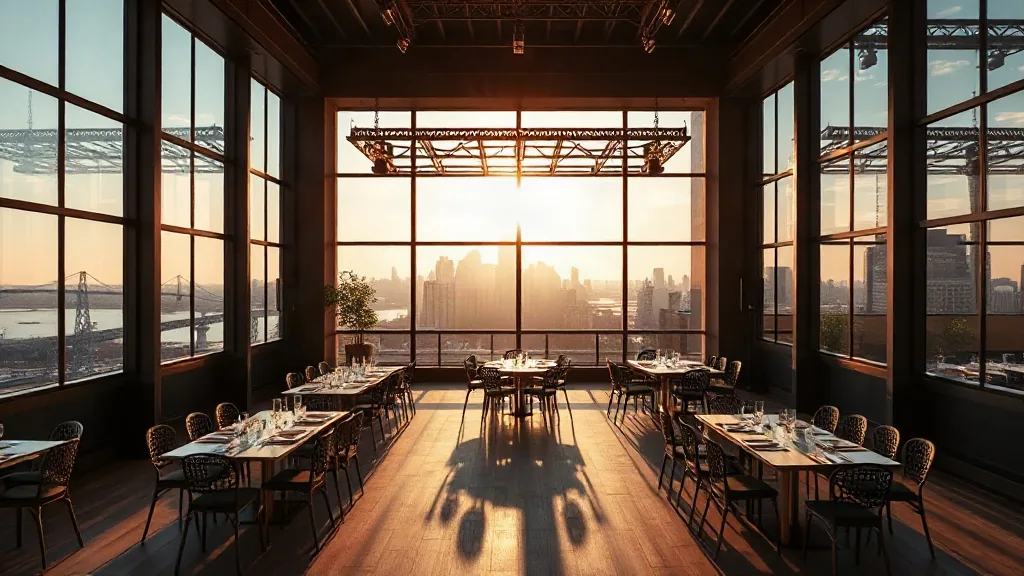
This one is specific and weird. Rooftops in DUMBO and Williamsburg facing the East River get a measurable wind shear effect — calm conditions in Manhattan, 14-18 mph wind on the Brooklyn side at the same hour. The river acts as a wind tunnel between Manhattan and Brooklyn buildings, and the height of the new Brooklyn waterfront construction has amplified it since 2020.
I learned this the hard way at a 90-person product launch in DUMBO in May 2024. Manhattan was glassy still. The DUMBO rooftop was so windy we had to weight every cocktail-table cloth and the AV team had to re-route the speaker cable because it kept whipping into the camera frame.
The fix: walk the venue in the same season + same time of day. The DUMBO/Williamsburg microclimate is well-documented enough that the venues will tell you about it if you ask the right question — which is “how often do you have to cancel the rooftop portion?” not “does it ever get windy?”
4. The Lower Manhattan inversion layer
In late September through November and again in March-April, Lower Manhattan (roughly Battery Park up through Tribeca) gets evening temperature inversions where cool harbor air settles in the streets and warm urban air sits above. On certain nights this means the rooftop is 6-8°F warmer than the street — pleasant. On other nights, when the inversion layer breaks, you get sudden 20-mph wind shifts and a 12-15°F temperature drop in 90 minutes.
You can’t predict it perfectly, but you can check the NOAA inversion-layer forecast (yes, it exists, look for “marine boundary layer”) for the day of your event. If the forecast shows a likely break window during your event hours, plan an indoor backup.
The four NYC rooftops I’d avoid most of the year
These are the ones where the microclimate is so bad relative to how the venue photographs that I think planners are walking into bookings they wouldn’t make if they’d seen the actual conditions.
I’m not going to name them by venue name because the people who run them are doing their best with what they’ve got, and most of these places work fine for a daytime corporate event or a windless September night. But here’s how I’d describe them so you can spot them in your own short list:
- A Midtown East rooftop with a glass canopy on the south side. The canopy acts as a heat-trap; the rooftop gets a “greenhouse” effect from May through early September that the venue staff doesn’t acknowledge. (Their workaround is to tell you to do the event later in the evening, which doesn’t actually solve it.)
- A Lower Manhattan rooftop that wraps around three sides of a 42-story building. The wrap means there’s always a windy side; the venue rotates which side they tell you to use depending on conditions, but the side they’re recommending isn’t necessarily the side that’ll work for your event setup.
- A West Side Highway-facing penthouse rooftop on 11th Avenue. The river updraft is constant. They have removable wind walls but they’re loud (clear vinyl flapping in 14 mph wind sounds like a sail). Beautiful in calm August. Bad May, October, November.
- A DUMBO rooftop that touts the Manhattan skyline view. The skyline view is real; the wind shear is also real. The venue acknowledges this in the contract (look for the “weather permitting” clause attached to the rooftop portion specifically) but doesn’t volunteer it in the tour.
What to ask on the rooftop walk-through
Three questions, in this order:
- “What time of year are your most cancellations?” Honest venues will say something specific — “we move events inside about 18% of the time in October” or “wind is mostly a March-April issue.” If they say “very rarely,” they haven’t tracked it.
- “How often do you do a sit-down dinner outdoors here, versus a cocktail reception?” Sit-downs are sensitive to wind and temperature in ways receptions aren’t. A venue that does mostly receptions on the roof is telling you something about their wind tolerance.
- “Can you show me the rooftop right now?” If the answer is anything other than “yes, follow me,” the rooftop is in worse shape than the photos suggest.
What I do now
Before I book any NYC rooftop for a corporate event, I:
- Walk it at the same time of day + same week of year I’m planning the event for. (Not “in the same season.” The same week. Microclimates shift by week in shoulder months.)
- Check the NOAA marine boundary layer forecast for the historical pattern that month at that location.
- Check what direction the prevailing wind comes from in that month at that location. (Wunderground has decent historical hourly data.)
- Walk to the corner of the rooftop where my keynote stage or speaker rig will go. Stand there 5 minutes. Notice what your hair is doing.
- Ask the venue to show me their cancellation rate on rooftops by month. If they don’t have one, I assume the worst.
It sounds like a lot. It takes maybe 90 minutes per venue. It has saved me about $0 in direct cost and probably $200K in client-trust capital over two years.
For more on what to do when the weather actually does break the venue, see The Keynote That Almost Didn’t Happen. For the broader Manhattan offsite list, see 7 Manhattan Off-Site Venues for Mid-Size Teams or browse the wider NYC rooftop directory.
If you’ve got a NYC rooftop you’re considering and you want a sanity check on the microclimate for your specific date, send the address and the time of year. I’ll pull the historical wind and temperature data and tell you what I think.