
'Networking' Is Dead — Try Concentric-Circle Programming Instead
Open networking at corporate events produces 11 minutes of conversation per attendee on average. Concentric-circle programming produces 47. I ran both at the same conference two years in a row.

I ran the same healthcare conference two years in a row, same audience demographic, similar attendee count, same city. Year one: standard cocktail hour with open networking, badge-and-mingle format. Year two: concentric-circle programming, which I’ll explain in detail in a moment.
I measured both with a simple post-event survey question: “How many people did you have a meaningful conversation with during the networking portion of today’s event?” Meaningful was defined for respondents as a conversation that lasted more than five minutes and that you would remember in a week.
Year one average: 2.1 conversations. Year two average: 4.3 conversations. The duration estimates for those conversations followed the same ratio. Average conversation length in year one: approximately eleven minutes. Year two: approximately twenty-two minutes per conversation.
Same people, same context, same budget allocation for the networking portion. Different structure. Twice the conversational output.
This was not a rigorous academic study. It was one internal post-event survey with a 68% response rate. But the pattern matched what I’d been observing for years before I had the data to confirm it: open networking at corporate events consistently underperforms structured networking, and we keep doing open networking because it requires less planning and we can call it “organic.”
Organic means unplanned. Unplanned networking doesn’t produce more authentic conversations — it produces more awkward ones, and more people standing alone near the food table.
What open networking actually looks like
For anyone who has attended a corporate event as a non-keynote speaker, non-executive attendee — as a regular person who showed up to learn and connect — I’ll describe the experience honestly:
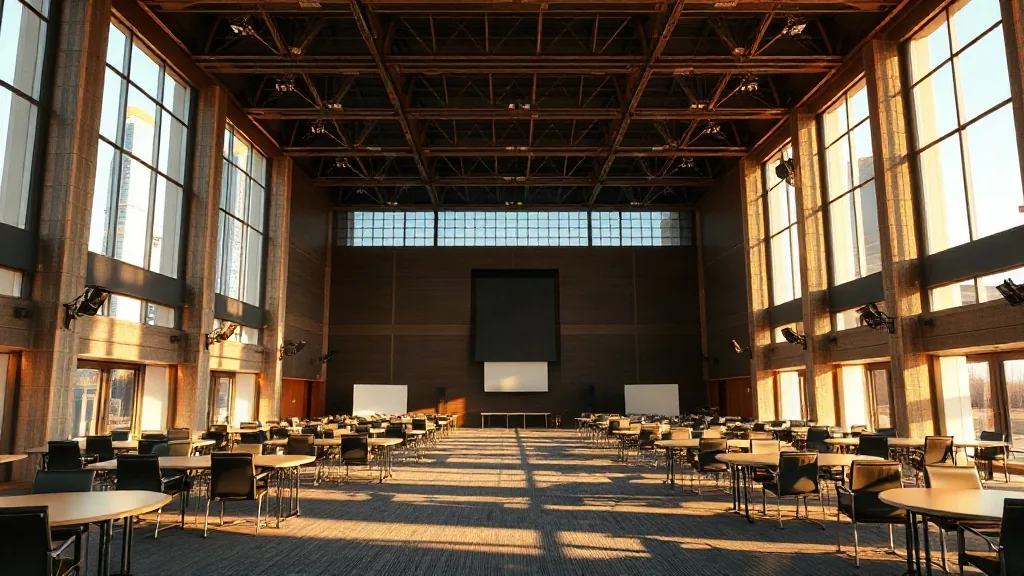
You arrive at the cocktail reception. You know three people in the room. You find one of them immediately. You talk with them for fifteen minutes about something you were already talking about at work. You get food. You circle the room once looking for someone you can approach naturally. You find it hard because everyone is already in conversation or they’re also circling. You end up talking with the person standing near you at the bar because the approach was simple and low-risk. The conversation is pleasant but generic — “what do you do,” “how long have you been in the field,” the same answers you give at every event. Forty minutes pass. You have had 1.8 conversations.
This is not a failure of social skills. This is the predictable output of a format that provides no structure, no prompts, and no scaffolding for people who don’t already know each other to begin conversations on topics of mutual relevance.
What concentric-circle programming looks like
The name comes from the physical format, which you can run with or without the circular seating arrangement.
The basic structure: Attendees are given one question at the start of the networking period. Not “introduce yourself” — a specific, content-relevant question. At the healthcare conference, we used: “What’s one thing that changed about how you work with patients (or leadership, or compliance) in the last eighteen months?”
Attendees pair up with someone they do not work with. They answer the question to each other. Four minutes per person, eight minutes total. Then one person moves — either physically (if you’re doing the rotating format) or by agreed protocol — and they repeat with a new partner.
Over a 45-minute cocktail period, with appropriate pacing, each attendee has four to five structured conversations, each anchored on a substantive question with a specific answer. Those conversations have a direction, a content core, and a natural conclusion. They’re not open-ended small talk. They’re specific exchanges that give the person something memorable to have said and something memorable to have heard.
The outcomes: Attendees know more about the field from the people they talked to. They have more specific reasons to follow up — “you mentioned the documentation system change, can I send you what we did?” — than generic networking ever produces. And the conversations are, counterintuitively, more comfortable for introverts and for people who are newer to the field, because the question is the same for everyone and nobody has to manufacture an opening.
The objections I hear every time
“That feels forced.” I used to agree with this. Then I ran year two and the post-event comments consistently described the networking as “more natural” than year one. Participants experienced the structured format as less forced because they didn’t have to create their own opening — the opening was given to them. The “forced” feeling is in the description, not in the experience.
“Our executives don’t like that format.” I’ve run this format in rooms full of C-suite people. Executives who are confident networkers are not disadvantaged by a structure — they work within it easily. Executives who are not naturally social are dramatically helped by it. The format benefits everyone below the top quartile of social comfort in the room without penalizing the top quartile.
“It’s not scalable for our 500-person event.” It scales. You break 500 people into ten groups of 50, each with a facilitator, each running simultaneously. The logistics are more complex but the format works at any scale. I’ve seen versions of it run at 800-person conferences.
“We don’t have time to design the questions.” The question design takes thirty minutes if you know your audience and event theme. It’s the cheapest high-impact investment in the event program you can make. At a healthcare conference, I draft three questions and let the client pick one. Thirty minutes of my time, twice the conversational output.
The question design
The question needs to do three things: be specific to the field or the event theme, have a real personal answer (not a generic professional answer), and be short enough to hold in working memory.
Good examples from events I’ve run:
- “What’s the one thing you learned in the last year that changed how you approach your job?”
- “What’s one decision your organization made that you’d make differently if you could?”
- “What’s the resource or tool you’re using that you think more people in this field should know about?”
Bad examples (too generic, too open-ended):
- “Tell me about your work.”
- “What brings you to this conference?”
- “What are you hoping to get out of today?”
The test for a question: can it be answered in sixty seconds with a specific, personal, content-rich answer? If the answer to the test question requires setup — “well, it depends…” or “there’s a lot of context here…” — the question is too open. Narrow it.
Venue implications
The concentric-circle format works best in spaces that allow for movement, either physical rotation or simple partner-swapping. Cocktail hours in traditional ballroom setups — round tables, restricted walking paths, a bar at one end — work against the format because they anchor people to locations.
When I’m specifying a venue for an event where networking quality matters, I now look specifically at cocktail reception layout options: can the room be cleared of stationary tables? Is there enough floor space for a standing rotation? Can the room setup be hybrid — some standing areas, some seated conversation clusters — to give people options?
Conference centers in Florida that specialize in corporate events often have more flexible cocktail reception configurations than hotel ballrooms, because their design prioritizes programming flexibility over traditional banquet setup. For events in Miami and South Florida specifically, Miami conference centers and Fort Lauderdale waterfront venues tend to have outdoor reception areas that are ideal for the rotation format — the physical movement feels natural in an outdoor setting in a way it doesn’t in a carpeted ballroom.
When you’re comparing venues, ask specifically: “Can you show me how this space sets for a cocktail reception where we want attendees moving around?” Their answer — and the physical space — will tell you whether the concentric-circle format is viable.
The thing nobody wants to say
Open networking at corporate events is popular with planners because it requires the least programming work. Put up some cocktail tables, set the bar, and call it networking. The result is consistently mediocre, and attendees consistently leave feeling like they didn’t connect with enough people.
Structured networking requires thirty minutes of question design and a facilitator for the first five minutes to explain the format. The result is consistently better, and attendees leave naming specific conversations as a highlight of the event.
We keep doing the mediocre thing because it’s easier. That’s worth saying plainly.
Two related reads worth pairing with this: why the cocktail hour is 25 minutes too long — the 35-minute format I recommend aligns well with the concentric-circle rotation timing — and why your CEO hates giving the speeches you put on the agenda, which covers the same underlying problem from the program design side.
Send me your event agenda. I’ll show you where the concentric-circle format fits and what question to use.


