Outdoor Garden vs Indoor Venue for a Spring Event: Weather-Risk Pricing by Region
Tent, heater, and generator rental for a garden event in April runs $9,000-$22,000 depending on region and size. Factor that against an indoor fallback and the math often reverses.

Spring is the most optimistic season for event planning and the most punishing for planners who didn’t account for weather. I’ve run outdoor garden events in March and April in Florida, Virginia, and Georgia. The Florida events have a 70% chance of working out. The Virginia events in March have closer to a 50% chance. Georgia in April is fine unless it’s a La Nina year, in which case it’s 60 degrees and raining on your seated dinner.
Here’s the regional breakdown and the add-on cost that determines whether the garden event is worth the risk.
Weather Probability by Region and Month
These aren’t fabricated statistics; they’re my working estimates based on historical patterns for outdoor corporate events, where “workable weather” means above 58 degrees and no precipitation:
| Region | March probability of workable weather | April probability | May probability |
|---|---|---|---|
| South Florida (Miami, Fort Lauderdale) | 80% | 78% | 72% (heat begins) |
| North Florida, Georgia, Alabama | 65% | 75% | 82% |
| Mid-Atlantic (DC, Baltimore, Philadelphia) | 48% | 62% | 74% |
| Southeast interior (Nashville, Charlotte) | 55% | 70% | 78% |
| Texas (Dallas, Houston, San Antonio) | 68% | 72% | 75% |
| Midwest (Chicago, Detroit, Minneapolis) | 28% | 48% | 68% |
| Pacific Northwest (Seattle, Portland) | 30% | 42% | 55% |
If your outdoor garden event date falls in a region-month with below 65% probability, you need either weather protection infrastructure or an indoor fallback in the contract.
The Full Add-On Cost for Outdoor Weather Protection
Here’s what tent, heater, and generator rental costs for a 150-person garden dinner:
| Item | Cost range | Notes |
|---|---|---|
| Clear-span tent (30x60, fits 150 for dinner) | $3,200-$5,800 | Delivery, setup, and strike included |
| Tent flooring (hardwood or rubber roll) | $2,800-$5,200 | Required for uneven garden surfaces |
| Propane heaters (12-15 units) | $1,100-$1,800 | Per event |
| Generator (20kw, runs HVAC + lighting + heaters) | $700-$1,200 | Includes fuel for 6-hour event |
| Tent lighting (string lights or temporary fixtures) | $800-$1,600 | Tents don’t include ambient lighting |
| Total weather protection | $8,600-$15,600 | Doesn’t include installation labor for some markets |
Add another $1,500-$2,500 for a 200-person event. The tent footprint scales.
At $8,600-$15,600 for weather protection, you’ve added $57-$104 per head to a 150-person event before you’ve spent a dollar on catering, venue rental, or anything else.
Indoor Venue Cost for Comparison
A 150-person garden reception indoors at a comparable quality venue (banquet hall, hotel ballroom, event space) in most tier-2 US cities runs $3,500-$7,000 in venue rental. No tent, no heaters, no generator. You add $3,500-$7,000 in venue rental and remove $8,600-$15,600 in weather protection infrastructure. The indoor venue saves $5,100-$8,600 net.
The indoor venue has zero weather-cancellation risk, which means you also save the weather-cancellation insurance rider ($400-$800 for a $60,000 event), and you don’t spend $1,200-$2,000 of your planning time in the 10 days before the event refreshing weather apps.
When the Garden Wins Anyway
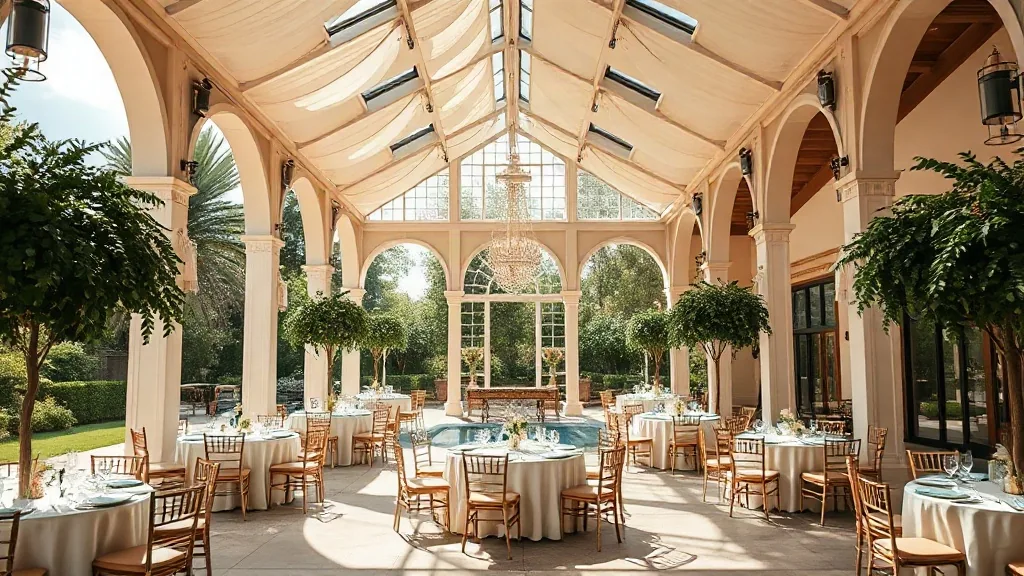
The atmosphere. An outdoor garden dinner in Savannah in April, or in Charleston in May, or in a Washington DC garden with cherry blossoms, is a genuinely better experience than a hotel ballroom. If you’re running a client appreciation dinner for 80 people and the outdoor garden is a 120-year-old mansion’s formal garden in bloom, that experience is worth the weather infrastructure cost.
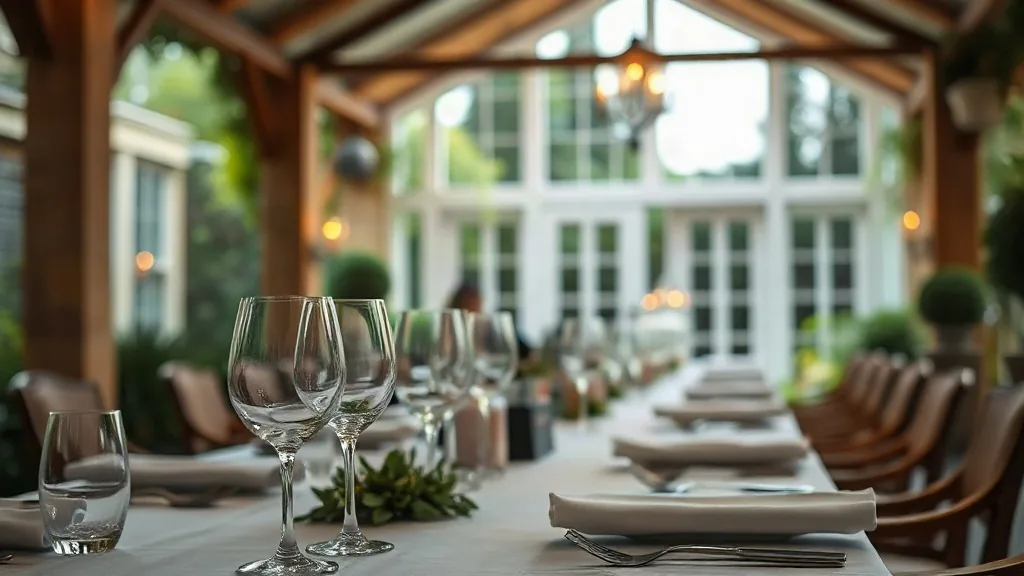
It’s also worth noting that a fully tented outdoor event isn’t the same as an indoor event. A clear-span tent in a garden preserves some of the outdoor atmosphere (open sides, garden views through the tent walls, ambient outdoor sounds) while providing weather protection. It’s not as good as a perfect spring day, but it’s better than a ballroom.
The Contract Clause That Protects You
Any outdoor garden venue booking should include a force majeure clause that covers weather cancellation, with a specific trigger definition: National Weather Service forecast of greater than 60% precipitation probability at event location within 24 hours of event start, or temperature below 50 degrees Fahrenheit at event start time.
I’ve added that exact language to outdoor event contracts for the past four years. It’s resulted in two full renegotiations (one full refund, one full rebooking credit) and zero disputes at the event itself.
Without that clause, “weather cancellation” is defined by the venue, not you. Their definition will be a named storm. Your actual problem will be a cold rainy April night.
Decision Table by Region and Month
| Region | March | April | May |
|---|---|---|---|
| South Florida | Garden OK, add tent as option | Garden OK | Indoor preferred (heat) |
| Southeast (GA, SC, AL) | Indoor safer | Garden OK with tent option | Garden works |
| Mid-Atlantic | Indoor required | Indoor safer, garden with full tent stack | Garden OK |
| Texas | Garden OK with tent option | Garden works | Garden works |
| Midwest | Indoor required | Indoor safer | Garden with tent option |
The Lighting Consideration for Garden Events
One item that outdoor garden budgets consistently underestimate: lighting after 7pm. In March and April, sunset is between 7:15pm and 7:45pm in most of the US. An outdoor dinner that starts at 6:30pm and runs until 9pm needs lighting for the second half of the event.
String lights over a garden dinner table are romantic in photos and inadequate for a working dinner where guests need to read menus, see food, and maintain eye contact in conversation. String lights at 15 lumens per bulb provide ambient glow, not functional illumination.
For a properly lit outdoor dinner that runs into the evening, you need: overhead string lighting (aesthetic layer), perimeter landscape lighting (safety and directional), and task lighting at tables (candles or votives at minimum). Renting a temporary light rig for a 150-person garden dinner runs $1,800-$3,500 beyond what the venue typically includes.
An indoor ballroom or banquet hall has overhead lighting that can be adjusted from 10% to 100% brightness with a dimmer board. No extra rental, no weather risk, and your venue looks the same at 6:30pm as it does at 9:00pm.
The Guest Experience Consistency Argument
Outdoor garden events have a higher variance in guest experience within the same event. Guests near the heated tent edge are cold; guests near the center are comfortable. Guests upwind of the catering station smell the food before dinner; guests at the far side of the garden may not hear the program announcement over ambient outdoor noise. The event designer’s intended experience and the guest’s actual experience diverge more often in outdoor settings.
Indoor venues produce consistent experiences by definition. The temperature is the same at every table. The acoustic environment is controlled. Guests seated at the perimeter and guests seated at the center have the same experience of the program.
For a client dinner where the guest experience needs to be consistently excellent rather than variable, the indoor venue is the safer choice.
Browse outdoor and garden venues for your region and ask each venue what their weather policy covers before you sign. For the contract language that protects against weather-related financial loss, see force majeure in venue contracts and event insurance cost by size and venue type.
What region and what month? Those two facts determine whether the garden event is a good idea or an expensive optimism.