
The 30-Minute Pre-Event Vendor Briefing That Prevents 80% of Day-Of Problems
A structured pre-event vendor call covers run-of-show review, load-in sequence, escalation contacts, and failure protocols in 30 minutes. Most planners skip it and spend three to five hours on event day solving problems that the call would have prevented. The agenda and the script are repeatable across every event type.

Two days before a 350-person product launch in Austin, I ran a 35-minute pre-event call with six vendor leads: AV, catering, event lighting, security, registration, and venue operations. We walked through the run-of-show, confirmed load-in sequence, and worked through three contingency scenarios.
The event ran without a single unscheduled interruption. I’ve run that call for every event I’ve produced since 2019. The events where clients skip it are not events I’m proud of.
The call is not a status update. It’s a structured decision-making session for the people who will be in the room when something goes wrong.
Who should be on the call
Invite the day-of lead for every vendor category, not the account manager or the booking contact. You want the person who will be in the building running the event.
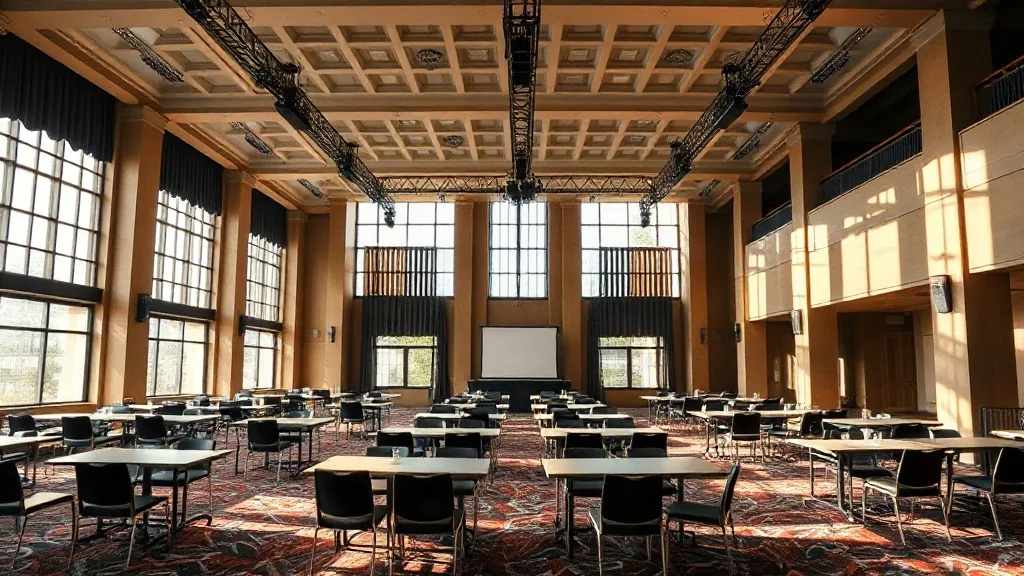
For a full-day conference, that typically includes:
- AV lead (or technical director for complex productions)
- Catering manager or banquet captain
- Venue operations contact (not the sales manager)
- Security lead if applicable
- Registration team lead
- Any specialty vendor with a significant setup or strike requirement (lighting, floral, specialty F&B)
Exclude: the client-side executives who aren’t doing day-of work. The CEO doesn’t need to hear the load-in sequence; the lead planner does.
The five-section agenda
Section 1: Run-of-show walkthrough (10 minutes)
Walk through the run-of-show chronologically, starting with load-in. The goal is not a full narrative read; it’s confirming that each vendor’s assigned time blocks are confirmed and conflict-free.
Cover:
- Vendor load-in sequence and start times
- Event start and end times
- Major program transitions (when general session breaks for lunch, when breakouts begin, when dinner service starts)
- Load-out timing
Ask each vendor to confirm their times verbally. “AV, you’re in at 5am, audio check at 8am, and you’re clear for the first panel by 8:45. Is that still the plan?”
Any vendor who says “actually, we need to shift that 30 minutes” has just saved you a load-in conflict that you’d otherwise discover at 5:15am.
Section 2: On-site contact confirmation (5 minutes)
Every vendor lead provides their day-of phone number and confirms they will have that number active from load-in through strike. Then every vendor receives every other vendor’s number.
This sounds obvious. It isn’t. Most vendors have their booking contact in the planner’s phone but not the AV lead’s cell or the catering manager’s direct line. When the mic fails and the AV lead needs to tell the catering captain to hold service, they need a number that rings directly, not a main office line.
Create a shared contact list with name, role, and day-of cell for every person on the call. Distribute it at the end of the call. It should be the last page of the printed run-of-show.
Section 3: Load-in logistics (5 minutes)
Confirm the load-in sequence explicitly: who goes in first, who follows, and what the conflict points are.
Cover:
- Service entrance access time and point of contact
- Elevator capacity and schedule (if multiple vendors are competing for the same access)
- Parking for vendor vehicles
- Whether venue staff need to be present for vendor access and who that person is
If you’re at an event venue with a dedicated loading area, this section is often straightforward. If you’re at a hotel and resort with a single service elevator and six other events on the same day, this section is the most important thing you discuss.
Section 4: Failure protocols (7 minutes)
This is the section most pre-event calls skip, and it’s where the 80% comes from. Work through the three most likely failure scenarios for your specific event.
For a conference with a keynote speaker:
- “If the keynote speaker is delayed by 15 minutes, AV holds the title slide, the emcee holds at the front of the room, and [registration lead name] texts me immediately. We do not announce a delay until the 10-minute mark.”
For a catering event with hot meal service:
- “If the kitchen is behind on the plated entrée, catering manager calls me directly, not through the venue sales contact. We have a 12-minute service buffer before the program schedule is affected.”
For any AV setup:
- “If the primary projector fails, AV has a backup unit staged near the mix position. Swap time is 8 minutes. I will hold the emcee at the podium with ad-lib talking points for up to 10 minutes.”
The failure protocol is not about predicting disasters. It’s about making sure no vendor invents a solution on the spot. Pre-approved protocols, with decision authority designated in advance, move faster and produce better outcomes than improvised crisis management.
Section 5: Open questions and final confirmation (3 minutes)
Ask each vendor lead: “Is there anything on your end that could affect the schedule that we haven’t covered?”
Most of the time, nothing comes up. Occasionally someone mentions a crew shortage, a delivery window conflict, or a piece of equipment that’s being tested. Those items are manageable if you hear about them 48 hours before the event. They’re not manageable when the AV lead tells you at 6am that they’re two people short.
Close with: “We’re confirmed for [event date]. You all have each other’s numbers. If anything changes before the event, contact me and copy the relevant vendor leads. See you on-site.”
When to schedule the call
48-72 hours before the event. Not a week out (too early for day-of leads to confirm their crews) and not the night before (vendors are staging and packing, not in meeting mode).
If your event is on a Friday, hold the call on Tuesday or Wednesday. Thursday night calls with vendors who are staging equipment don’t get full attention.
For smaller events
A 75-person dinner at a conference center doesn’t need a six-vendor call. It needs a 15-minute check with the AV lead and the catering manager. The format is the same: confirm times, exchange day-of cells, discuss one or two contingencies. The discipline of the call scales down with the event.
What doesn’t scale down is the mindset that the call is optional. I’ve skipped the pre-event call twice in six years. Both events had avoidable day-of problems. That’s a 100% correlation in my sample of two, which isn’t statistically significant, but it’s enough to keep the call on my pre-event checklist regardless of event size.
A note on the venue operations contact
For hotels and resorts, the sales manager who booked your event is rarely the person who shows up on event day. The event is handed off to a convention services manager (CSM) or a banquet operations coordinator. Get this person’s name and direct number before the pre-event call and make sure they’re on the call or at minimum briefed on the run-of-show. The handoff gap between sales and operations is one of the most common sources of day-of surprises at hotel venues.
What’s your event headcount and your primary vendor count? Those two numbers tell me how long your pre-event call should run and which failure protocols are most important to work through.


