
Private Equity Offsites Are Keynote-Free — Here's What They Do Instead
PE firm offsites don't look like tech company retreats or banking conferences. No keynote, no general session, no branded stage. They run on a different format entirely — and the venue has to match it.

I planned my first private equity firm offsite in 2016, and I went in with the wrong mental model. I had the general-session room set up theater style, the AV rigged for a keynote presentation, a registration table with branded lanyards, and a run-of-show that assumed a content-delivery arc followed by a networking reception. I had, in other words, planned a conference.
The managing partner looked at the setup on site visit and said, gently but clearly, that this wasn’t what they had in mind.
What they had in mind was a working session. A big table. Their twenty senior people in chairs around it. A facilitated discussion that ran all day. A dinner that evening — small, no speeches, the right wine, the conversation continuing from where the day left off. And then a half-day the following morning.
No stage. No lectern. No keynote. No branding. No badges.
That was my orientation to private equity offsite culture, and it has not materially changed in the years since. The format is distinct, the venue requirements are specific, and the planners who treat a PE firm offsite like a corporate conference produce the wrong event.
Why PE offsites run the way they do
Private equity firms are, at their core, partnership structures with concentrated decision-making authority at the top. The senior partners in the room have worked together for years, have established views on each other’s judgment, and gather for the offsite to make decisions — not to be presented to, not to be inspired, not to network with each other (they already know each other very well).

The keynote format — one expert addressing a seated audience — is philosophically wrong for this group. The PE offsite is a working meeting that happens away from the office, in a setting that encourages frankness and produces decisions that the daily pace of office life doesn’t allow.
The format that works: a round or rectangle table large enough for the whole group, a skilled facilitator (often from outside the firm, sometimes a senior internal voice), an agenda that’s a question list rather than a session list, and enough time for real disagreement to resolve rather than paper over.
The evening component is equally important. A private dinner — genuinely private, not a hotel banquet room, not a restaurant with other diners — where the conversation continues without the agenda’s structure. The dinner is where the things that didn’t get said in the working session get said. Every experienced PE offsite planner knows this, and every venue has to support it.
Venue requirements
The venue requirements for a PE offsite follow directly from the format.
The main room
A single, serious conference table that seats the whole group. Not a u-shape, not rounds, not classroom. A rectangle or oval that puts everyone in the same visual plane, with no implicit head unless the firm explicitly wants one.
The room should be private — genuinely private, not a ballroom with dividers. The conversation in a PE offsite working session is frank about portfolio companies, partner performance, and fund strategy. It requires a room with no adjacency risk.
Natural light matters for an all-day session. A windowless hotel basement conference room produces an energy problem by mid-afternoon that no amount of coffee resolves. If the venue has a choice between a windowless room and a room with natural light, the natural light room is always right for this format.
The dining space
The dinner venue needs to be as private as the working session. I look for one of two configurations:
- A private dining room that seats the whole group, within or adjacent to the working-session venue. No other diners in the same space.
- A reservation at a restaurant that has a private room, with a menu managed in advance so there’s no awkward ordering process.
The second option requires more vetting. Some restaurants’ private rooms are genuinely private — separate entrance, separate server, acoustically isolated from the main dining room. Others are just a curtained section of the main dining room. For a PE dinner, only the first type works.
Location
PE firms pick offsite locations with a different logic than tech companies. The choice is not about the Instagram aesthetic or the team-building activity options. It is about getting a group of senior, extremely busy people out of the office in a way that justifies the travel cost and produces a productive day.
The criteria that matter: ease of travel from where the partners are based, a setting that is different enough from the office to encourage a different conversation, and accommodation that doesn’t create its own logistical complications.
The private resort model — a small luxury resort rented out, or a block of rooms at a property that can accommodate the group without other large events — works well because it eliminates the hotel-lobby noise and the “who else is here” dynamic. For a 15-20 person PE partnership, a private estate rental (with full catering brought in) is also common and often preferred by the most senior partners.
Country clubs in Georgia — specifically the private clubs in the Atlanta suburbs, which serve a significant PE community — are a regular venue category for this work. The private-club format, with dining rooms and meeting rooms that are exclusively member-facing, solves the privacy and quality requirements simultaneously.
For a New York-based PE firm doing an off-site outside the city, the Hudson Valley, Connecticut, and New Jersey options are the working geography. Meeting spaces in New York doesn’t fully capture these, but the venue category overlaps with the country club and private estate listings.
The facilitation question
The single biggest decision in a PE offsite is not the venue; it’s the facilitation structure. A badly facilitated PE offsite is an expensive day of conversation that doesn’t produce decisions. A well-facilitated one produces a year’s worth of strategic alignment in two days.
I don’t facilitate these events — that’s not my role — but I have strong opinions about the formats that work, drawn from watching many of them.
What doesn’t work: A management consultant running a frameworks-and-slides session. PE partners have seen every framework; presenting frameworks to this group is a fast way to lose the room.
What works: A skilled, senior facilitator who has worked with investment-grade decision-makers before, who can hold a large group conversation without letting it drift, and who knows when to let disagreement breathe and when to call a decision. The best PE offsite facilitators I’ve seen are former operating executives or retired managing partners from other firms — people who speak the language as a peer.
The choice of facilitator changes the venue requirements slightly: an external facilitator often needs a prep session before the main day, which requires either arriving the evening before or having a private space on the day.
What the catering needs to be
PE offsites have specific catering requirements that differ from the standard corporate conference.
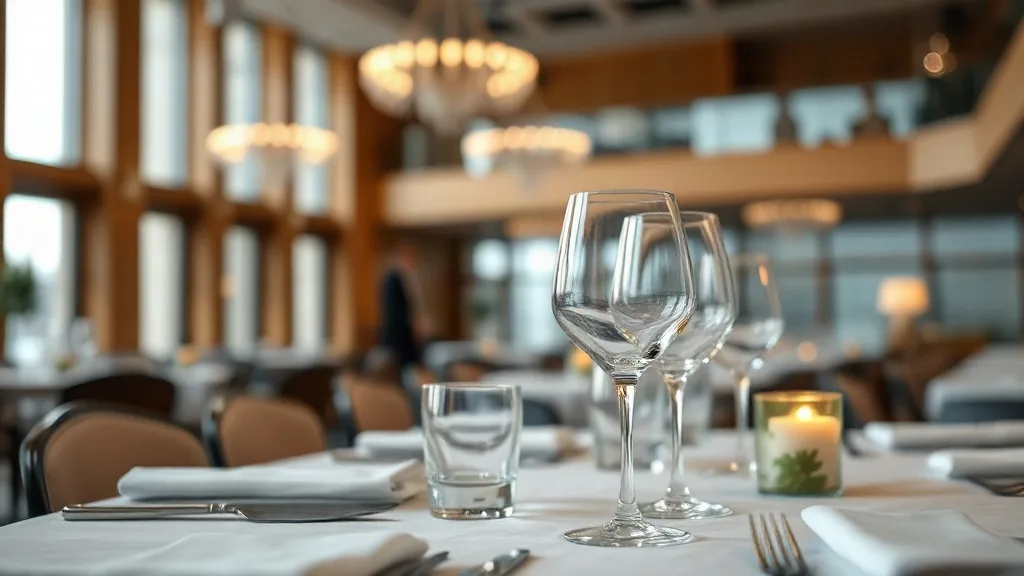
- Working lunches, not buffet spreads. The group is at the table all day; food comes to them. A buffet requires people to stand up, move, and break the session’s momentum. Plated working lunches — simple, quick, not elaborate — keep the conversation going through the meal.
- Quality, not quantity. A PE firm offsite is not an incentive trip; it’s a working meeting. The food should be excellent and unfussy. Three-course lunches with tableside service are an overshoot. Exceptional ingredients with minimal ceremony are right.
- The dinner is different. The evening dinner is the one elaborate moment. Wine program should be curated and presented (not just poured), menu should be discussed with the host or managing partner in advance, and the pacing should be slow — this is the event’s long exhale, and the catering has to support a three-hour dinner that nobody is rushing.
Budget expectations
PE firm offsites run at a higher per-head cost than most corporate events of comparable size, because the format — private settings, elevated catering, facilitation fees — concentrates spend on quality rather than scale.
A 20-person PE partnership offsite, two days, with private accommodations, working sessions, and an elevated dinner, typically runs $2,500-$5,000 per head all-in at a high-quality venue, or $50,000-$100,000 for the group. For a firm managing a multi-hundred-million-dollar fund, this is a small investment in a meeting that sets the direction for the year.
The Charlotte banking-district venue guide covers the finance-adjacent venue inventory in one of the country’s busiest financial markets — several venues on that list are well-suited to PE firm events. For Atlanta-based PE activity, meeting spaces in Atlanta Georgia is the directory.
Send me the headcount, the partnership structure (how many equity partners vs. junior partners vs. operating partners in the room), and the city — and I’ll build the format and venue search around what actually produces decisions.


