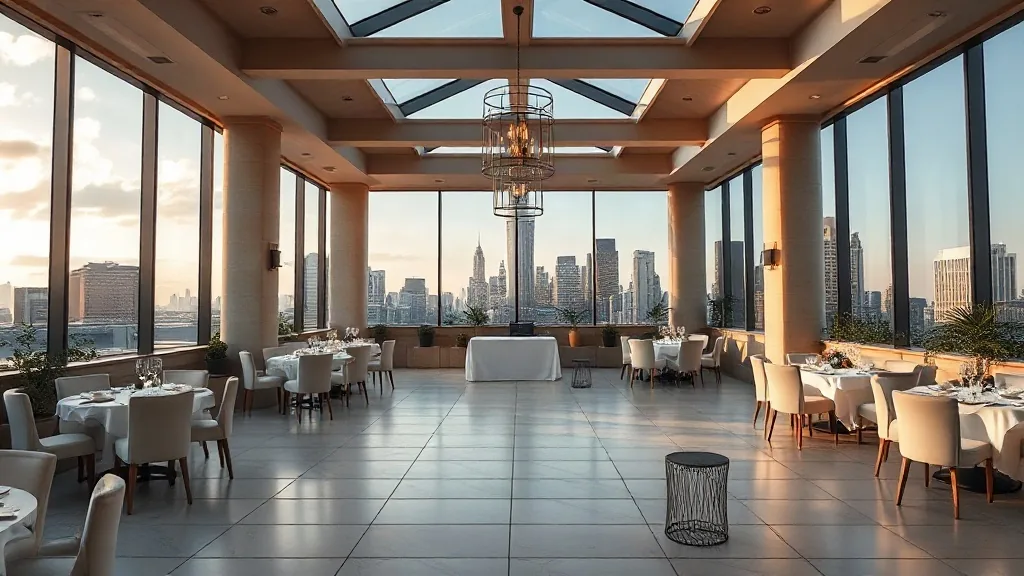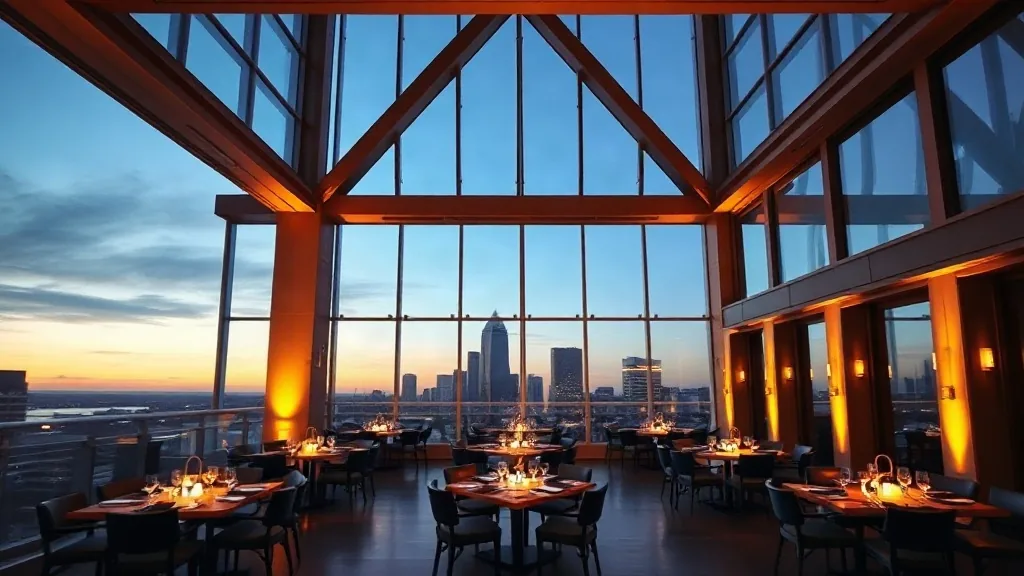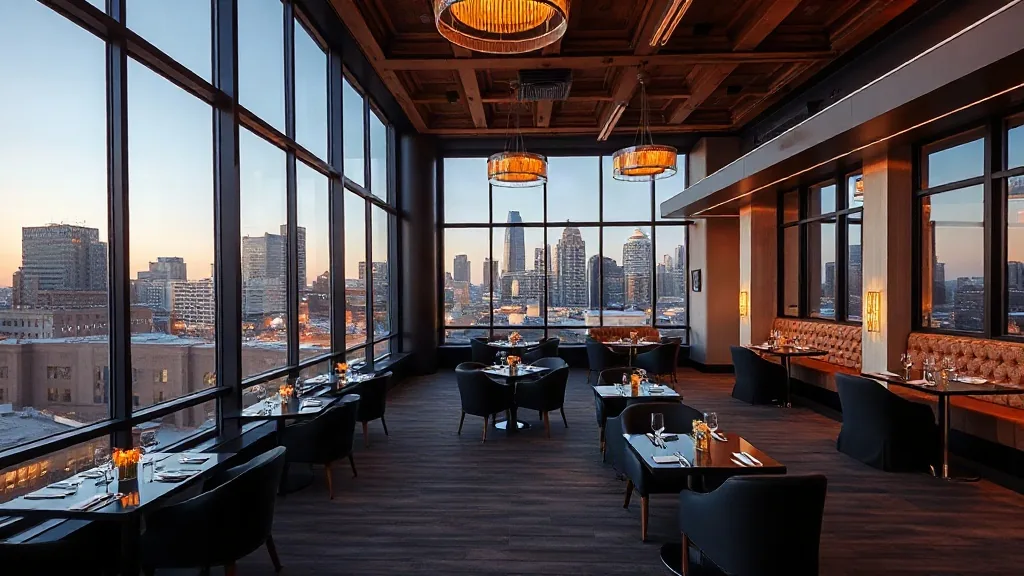
Rooftop vs Ballroom for a Company Gala: the Weather-Risk Calculus
A tent and heater package for a rooftop gala in October adds $8,000-$18,000 to your base rental. Factor in the insurance rider and you may have already closed the cost gap with a ballroom.

The rooftop looks better in the proposal photos. It always does. But the rooftop is not a venue; it’s a location that becomes a venue only after you add everything a ballroom already has.
Here’s the weather-risk math and what it does to the comparison.
The Tent and Heater Add-On Cost
An uncovered rooftop in October in most US cities is a gamble. Below 55 degrees, guests stop staying outside after 20 minutes regardless of how good the view is. Wind chill at elevation makes the temperature feel 8-12 degrees colder than ground level.
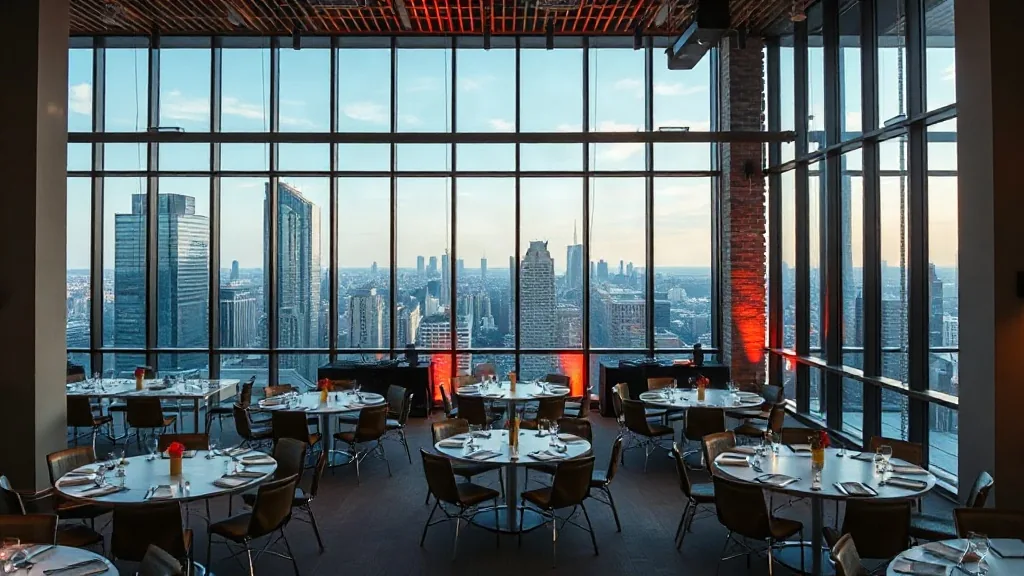
A tent package for a 200-person rooftop gala runs $6,000-$12,000 depending on the structure type and the city. A clear-span tent that allows the view while providing wind and rain protection is $9,000-$15,000. Propane patio heaters (one per 200 square feet, approximately 15 for a 3,000-square-foot tent) run $85-$120 per unit for a 6-hour rental, so $1,275-$1,800 for the heater set.
Total weather protection for a 200-person rooftop gala: $8,000-$18,000. That’s before you add the flooring (most rooftops are not event-floored), which runs $3,000-$7,000 for a temporary hardwood or rubber event floor. And before the generator, because tent lighting and heaters pull more power than most rooftop electrical systems can handle. Generator rental for this scope: $800-$1,500.
You’re at $11,800-$26,500 in add-ons before you count the venue rental itself.
The Insurance Rider Difference
Every rooftop venue I’ve worked with requires a special event insurance rider with $1-$2 million in general liability minimum, and many now require a weather-cancellation endorsement that covers your deposit loss if a weather event forces cancellation.
Weather-cancellation coverage for a $80,000 gala with $25,000 in non-refundable deposits runs $600-$1,200 in premium. That’s a real line item that doesn’t exist for a ballroom event.
A ballroom venue will still require general liability coverage (standard $1M minimum), but the probability of weather-related cancellation for an indoor event is essentially zero, so the rider is simpler and cheaper.
Guest-Dress Code Friction
This is the factor nobody talks about in writing and everybody complains about at the event. If your gala has a formal or black-tie dress code, guests attending a rooftop event in October in Chicago, New York, or Denver have to navigate the cold in formal wear. Women in gowns and heels on a tent-covered rooftop in 48-degree weather is not the experience the photos suggested.
This isn’t an insurmountable problem. You solve it with a staffed coat check at the rooftop entrance, shuttle service from the lobby so guests aren’t waiting outside, and heaters positioned at the entry point. That solution adds $1,200-$2,500 in staff and equipment cost.
But it’s worth being honest with your planning committee: the rooftop gala in October is a logistics challenge that a November ballroom gala is not.
Decision Tree: Rooftop or Ballroom
Choose the rooftop if:
- Event is in May, June, or September (lower weather risk in most US cities)
- Headcount is under 150 (smaller tents are more manageable and cost-effective)
- Your audience explicitly values the outdoor experience and the photos over comfort predictability
- Budget includes the full add-on stack without strain
Choose the ballroom if:
- Event is October through March
- Headcount is above 200
- You have any portion of your guest list with mobility limitations (rooftop access, uneven surfaces, and heeled footwear on outdoor tile is a real accessibility problem)
- Your company’s senior leadership group is the primary audience and you want reliability over atmosphere
Cost Comparison for 200 Guests in October, Mid-Tier US City
| Line Item | Ballroom Gala | Rooftop Gala |
|---|---|---|
| Venue rental | $4,000-$8,000 | $5,000-$10,000 |
| Tent package | $0 | $8,000-$15,000 |
| Heaters | $0 | $1,300-$1,800 |
| Event flooring | $0 | $3,000-$7,000 |
| Generator | $0 | $800-$1,500 |
| Insurance rider premium | $300-$600 | $700-$1,400 |
| Coat check and entry staffing | $400-$800 | $1,200-$2,500 |
| Total overhead | $4,700-$9,400 | $20,000-$39,200 |
The rooftop’s base rental is sometimes lower than a ballroom rental. The add-on stack almost always reverses the comparison by October.
When the Rooftop Wins Cleanly
June events in coastal cities. The weather risk is low, the evenings are warm, the sky is still light at 8pm, and the photo opportunities are at their best. A June rooftop gala in Miami, San Diego, or even New York with a clear weather forecast needs only a light tent structure or none at all, bringing your total add-on cost to $3,000-$5,000 instead of $20,000.
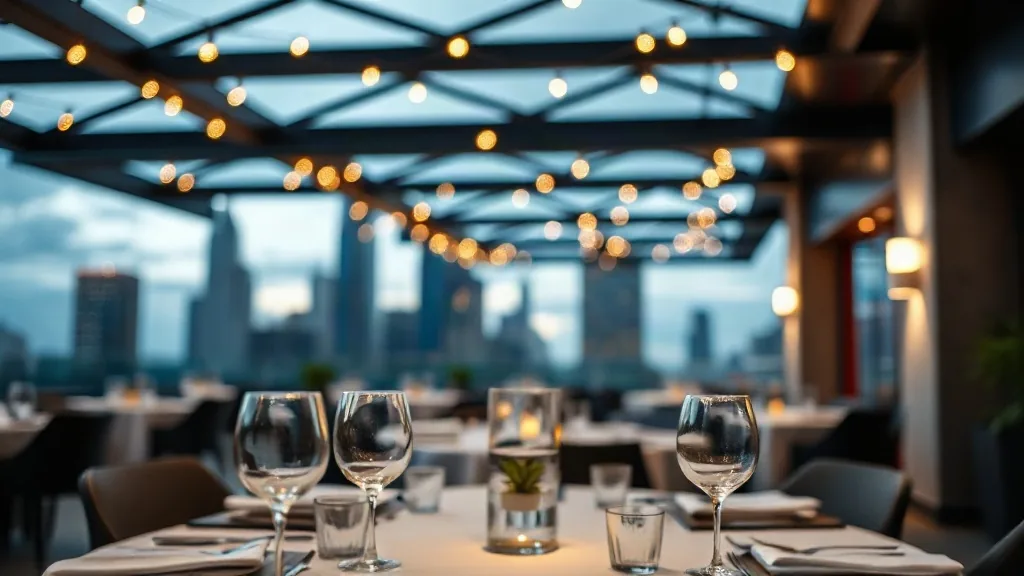
For a spring or early-fall rooftop gala, the math changes entirely. The tent cost drops, the heating cost disappears, and you’re left with a venue that’s genuinely more interesting than a ballroom for $3,000-$5,000 in overhead.
The Caterer’s Perspective on Rooftop Galas
I’ve talked to enough caterers to know that rooftop events are their least favorite format for large groups. Not because the food is harder to make, but because the logistics are harder to execute. Hot food at a rooftop station on a 55-degree evening loses temperature 40% faster than the same food at an indoor station. Chafing dishes that hold food at 165 degrees indoors may struggle to stay above 145 degrees in wind. Below 140 degrees, the health department has opinions.
A caterer working a rooftop in October needs to compensate with shorter replenishment cycles (every 12-15 minutes instead of every 25-30 minutes), which requires more kitchen-to-station staff and a faster prep cadence. That labor cost gets passed to you. Expect a $12-$20 per head surcharge from caterers who know what they’re taking on.
At an indoor ballroom gala, the caterer works in a standard environment and uses standard staffing ratios. The food quality ceiling is higher and the execution reliability is better.
The Accessibility Factor
One item that event budgets don’t typically capture: rooftop galas create access challenges for guests with mobility limitations. Elevator access is not always straightforward at venues where the elevator opens directly into a lobby space that feeds into the main rooftop. Guests with walkers or wheelchairs need a clear path from the elevator to the tent entry without crossing AV cabling, tent stakes, or uneven decking.
For a company gala where 10-15% of guests are above 70 (board members, long-tenured employees, executive guests), the accessibility question belongs in your venue checklist before you commit to the rooftop.
Browse rooftop venues for current options in your city and ask each venue for their weather contingency plan before you sign. For the contract terms that govern weather-related cancellation, see force majeure in venue contracts and event insurance cost by size and venue type.
What month is your gala and what percentage of your guest list is above 65? Those two facts narrow the choice faster than any venue walkthrough.