
The SaaS Offsite 'We Don't Do This Anymore' Trap
Every SaaS company goes through a phase where they announce they're 'not doing big offsites anymore.' Then Q4 hits and they're scrambling for 80 seats in six weeks. Here's the cycle and how to break it.

I’ve watched this happen at six different SaaS companies since 2019, and it is now predictable enough that I can describe it in advance.
Q1: the company does a big company-wide offsite. Somewhere nice. Three days. $180,000 loaded. The CFO sees the budget line. The CEO reads a newsletter about async-first culture. Someone in People Ops shares a Substack post about distributed teams.
Q2: the internal announcement. “We’re moving away from large in-person gatherings. We’re investing instead in team-level connection and intentional distributed culture.” There is a Slack post. There are supportive emoji reactions.
Q3: attrition ticks up. Pipeline softens. The engineering leadership team, which hasn’t been in a room together since the announcement, is making decisions at half speed. Two VPs who had a tense Slack thread in Q2 have not resolved it.
Q4: the CEO wants everyone in a room. Not a big offsite — just a “company alignment summit.” Eighty people. Six weeks out. Budget TBD.
I get the call in week one of Q4 and I spend the next six weeks fixing a problem that did not need to exist.
What actually happened
The “we don’t do this anymore” decision was made by people reacting to cost, not to evidence. The $180,000 offsite felt expensive as a line item. The distributed-culture Substack post gave it an ideology. Nobody measured what happened to collaboration velocity, decision quality, or attrition in the quarters after they stopped gathering.
The research on this is not ambiguous. Sustained remote teams — even high-performing ones — degrade on tasks that require trust, ambiguity resolution, and relationship repair. Those tasks don’t disappear from a SaaS company; they accumulate, and they eventually create the Q3 symptoms I described. The company-wide offsite at scale is expensive. The cost of not doing it is diffuse and unmeasured until it isn’t.
The trap inside the trap
The “we don’t do this anymore” phase also degrades institutional planning capacity. Your event coordinator who knew the venue inventory, who had the relationships with the preferred AV vendor, who had the run-of-show template from the last three offsites — that person gets reassigned or leaves. The institutional memory goes with them.
So when Q4 comes and the CEO wants 80 people in a room in six weeks, you’re not just scrambling for a venue. You’re rebuilding the planning infrastructure from zero while also scrambling for a venue. That is why the Q4 recovery costs more than the Q1 offsite would have: you’re paying the venue premium for late notice AND the external planner premium for no-lead-time AND the productivity cost of the scramble itself.
I have quoted late-notice SaaS offsites at $40,000-$60,000 in pure logistics cost that could have been $22,000-$28,000 with eight weeks of lead time. That delta is the “we don’t do this anymore” tax.
What the alternative looks like
The companies I work with that have gotten this right — that have avoided both the $180,000 excess and the Q4 scramble — have done it by treating offsites as infrastructure, not events.
The model that works: two cadenced all-company gatherings per year (not one big annual, which concentrates the cost and the risk), plus one leadership offsite in between. Three gatherings. Budget allocated in January. Venue contracts signed in February for the whole year. No surprises.
The all-company gatherings don’t have to be three days in a mountain resort. For a 60-80 person SaaS team, a one-and-a-half day event — fly in Wednesday evening, full day Thursday, half day Friday, fly home — produces most of the team-cohesion benefit at about 55% of the cost of a three-day event. The variable isn’t days; it’s unstructured time, and a Wednesday-evening social dinner + full Thursday gives you nearly as much of that as a three-day format.
Venue needs for a SaaS company offsite
SaaS companies tend to have specific venue needs that a generic corporate-offsite venue list doesn’t anticipate.

Real WiFi, not hotel WiFi. I’m serious. I have been burned by this more than any other single variable. A hotel’s “complimentary high-speed WiFi” is a fiction on a 80-person technical day where 40 people are sharing screens and the hybrid participants are on video. I negotiate dedicated bandwidth as a contracted deliverable, with a backup 5G solution on standby. If the venue won’t commit to bandwidth specs in writing, I find a different venue.
Breakout rooms that are actual rooms, not dividers. A SaaS offsite has workshop sessions. The workshop sessions need rooms that don’t bleed audio into each other. Folding partitions between session rooms are not rooms; they are optimism.
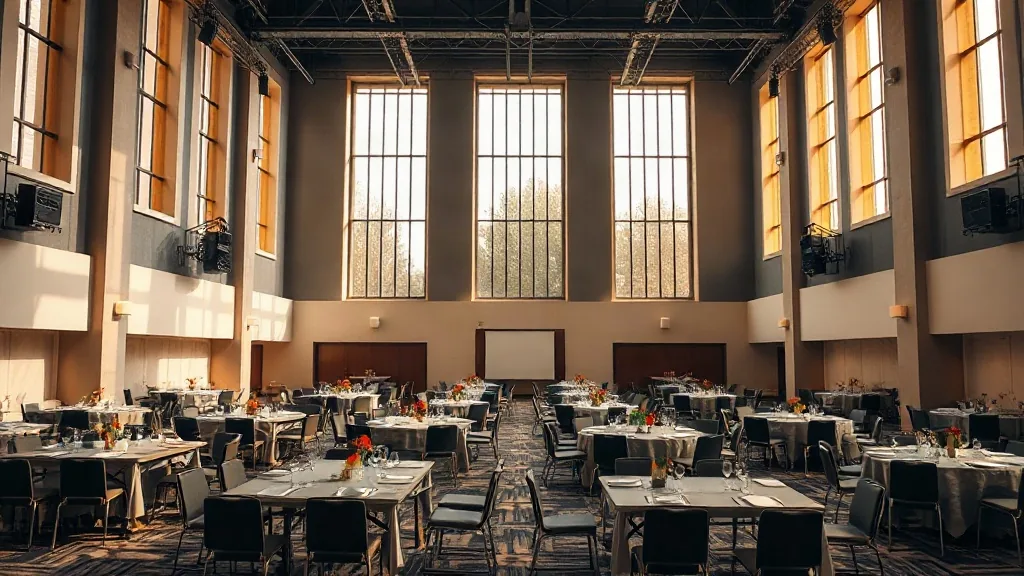
A main room that isn’t a hotel ballroom. The hotel ballroom format — round tables, low ceilings, event-neutral decor — produces a particular flatness that SaaS teams respond badly to. A tech company’s people have usually worked in interesting offices; a beige ballroom registers as uninspired. Meeting spaces in San Francisco and meeting spaces in the Bay Area have the kind of flexible, architecturally interesting conference venues that land better for a tech crowd.
For Austin, which has become a major SaaS hub and where I’ve run several company offsites, the converted warehouse and creative-campus venues in the east side work well. Conference centers in Austin Texas is the starting point; then filter for the properties that aren’t Marriott or Hilton.
For a remote-first company with employees distributed across multiple cities, the choice of city matters as much as the venue. I run a simple analysis: where do your people live, weighted by seniority? The city that minimizes average flight time for the most important people in the room is usually the right answer, not the city where the CEO happens to be based.
The “intentional” offsite versus the “team-building” offsite
One thing I’ve noticed in SaaS culture specifically: there’s a strong preference for framing the offsite as “intentional” (strategy work, decision-making, planning) rather than “team-building” (which triggers eye-rolls). The marketing matters.
The irony is that the team-building function — the actual social cohesion, relationship repair, trust-building — happens in the same event as the “intentional” strategy work. The evening dinner does more for cross-functional relationships than the afternoon strategy session. The informal conversation during the morning break does more trust-building than the team-building activity scheduled at 3pm.
The mistake I see SaaS event briefs make is putting all the “intentional” content in the schedule and leaving no unstructured time. A packed agenda with sessions from 8:30am to 6:30pm with one 45-minute lunch break is producing nothing. The value of gathering in person is the time that isn’t scheduled.
I tell my SaaS clients: schedule 60% of the day. Leave 40% as buffer, extended meals, and optional activites. Every single one of them pushes back in the planning phase. None of them regret it after the event.
The Q4 recovery
If you’re reading this in Q4 with six weeks and 80 people and no venue: it’s fixable. Meeting spaces across California and conference centers in Texas are where I start for West Coast SaaS companies. The late-notice window means you’re looking at venues with cancellations, which occasionally surface something better than what you’d have found with eight weeks of lead time.
The Austin tech offsite venues guide has specific venue picks for the city, and the SF tech offsite venues post covers the Bay Area options with the same filter.
Send me the headcount, the dates you’re considering, the city your largest concentration of employees is in, and the honest answer to “how strong is the team-cohesion case right now” — and I’ll tell you what’s possible.


