
The Sales Kickoff Playbook for 100-200 People: Room Layout, Recognition Sequence, and the Party Math
Sales kickoffs have a specific formula: general session with executive messaging, breakouts for product training, recognition dinner, and an after-party that the rep on a 9am flight can actually make it to. The venue brief, timeline, and per-head cost benchmarks are different from every other corporate event format. Here's what 8 years of SKOs actually looks like.

The first SKO I planned ran $280 per head. The most recent one ran $195 per head. The difference wasn’t quality. It was knowing which line items don’t matter to the room and negotiating the ones that do. After 8 years of sales kickoffs across Atlanta, Nashville, Phoenix, and Chicago, here’s how I actually plan them.
What makes an SKO different from every other conference
The format has a specific psychological arc that non-sales planners frequently miss. An SKO is not an information transfer event. It’s a motivation and alignment event that happens to include product training. If your attendees leave energized, the event worked. If they leave informed but flat, you failed regardless of how clean the logistics were.
That arc has four required segments: executive vision (why this year matters), product and strategy (what we’re selling), recognition (who did it last year), and celebration (permission to be loud). Every other element is optional decoration. The venues, layout, and timing choices all serve these four segments.
The venue brief for a 150-person SKO
You need four distinct spaces, and getting them right before you start touring saves 3 weeks of back-and-forth:
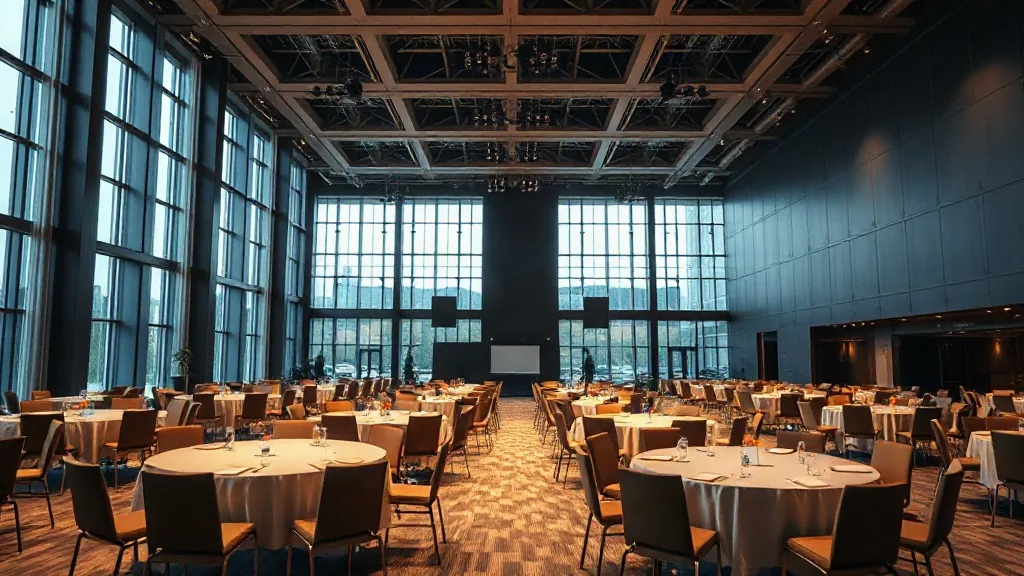
General session room: Theater-style capacity for 100% of attendees, minimum. For 150 people, you want a room that comfortably seats 180 in theater-style (the extra 20% is buffer for late adds, last-minute guest invites, and the fact that sales teams routinely overrun headcount). The room needs a raised stage with a minimum 12-foot ceiling clearance (for large-format screens), a house sound system that handles both spoken presentations and music playback, and rigging points or truss capability if your production vendor needs overhead lighting. Conference centers almost always have this. Hotel ballrooms with pipe-and-drape stages rarely meet the rigging requirement.
Breakout rooms: You need 3-4 rooms for 25-40 people each. Classroom setup works better than theater for product training because reps need to write. Each room needs a display screen, a whiteboard, and a door that closes. This is where hotel properties fail most often: their “breakout rooms” are frequently wide-open spaces divided by accordion walls with sound bleed between them. Ask the venue to demonstrate the acoustic separation before you commit.
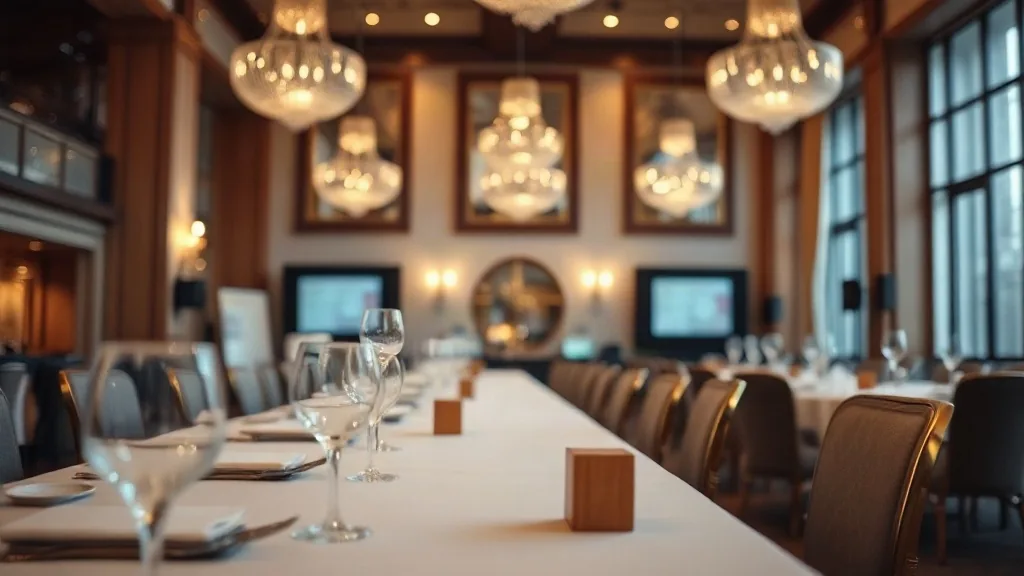
Recognition dinner venue: This is the highest-stakes meal of the year for most sales teams. It doesn’t need to be elaborate but it does need to feel different from the standard conference banquet. A private dining room at a good restaurant works for groups up to 80. For 100-150, you need a dedicated event space. Restaurants with private dining can work if the room size is right. This is not the meal to do plated service at round tables with a PowerPoint backdrop.
After-party space: Near the hotel, ideally in-venue or a 5-minute ride. The after-party runs 9pm-12am and has an open bar. It does not need to be a rented venue. A hotel bar buyout, a rooftop at the host hotel, or a reserved section at a nearby bar all work. The two requirements: the music can be loud and the venue doesn’t close at 10pm.
The recognition sequence
This matters more than most planners realize. The recognition dinner is when sales reps feel seen or don’t. Getting the sequence wrong is the most common SKO mistake.
The sequence that works: 10-minute CEO remarks (not a speech, a toast), then award categories from largest group to smallest (regional winner, then individual president’s club, then top performer), then dinner service. Never interrupt active dinner service for recognition. The catering staff and the event AV need to know the award sequence in advance and coordinate their timing.
Names on awards must be verified against HR records no later than 7 days before the event. I have seen, twice in 8 years, award plaques with incorrect spellings. In a room of 150 salespeople who will talk about it for months, this is a serious error.
The timeline: T-minus 90 days
90 days out: Venue sourced and under contract. Four-space brief sent. AV vendor engaged.
75 days out: Hotel room block confirmed. Room block size: for a 2-night SKO, assume 85% of attendees need rooms plus 10% of that total for guests and late adds. For 150 attendees, block 145-150 rooms.
60 days out: AV production brief finalized. Screen size, rigging requirements, recording setup (most companies want the general session recorded), and streaming specs for remote employees.
45 days out: Speaker run-of-show drafted. Every speaker gets a slot time with a hard stop time, not a suggested stop time. SKOs go long because executives don’t finish on time. The run-of-show enforces the structure.
30 days out: Recognition dinner confirmed. Award list locked. Seating chart for dinner drafted with sales leadership input on table assignments (salespeople care about table placement more than you’d expect).
14 days out: Final headcount to venue and catering. After-party setup briefed.
Day before: General session room walkthrough with AV vendor. Check stage, screens, audio levels. Confirm load-in access time for morning of day 1.
The per-head cost benchmarks
For a 2-day, 1-night SKO with 150 attendees at a Tier-2 city conference center:
- Venue rental: $0-$4,000 (often waived with F&B minimum)
- F&B all-day: $120-175 per person per day (coffee breaks, working lunches, general session refreshments)
- AV production: $18,000-35,000 total for a full 2-day general session setup with screens, sound, staging, and 2 breakout rooms supported
- Recognition dinner: $95-140 per person
- After-party bar buyout: $35-60 per person for a 3-hour open bar
- Hotel room block: negotiated rate; Tier-2 cities average $159-209/night for a 150-room block
Total all-in range for a 150-person, 2-day SKO at a Tier-2 city: $185,000 to $280,000. Per-head: $1,230 to $1,867.
The line items most often cut incorrectly: the production budget (a $3K price difference in AV vendor quotes usually reflects a genuine capability gap, not just margin) and the after-party (reps remember the after-party longer than the general session).
Cities that work well for SKOs
Nashville has become the go-to Tier-2 SKO city because hotel room rates are reasonable ($170-210 group rate), conference centers have been built out to handle 100-500 person events, and the entertainment district satisfies the after-party requirement without a bus ride. The drawback is that Nashville now hosts so many SKOs that some reps have been there 3 years running. Orlando competes well above 200 attendees because of convention infrastructure; below 200, the resort pricing often makes Nashville and Phoenix sharper. Chicago works for nationally distributed teams where flight connectivity is the primary concern.
The variables I run for every SKO city decision: average group hotel rate, direct flight access from the company’s top-5 rep metro areas, and whether the conference center AV infrastructure is owned or third-party. Third-party in-house AV is almost always more expensive than bringing your own vendor.
What’s the headcount, city shortlist, and budget band you’re working with? Those three inputs get you to the right venue category in one call.


