
Security Staffing Cost by Event Size: What I Pay and When Off-Duty Officers Are Required
Marc Tatum documents his security spend across events of 50 to 800 people, with the rate gap between event staff and off-duty police officers spelled out by city tier. The standard is one guard per 75 to 100 guests. When venues require off-duty officers, the cost nearly doubles.

The first time a venue contract included a mandatory security requirement, I almost missed it. It was buried in section 14 of a 22-page agreement for a 300-person gala at a downtown Atlanta event space. The requirement: minimum 4 licensed security guards, at least 2 of whom must be off-duty law enforcement officers. The cost: $1,640 for the evening. Had I missed that clause and tried to meet it 48 hours before the event, I’d have been looking at $2,200 to $2,800 in premium-rate staffing with no negotiation leverage.
Security is the line in an event budget that most planners ignore until the venue forces the conversation. Here’s how it works, what it costs, and when you actually need it.
The baseline: 1 guard per 75 to 100 guests
This ratio is the starting point for any event with alcohol service and more than 50 guests. Below 50 guests and no alcohol, you often don’t need dedicated security staff at all. Above 50 guests with an open bar, the calculus changes.
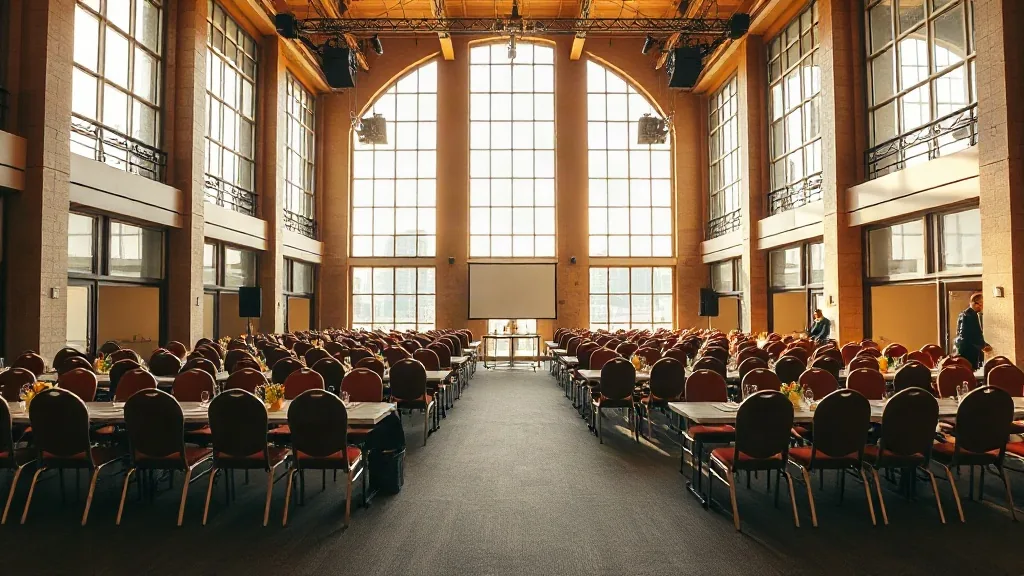
At 100 guests, the standard recommendation is 1 to 2 guards. At 200 guests, 2 to 3 guards. At 500 guests, 5 to 7 guards. The ratio compresses a bit at larger events because crowd management near exits and the main entrance is a fixed staffing need regardless of total headcount.
The distinction that matters most: event staff versus licensed security.
Event staff (crowd management, access control) typically don’t carry credentials beyond a general security certification. They’re appropriate for most corporate events. Licensed security guards carry a state-issued license and are authorized for higher-risk posts. Off-duty police officers carry police authority and are required by many venues for any event above 300 people or any event with a licensed bar.
What I pay, by role type
| Role | Tier-2 city rate (ATL, Nashville, Charlotte) | Tier-1 city rate |
|---|---|---|
| Event/crowd staff | $18 - $26/hour | $25 - $40/hour |
| Licensed security guard | $28 - $42/hour | $40 - $62/hour |
| Off-duty law enforcement | $45 - $70/hour | $65 - $95/hour |
Most security contracts have a 4-hour minimum. A 6-hour event with a 4-hour minimum means you’re paying for 6 hours of labor. Build that into the calculation.
Security budget by event size (Atlanta, tier-2 pricing, 6-hour event):
| Headcount | Staff needed | Mix | Cost range |
|---|---|---|---|
| 50 - 100 | 1 licensed guard | 1 licensed | $168 - $252 |
| 100 - 200 | 2 security | 2 licensed | $336 - $504 |
| 200 - 300 | 3 security | 2 licensed, 1 event staff | $432 - $648 |
| 300 - 500 | 4-5 security | 2 off-duty officers, 2-3 licensed | $1,080 - $1,890 |
| 500 - 800 | 6-8 security | 3 off-duty officers, 3-5 licensed/event | $1,620 - $2,940 |
The jump between the 200-300 bracket and the 300-500 bracket is driven entirely by the off-duty officer requirement. Two licensed guards at $35/hour for 6 hours is $420. Two off-duty officers at $58/hour for 6 hours is $696. Add three more licensed guards and you’re at $1,326 minimum.
When venues require off-duty officers
Mandatory off-duty officer requirements show up in three common scenarios:
Large event spaces and stadiums: Stadiums and arenas almost universally require off-duty officers for any buyout event. The required number scales with headcount, but expect a minimum of 2 to 4 officers for any event above 200 people. This is written into the venue’s operating license, not negotiable.
Events with cash transactions: Any event where cash changes hands (ticket sales, cash bar, retail) at a venue requires licensed security at the cash points in most local ordinances. This catches planners who set up a cash bar or merchandise table without checking the venue’s requirements.
Events with public access or partial-venue bookings: If your event shares a building with the general public (a conference center with other events running simultaneously, a museum with public galleries open, a restaurant with a partially private space), the venue may require additional licensed staff to manage the boundary between your event and the public space.
At convention centers in tier-1 cities, mandatory security staffing can add $3,000 to $8,000 to the event cost for a 500-person conference with a general session and multiple breakouts. This is rarely itemized separately in the venue proposal; it’s often buried in a “building services” or “event staff” line.
When I add security beyond the venue minimum
Two event profiles where I go above the venue’s minimum requirement:

C-suite or executive events with public figures in attendance: If a senator, prominent CEO, or public figure is attending, I add one additional licensed guard to the VIP entry point, regardless of what the venue requires. The incremental cost is $200 to $400 for the evening. The cost of a security incident at a client event is not calculable.
Events with alcohol and young workforces: A tech company all-hands with an open bar and 250 employees averaging 28 years old is a different security profile than a pharmaceutical advisory board dinner with 40 attendees and a wine selection. I staff the tech all-hands at the high end of the ratio (1 guard per 70 guests) and the advisory board at the low end (1 guard per 100 guests).
The event venue conversation to have before you sign
On every first call with a new venue, I ask: “What is your minimum security requirement for an event of this size and format, and do you have preferred vendors or a required vendor list?” The answer tells me two things. First, whether there’s a mandatory cost I haven’t budgeted. Second, whether the venue has a kickback relationship with a security company that I need to evaluate against the open market.
Required vendor lists for security exist at some venues and are legitimate (the venue has vetted the company, knows the staff, and trusts the quality). Preferred vendor lists are weaker: they’re a suggestion, and I sometimes bring my own security company when I have a better relationship and equivalent quality.
What’s your event format, headcount, and venue type? Share those and I’ll tell you what the security line should look like before you talk to the venue.


