
The 'After Party' Line Item Is Wasted Budget 7 Times Out of 10
You're spending $8,000–$22,000 on a separate after-party that 40% of attendees skip, 30% leave within an hour, and almost nobody remembers by Day 2. Here's the budget reallocation that actually improves the event.

I’ve been tracking after-party attendance rates for the last three years. Not formally — I don’t have a research grant — but every time I run an event with an after-party component, I now count heads at 60 minutes in and again at 90 minutes in. I share this because the numbers are consistently bad, and I think planners should talk about them more honestly.
For a 300-person conference with an evening after-party, my rough average attendance at the 60-minute mark is about 45-50% of total attendees. At 90 minutes, 28-35%. By the time the venue’s contracted end time arrives, you’re looking at the diehard 15-20% who would have found a bar themselves anyway.
The after-party typically costs between $8,000 and $22,000 depending on venue, market, and format. For a 300-person event, you’re spending meaningful money — $26 to $73 per head — for an experience that a majority of your attendees either skip entirely or leave within the first hour.
I’m not saying after-parties are never right. I’ll get to the exceptions. I’m saying that the after-party has become a reflexive line item that planners add because “that’s what you do after a gala/conference/awards night,” without running the math on what it’s actually producing.
Why the after-party survives despite the math
The after-party persists for a few structural reasons that have nothing to do with whether it serves attendees.
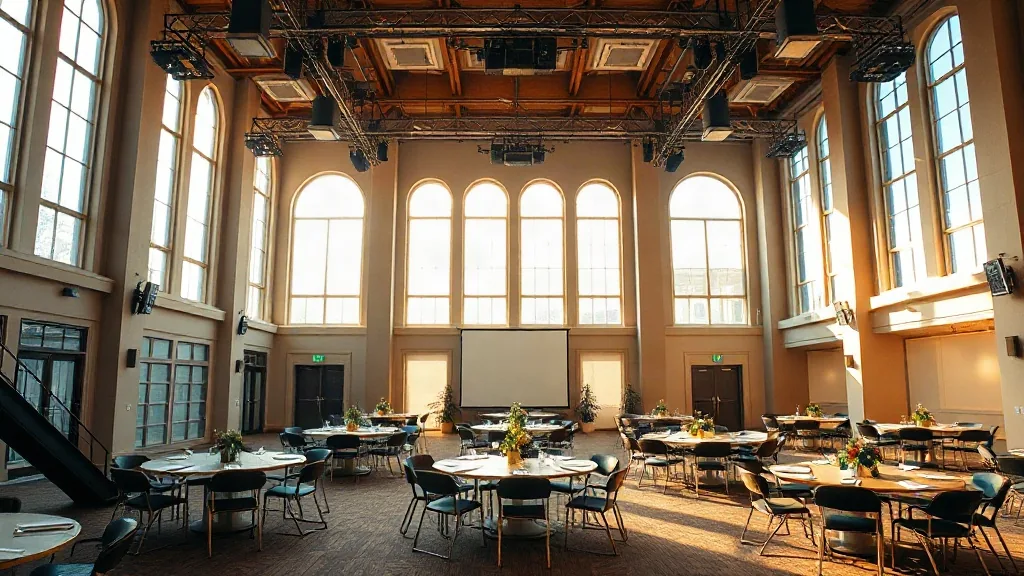
The core group has a great time. The 15-20% who stay to the end are typically the highest-energy, most socially extroverted attendees — often the salespeople, the extrovert contingent in the leadership team, the folks who were going to find a party regardless. They love it. They talk about it. The CEO hears from them and concludes the after-party was a success. He is measuring a 20% sample without knowing that’s what he’s doing.
It photographs well. The after-party Instagram content — typically a smaller, rowdier, more casual crowd than the main event — often makes the company’s event look more vibrant than it was. This creates a feedback loop where the photos prove the party worked, even if the photos represent 15% of the guest list at 11pm.
Planners want the backup time. An after-party gives planners somewhere to point when the main event ends and people ask “what’s next?” It’s a safety net that solves a perceived problem (guests being at loose ends) that mostly resolves itself at events with engaged attendees.
The venue includes it in the package. Lots of hotel venue packages bundle after-party space at what looks like minimal marginal cost. It’s not minimal — you’re paying in the package price — but the line item is buried, which makes the decision feel like “getting something for free.”
The attendance math, applied
Let’s run the numbers for a 250-person annual company gala with a main event from 6pm to 10pm and an after-party from 10pm to midnight in an adjacent venue space.
After-party direct cost: $12,000 (venue fee, separate bar program, possibly a DJ).
Attendance trajectory, based on my experience:
- 10:00pm (start): ~140 people show up (56%)
- 10:30pm: ~105 people remain
- 11:00pm: ~75 people remain
- 11:30pm: ~50 people remain
- 12:00am: ~35 people remain
Your effective per-attendee cost rises as the night continues. By midnight you’ve spent $343 per person for the 35 die-hards who stayed. Those 35 people were going to find a bar anyway. You paid $12,000 to give them a slightly nicer one.
The 110 people who attended the main event and went directly to their hotel rooms never touched the after-party budget. They’re 44% of your guest list. You spent nothing on them at the after-party — and you probably spent nothing additional on them at the main event, either, because the budget all went to the after-party.
What to do with the money instead
Here are the interventions I now propose when a client reaches for the after-party line item:
Extend the main event by 45-60 minutes. Instead of hard-stopping at 9:30pm with the formal program and pointing everyone to the after-party, run the main event until 10:15 or 10:30. Add dancing, keep the bar open, let the band continue. You retain 80-90% of the room instead of 56%. Cost delta: marginal (venue time extension, band overtime). This almost always tests better in post-event feedback than the after-party.
Invest in the last hour of the main event. The last sixty minutes of a gala or conference dinner are often the most neglected. The speeches are done, the awards are over, the formal program has wrapped. This is exactly when people start looking at their phones and calculating ride-share times. Put the money here: a surprise dessert moment, a better DJ set, a late-night snack station that comes out at 9:30 and signals “we’re not done yet.” $3,000 spent on the last hour of the main event retains more guests than $12,000 spent on a separate after-party.
Host room-block guests differently. If 60% of your attendees are staying at the conference hotel, the hotel bar becomes the after-party whether you plan it or not. Negotiate a hotel bar buyout from 10pm to midnight: open bar for in-house guests only, $4,000-$6,000, and the venue usually throws in some light bites. This costs half as much as a formal after-party and produces a more organic, genuinely social experience. You also capture the people who “just wanted to grab a drink with a few colleagues” without making them feel like they’re obligated to attend an official event.
Add something to the morning. Many multi-day conference after-parties exist because Day 2 starts with a dull 8am breakfast and attendees are trying to manufacture social momentum the night before to carry them through it. Fix Day 2 morning instead: a better breakfast format, a 7am optional activity (yoga, a run, a city walk), a networking format that doesn’t involve sitting in the same ballroom configuration. The after-party is often treating a symptom — low Day 2 engagement — that would be better treated directly.
The cases where after-party is right
I said 7 times out of 10, not 10 times out of 10. The situations where an after-party is genuinely worth it:
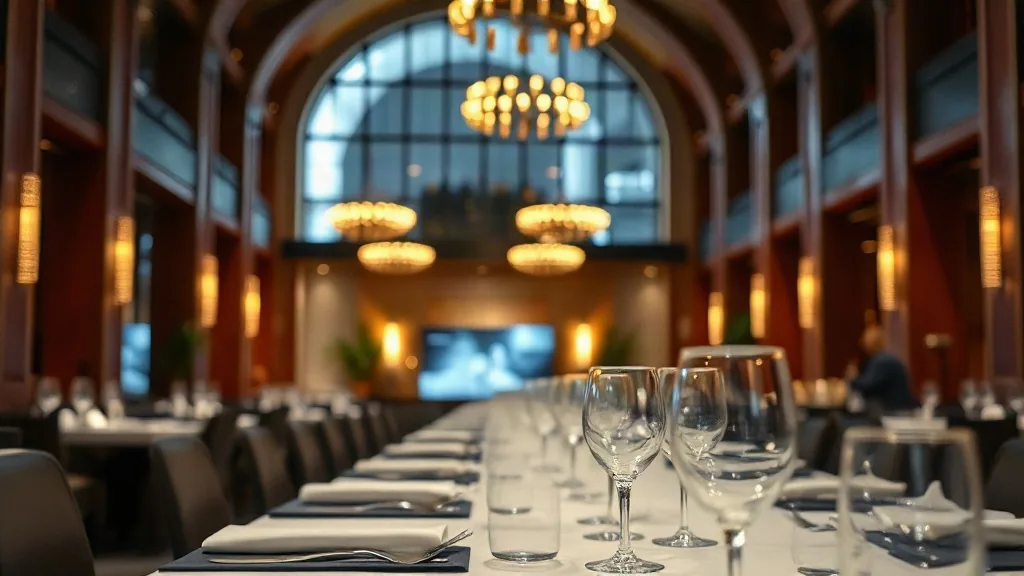
Sales kickoffs with a young team. A 200-person sales team where the median age is 28 and the culture is high-energy has a real after-party that runs until 1am and everyone’s there. I’ve seen it. The 15-20% figure applies to a more mixed-demographic gala crowd; a sales team is a different population.
Client entertainment events. When the after-party is the relationship-building mechanism — when you’re hosting 30 clients and the after-party is where the real conversation happens — the economics are completely different. You’re not measuring attendance rates; you’re measuring conversations.
When it’s opt-in and separately ticketed. Some conferences offer the after-party as an optional add-on, ticketed or RSVP-gated. This self-selects the audience to people who actually want to be there, keeps the bar program manageable, and lets you stop treating the after-party as a default right-of-passage for every attendee.
Milestone events. A company’s 25th anniversary, a product launch that genuinely calls for celebration, a closing-night party at a multi-day summit — some events have enough inherent occasion that the after-party serves the moment. These are real. They’re also not the annual awards dinner.
The conversation to have with your client
When a client says “we want to do an after-party,” I now ask three questions:
- What’s the demographic mix of your attendees? (Median age, corporate vs. sales vs. exec, how many are hotel guests vs. driving home?)
- What’s the goal — entertainment, relationship-building, or continuation of the main event energy?
- What’s the end-time of the main event, and what’s happening the morning after?
These three answers tell me whether an after-party is actually solving a real problem or just filling in a template that someone saw at a conference five years ago.
If you’re planning a Florida gala or awards dinner, I’ve run this budget reallocation conversation in Orlando, Miami, and Tampa and it almost always results in a better main event and a better use of $10,000-$15,000. Look at the Florida corporate venue directory — most of the better venues are flexible on event extensions in ways that make the “no separate after-party” option straightforward to execute.
Worth reading alongside this: the cocktail hour length piece makes a similar argument about the first hour, and the eight-rounds-of-ten seating post addresses what happens in the middle.
Send me the headcount, the program schedule, and the after-party budget. I’ll show you where it goes further.


