
The Attendee Who Had a Medical Event on Day Two and What the Venue Did Right
An attendee at a 240-person healthcare consulting conference needed emergency medical attention during afternoon breakouts on day two. The venue's response from the first two minutes changed the outcome. This is exactly what happened, what the venue's staff did, what I did, and the preparedness questions I now ask at every site visit.

Day two of the conference, 3:20pm. The afternoon breakout sessions had been running for 40 minutes. I was in the main corridor reviewing the next morning’s setup schedule when the banquet captain, whose name was Jerome, came out of breakout room 3 at a pace that told me something was wrong before he said anything.
He said there was a guest with a medical issue in the room. His voice was controlled. He was already moving toward the house phone on the wall.
I went into the room. One of our attendees, a mid-50s woman I recognized from the morning session, was seated but leaning forward against the table with her eyes partially closed. Two colleagues were beside her. She was responsive but clearly not well.
What happened in the next 12 minutes is the reason I now have a specific set of questions for every site visit.
What the venue did
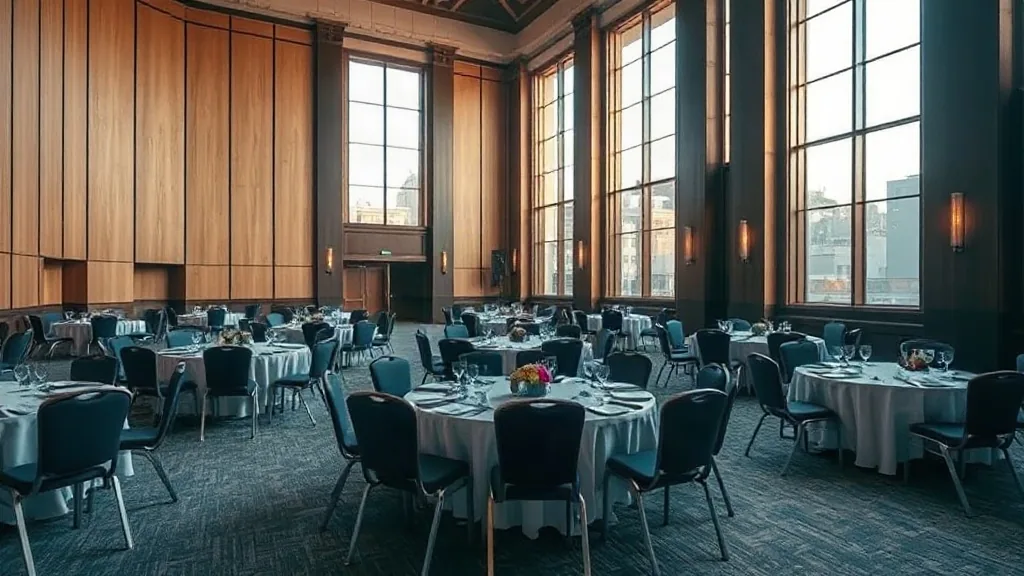
Jerome called the venue’s on-site first aid team from the house phone in the corridor. The team arrived in under 3 minutes: one trained first aid responder with an AED and a basic medical kit. This was not a hotel with a nurse on staff; it was a mid-size Florida conference center. They had a designated first responder for events above 150 attendees.
I didn’t know that. I had never asked about it.
The responder assessed the attendee while Jerome came back to me in the corridor to ask two things: did I want him to redirect other attendees away from the room, and did I want him to manage communications with the other breakout session leaders. I said yes to both.
Jerome didn’t wait for me to figure out that attendee redirection and communication management were things that needed to happen. He had done this before. He knew the two immediate needs of the planner in this situation and offered them before I thought to ask.
The on-site responder determined the attendee was experiencing a cardiac episode and called 911. The paramedics arrived at 3:29pm, 9 minutes after I entered the room. The attendee was transported by ambulance at 3:34pm.
She recovered. I received a call from the conference organizer three days later confirming she was home and well.
What I did right and wrong
What I did right: I told the two colleagues beside the attendee to stay with her and moved the other 14 attendees in the room to the corridor. I called the client’s head of events, who was on site, within 4 minutes. I pulled my run-of-show document and found the AED location I had noted during the site visit.
I had noted the AED location. I hadn’t asked where the nearest fully-stocked first aid kit was, whether the venue had a first responder on staff for events, or what the venue’s internal emergency protocol was. I had the AED location because it was on a safety checklist I use. The other questions weren’t on the checklist.
What I did wrong: I entered the room without a clear role and spent about 90 seconds in the way. The venue’s first responder and the attendee’s colleagues were the people with specific functions. I was a third presence without a clear task. Jerome was more useful than I was for those 90 seconds because he knew what to do next.
The post-event conversation with Jerome
Three days after the conference, I called Jerome and asked him to walk me through the venue’s protocol for medical emergencies during events. He was specific and patient.
The conference center had a formal protocol that I’d never requested to see: an emergency response binder kept at the banquet captain’s station, a first responder designated for all events above 100 people, an AED on every floor, and a communication protocol for reaching the event planner without alerting other attendees. The first responder’s presence wasn’t advertised; it was standard for events above their threshold.
Jerome also told me that the most common failure mode in medical situations at events was the planner going into the room and trying to manage the medical response rather than managing the communication and logistical response around it. The venue’s protocol was built around getting the planner out of the room after the first 60 seconds and giving them a specific communication task.
He was describing what happened with me. I had been in the room for about 90 seconds before someone with medical training arrived and there was nothing for me to contribute there.
The questions I now ask at every site visit
These four questions are now on my site visit checklist, and none of them were there before this event.
First: does the venue have a designated on-site medical first responder for events above a certain headcount? What’s the threshold and where is that person stationed?
Second: where is the nearest AED, and what’s the protocol for accessing it during an event? (Knowing the location is not enough; some AEDs are in locked cases with codes that only venue staff know.)
Third: what is the venue’s internal communication protocol when a guest has a medical emergency? How does the venue contact the event planner without creating visible alarm among other attendees?
Fourth: what is the standard time between a 911 call and ambulance arrival for this specific address, based on historical calls? This varies by neighborhood and time of day. A conference center in a downtown location may be 4-6 minutes. A suburban or campus property may be 8-14 minutes. That difference matters for how the venue’s on-site first responder stages the response.
At hotels and resorts, the answer to question one is typically a security staff member with first aid training. The quality of that training varies. Full security teams at large resort properties often include staff with EMT certification. Smaller properties may have a security guard with a weekend first aid course from three years ago.
What to do with the answers
If the venue’s medical response capability is thin, the options are to hire an outside medical standby service for events above a certain headcount, to identify a local urgent care or emergency room within 8 minutes of the venue, and to brief your day-of staff on who holds the emergency protocol document.
For Florida conference centers, the heat and the older attendee demographics at certain event types (healthcare, financial, pharmaceutical) argue for higher baseline preparedness than the venue’s default protocol may provide.
The attendee who had the cardiac episode was 54. She had no prior diagnosis. The event was not physically demanding. Events with any significant concentration of attendees in the 50-65 range have a measurable baseline risk that’s worth planning for explicitly.
What’s your current preparedness process for medical situations? If you don’t have a site visit checklist that addresses these four questions, share your next venue and I’ll help you build the right questions for that specific property.


