
The Conference Room That 'Seats 40' and the 22 People Who Actually Fit
Venue capacity numbers are almost always wrong, and not by a little. A room 'seating 40' in theater style often holds 22 comfortably in U-shape, 18 in classroom, and 28 in boardroom. This post breaks down the four main setups, the real capacity ranges for each, and the single question that stops a venue from overselling you the room.

I booked a room described as “seats 40 comfortably” for a client workshop in San Jose. Forty-person workshops are common in my work. I’ve run dozens. I know what 40 people in a room feels like.
The room held 22 people in the U-shape we needed. Comfortably. Any more than 22 and people would have been sitting with chairs touching, arms bumping at every turn. The venue’s capacity claim wasn’t a lie, exactly. It was theater-style seating, 18-inch rows, no tables, no breathing room. The way you’d pack people in for a presentation, not a working session.
We moved the extra 18 people to a breakout space down the hall. The event worked. But it shouldn’t have been close.
Where the “40 seats” number comes from
Theater-style is the highest-capacity configuration for any room because it’s the least functional one. Rows of chairs face forward. There’s no table space, no room for laptops or notebooks without a lapboard, and the sight lines for anything other than a stage presentation are poor. Venues advertise theater capacity because it’s the biggest number they can put in the brochure.
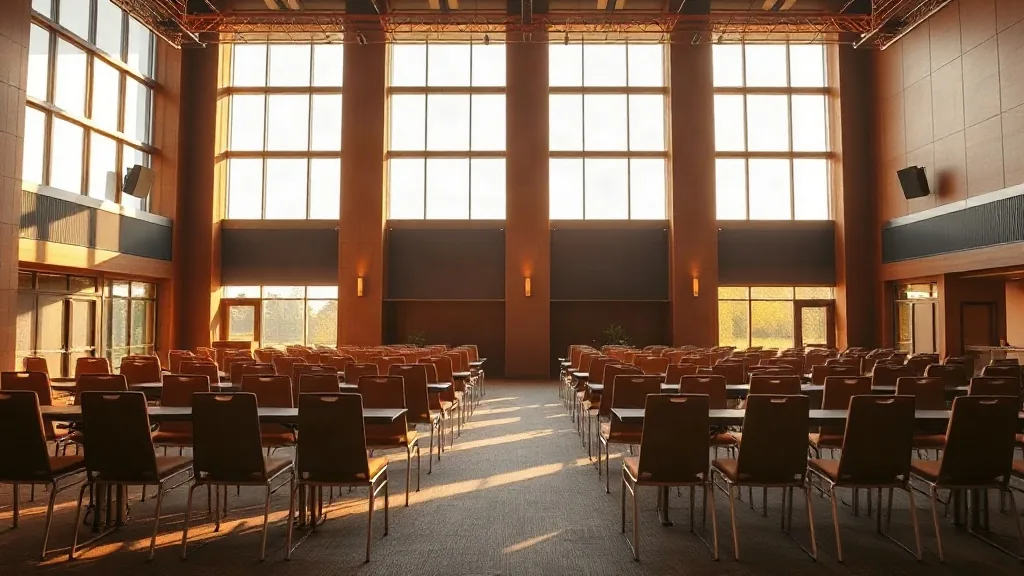
The standard measurement is 6 square feet per person in theater configuration. A 240 square foot room fits 40 people by that math. It also has chairs touching on both sides and a 12-inch aisle.
For the configurations actually used in corporate events, the same room shrinks fast.
U-shape, which is the most common setup for 20-40 person working sessions, consumes roughly 15-18 square feet per person because the center of the U is dead space. That 240 square foot room fits 13-16 people in U-shape, not 40.
Classroom, two-to-three people per table with tables facing forward, runs about 12-15 square feet per person. Same room: 16-20 people.
Boardroom, single rectangular or oval table, runs 10 square feet per person for the table plus 3-4 feet for chair pull-out on each side. Same room: 22-24 people, which is about where it started to feel comfortable in San Jose.
Cabaret, round tables of 6-8 with chairs on three sides only (presenter side open), runs 18-20 square feet per person. Same 240 square feet: 12-13 people.
The question that stops the oversell
The single question is: “What setup does your capacity number refer to, and can you show me a floor plan of that setup?”
Every venue has a floor plan somewhere. The good ones keep it in the sales packet. If the salesperson doesn’t know which configuration their capacity number references, that tells you something important about how carefully they’ve thought through your event.
At most conference centers, the room data sheets will list multiple configurations with separate capacities for each. That’s what a real capacity document looks like. A document that lists only one number for a room is a marketing document, not an operations document.
The follow-up question: “What’s your largest setup for a working session with tables?” That gets you the real number.
What I saw over three years of site visits
I kept informal notes on capacity claim vs. reality from 2021 through 2023. Not a controlled study, but 34 rooms across 19 properties. The pattern was consistent.
Theater capacity matched reality in 28 of the 34 rooms (82%). When theater was the claim, it was usually accurate because it’s the most straightforward to count.
Conference/boardroom capacity matched reality in 23 of 34 rooms (68%). Most overestimates involved ignoring the pull-out space required for chairs.
Classroom capacity matched in 19 of 34 (56%). The overselling here was usually in the aisle width; venues counted people without leaving a 3-foot aisle between chair rows.
U-shape capacity matched in 14 of 34 (41%). The center dead zone is the consistent miscalculation. Venues count the perimeter seating and forget that the interior space is unusable.
What to check during the site visit
Bring a measuring wheel or use a laser measure on your phone (most modern phones have a built-in measurement tool). Get the length and width of the room. Multiply for square feet. Divide by 15 for a working-session estimate. If that number is less than 70% of what the venue told you, you have a conversation to have before signing.
Also check the room’s obstacles: columns, fixed AV risers, built-in millwork, low-hung pendant lights that can’t accommodate projection screens. I’ve seen rooms lose 20% of their functional space to a structural column that wasn’t visible in the venue’s photos because every photo was taken from the one angle that excluded it.
At coworking spaces with event rooms, this problem is worse on average because their rooms double as daily meeting space and are often configured around fixed table islands. What you see in the event listing photo is not what you’ll get when your 35-person workshop shows up expecting a U-shape.
The script I use with venue sales
When a sales manager gives me a capacity number, I say: “That’s helpful. For our working sessions, we’ll need U-shape for about [N] people. Does your floor plan show that fitting comfortably with 3-foot aisles behind the chairs?” If they can’t confirm it with a floor plan in the conversation, I ask them to email me one before I commit to a hold.
About 60% of the time, that request surfaces a revised capacity number that’s lower than the original. The other 40% of the time, the floor plan confirms the claim. Either way, I know what I’m booking.
The worst-case outcome of this process is a slightly longer sales conversation. The worst-case outcome of skipping it is 18 people in a hallway.
California conference centers I’ve worked with recently have gotten better about this: the properties that compete for tech-company events know that AV-loaded working sessions have different space math than general sessions. The ones that haven’t updated their room sheets are usually properties primarily focused on the wedding and social market.
What’s your headcount and setup format? I can tell you whether the room you’re looking at is actually going to work before you go on site.


