
The Facilities Manager Drafted Into Planning the Company Retreat
Facilities managers understand physical space, load requirements, and vendor logistics better than most event planners. What they're missing is the AV production timeline, the catering contract structure, and the day-of coordination layer that event work specifically requires. Here's the translation guide.

A facilities manager gets asked to plan the company retreat for a predictable reason: they managed the last office move, they know all the vendors, and leadership assumes that managing physical space is managing physical space. It’s not quite the same, but it’s close enough that a facilities background is actually a head start in certain areas.
Here’s what transfers directly, what doesn’t, and where the gaps most commonly show up in the event.
What facilities knowledge transfers directly
Load-in and load-out logistics. Facilities managers understand weight limits, loading dock access, elevator capacity, and vendor sequencing. These are the things that most event planners learn the hard way. If you’ve coordinated a multi-vendor office installation, you already know that the furniture vendor and the AV vendor can’t both occupy the loading dock at 8am. That knowledge applies directly to event setup.
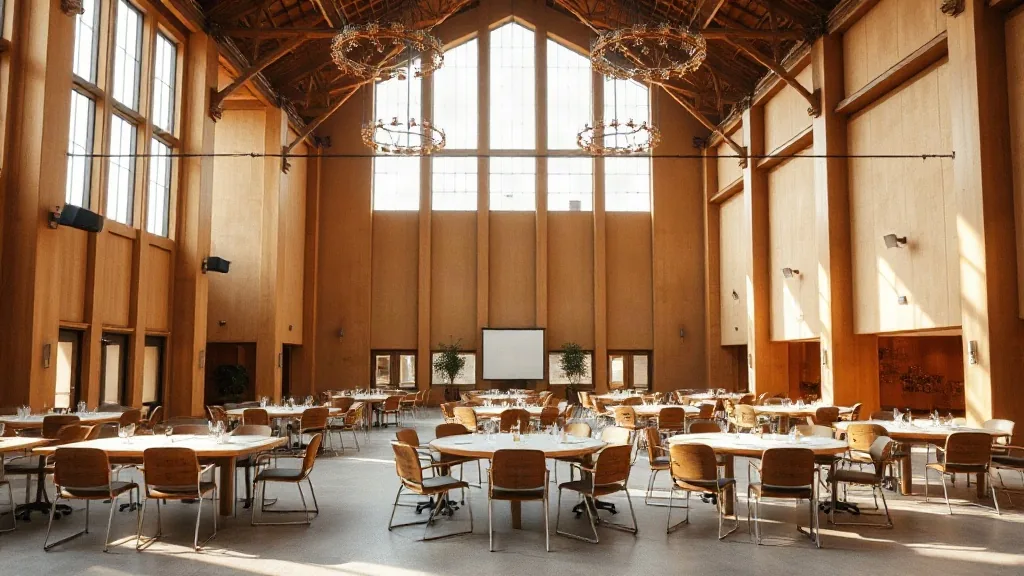
HVAC and occupancy. A facilities background gives you an intuitive read on whether a space is properly ventilated for 120 people versus the 80 it was designed for. You’ll notice the exhaust registers, you’ll ask about the BTU capacity, and you’ll be right to. Most event planners don’t think about air quality until someone mentions it at hour four of a packed session room. You’ll think about it at site visit.
Power access. You know which circuits can handle what loads. You know to ask about amperage before committing to an AV vendor’s proposed rig. This is genuinely valuable and directly prevents a category of expensive last-minute problems.
COI and vendor credentialing. Facilities staff are used to requiring certificates of insurance from contractors. The extension to event vendors is immediate: the AV vendor, the caterer, the entertainment act, and the photographer all need to produce COIs that name your company as additional insured. You already know the language.
What doesn’t transfer: the AV production timeline
Facilities project timelines work forward: you know when the work starts, you build to completion. AV production timelines work backward from show time, and the critical path is different from what facilities work produces.
For a 150-person company retreat with a morning general session, the AV team needs access to the room at 6am for a 9am start. Three hours to hang screens, run cable, do sound check, and resolve whatever the venue’s existing installation conflicts with. If the catering team also wants to set the room at 6am, you have a conflict. Catering defers to AV, not the other way around. AV infrastructure goes in first, catering sets around it.
This sequencing is not obvious if you come from facilities work, where trades have clear priority rules but different logical dependencies. Get the AV vendor’s setup requirements in writing before the event and share them with every other vendor.
For conference centers that own their own AV, this is managed internally. For warehouse venues or coworking spaces where you’re sourcing AV independently, you own the coordination.
What doesn’t transfer: the catering contract structure
A facilities manager who sees a catering proposal for the first time will look at the per-head cost and compare it to the total. They won’t necessarily look at the service-charge structure, the menu substitution rules, or the cancellation and headcount adjustment policies embedded in the BEO.
Three things to flag in any catering contract before you sign:
The service charge percentage. Standard range is 22-24%. It applies to every food and beverage item. On a $80/head menu for 150 guests, the service charge on a 24% contract adds $2,880 to the bill before tax. That number is not visible in the per-head quote.
The final-count cutoff. Most caterers fix the final headcount at 72-96 hours before the event. If attendance drops after that cutoff, you’re paying for the contracted count. If attendance rises, you may not be able to add covers if the kitchen is already prepped. Ask for this date explicitly and put it in your planning calendar.
The overtime clause. If the event runs past the contracted end time, catering staff go into overtime. At $22-$30/hour per server, running 90 minutes over on an event with 12 servers costs $400-$540 in overtime before the kitchen staff adds on. Ask the venue what the per-hour overtime cost is for a full-event staff contingent.
What doesn’t transfer: the day-of coordination role
In facilities work, the project manager shows up, confirms the work is done, and signs off. In event work, the coordinator is active throughout the event, not just at setup. They’re resolving problems in real time, managing the run of show, communicating with presenters, and making judgment calls about timing adjustments.

If you’re running your first retreat as a facilities-to-event-planner transition, assign a specific person to day-of coordination before you arrive on-site. This can be the venue’s event manager (ask whether this is included in the venue fee), a vendor who does day-of coordination as a service, or a trusted person on your team who’s been fully briefed on the run of show.
Don’t try to manage setup logistics and day-of coordination simultaneously. That’s two different jobs.
The briefing that covers the gap
Write a one-page transition document for yourself before the event: here’s what I know from facilities work (load-in sequence, power requirements, COI), and here’s what I’ve delegated to someone with event experience (AV production timeline, catering contract review, day-of coordination). Share it with your team lead so they know which decisions come to you and which go elsewhere.
One advantage facilities managers have that most planners don’t
Facilities managers know how to read a building’s condition. They notice the HVAC system that hasn’t been serviced in a year, the loading dock that’s too narrow for a full-size catering truck, the freight elevator that’s limited to 2,500 pounds. These are real event constraints that venue sales managers don’t disclose and event planners don’t know to ask about.
Use that advantage at the site visit. When the venue coordinator shows you the main event space, ask to see the service path from the loading dock to the room. Check the ceiling height against the AV vendor’s rigging requirements. Test the freight elevator with a vendor cart (or ask what the weight and dimension limits are). These questions take five minutes and prevent day-of surprises that a facilities-background planner is uniquely equipped to catch.
At a conference center with professional event operations staff, most of this is already managed. At a warehouse venue or an unconventional space, your facilities lens is a genuine differentiator.
What’s your retreat headcount, venue type, and how many days? That combination determines how complex the AV and catering coordination gets and whether you need outside event support for day-of.


