
The Fire Marshal Who Shut Us Down 12 Minutes Before Doors
At 6:48pm, with 340 guests arriving in twelve minutes, the fire marshal walked in and said the room was over capacity. Here's every decision we made in the next eleven minutes.

It was 6:48pm. Doors at 7:00.
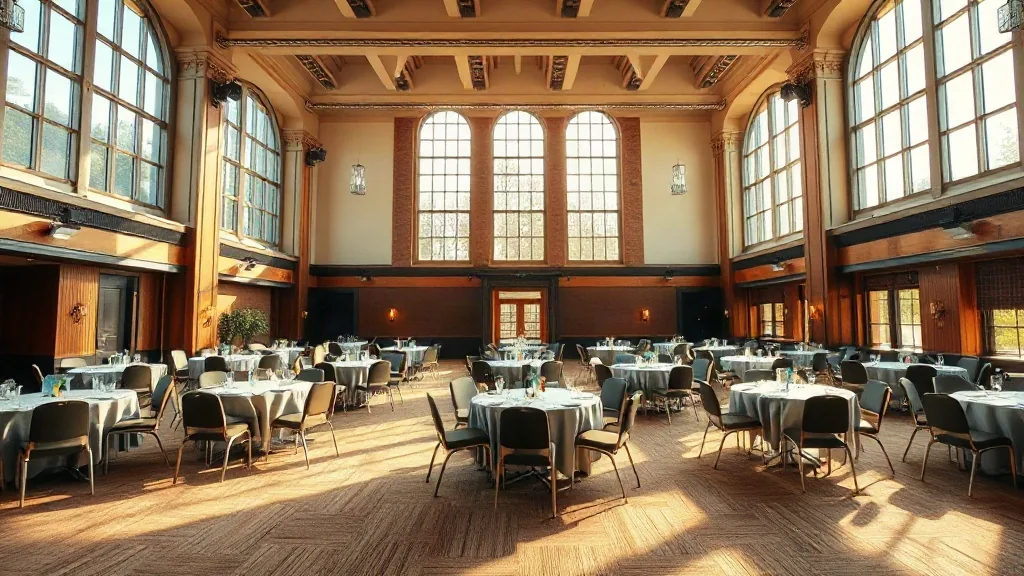
I was standing at the entrance to the main ballroom doing a final sweep — centerpieces, lighting cue, floor staff positioned — when I heard one of the venue coordinators say something quietly into her radio. The way she turned away from me told me everything before she finished the sentence. I walked toward her. She was already walking toward me. Behind her, coming through the service corridor, was a man in a dark jacket with a badge clipped to his belt.
The City of Tampa fire marshal. He had done a pre-event walk-through. The occupancy certificate on file listed the ballroom at 320 persons for a table-and-chair setup. Our confirmed headcount was 340. He was shutting us down.
Who was in the room and what was at stake
The client was a regional healthcare network — about four thousand employees across twelve facilities in the Tampa Bay area — and this was their annual gala, the biggest event on their internal calendar. Twelve hundred employees were not invited. Three hundred and forty were. Being selected for this event was a visible marker in their culture. The CFO was presenting recognition awards. Two physicians were retiring after a combined sixty-plus years with the system. Their families were in the lobby.
The event was not just a party. It was a ritual. Canceling it or moving it was not a real option in the emotional sense, even if it was technically possible. I had roughly eleven minutes to make it real.
6:48pm — twelve minutes
I pulled our venue contact aside and asked her three things in order: Is there any other certified capacity reading for this room at a different setup? Can we pull any tables? What’s the actual count on chairs?
She said the 320 figure was for rounds-of-ten with a 24-foot dance floor. If we eliminated the dance floor and collapsed it to rounds-of-eight, the occupancy calculation could shift. She thought. She wasn’t sure. She needed to call her GM.
I turned to my assistant and told her to pull our printed BEO and find the room diagram. We had confirmed the setup three days earlier. The diagram showed the dance floor as optional — the client had asked for it but I had not locked it contractually. That mattered. I didn’t know how much yet.
The fire marshal was patient. He’d seen this before. He was not punishing us, he was doing his job, and I want to be honest about that — he was not the problem. He gave me the number: 320. He gave me the rule: I needed to be at or below it before guests were admitted. He gave me the timeline: his shift ended at 7:30pm. He did not say that as a threat. He said it factually.
I told him I needed eight minutes.
The math on the fly
My assistant had the BEO diagram. The dance floor was a 24x24 section — six ten-person rounds fit in that footprint if we went to rounds-of-eight and pushed the tables tight. That was forty-eight seats recovered and, more importantly, a significant reduction in square footage consumed per person, which is the actual metric for occupancy calculations.
The venue GM arrived from the back of the house. I showed her the diagram. She looked at the marshal. He said: if you remove the dance floor, recalculate at rounds-of-eight, and give me a revised table count, I can re-assess.
She did the calculation on her phone. New total: 312 seats at rounds-of-eight, no dance floor.
Below 320. Technically compliant.
6:54pm — six minutes
I called the client. The healthcare network’s VP of People & Culture was the point of contact for this event — she was already dressed, already in the building, standing near the registration table. I told her the situation in forty words: capacity issue, we’re resolving it, no dance floor tonight, tables reconfigured, doors will open on time. She asked one question: “Can we still do the awards presentation?” Yes, I told her. The front of the room isn’t changing. Just the back.
She said: “Handle it.”
Three floor staff had already started breaking down the dance floor on direction from the venue coordinator. We were pulling risers, not a hardwood parquet — thank god — so it was a four-person job that took about four minutes. Two staff were resetting rounds, consolidating place settings, pulling the eighteenth chair from each ten-top. We had stacked the extras behind the service door by 6:59pm.
I went back to the fire marshal. He walked the room. He counted. He signed off at 7:01pm.
We opened doors at 7:02pm.
How the night went
Nobody on the guest side knew. The room looked intentional — tighter, actually warmer because of it. A few people commented that it felt more intimate than previous years. The retiring physicians got a standing ovation. The CFO cried at the podium, which I had not anticipated and which wrecked me. The night ran ninety-four minutes and ended cleanly.
The VP of People & Culture found me during the breakdown. She said, “What was the thing you handled at seven?” I told her. She was quiet for a second. Then she said, “You know what, the room was better without the dance floor. These people don’t dance.”
I did not tell her I had known that since the site visit and had tried to cut the dance floor three weeks earlier.
What I take from it
1. Read every occupancy certificate before you finalize your setup. Not after. The certificate is a public document — in most jurisdictions you can request it from the venue before signing. I now build a line into my venue intake: “Please provide the current occupancy certificate for the primary event space at our proposed setup type.” I’ve caught two additional mismatches since this event.
2. Know what’s optional in your BEO. The dance floor being listed as a “client preference” and not a locked setup element gave me a legal escape route. When you’re building your BEO, be deliberate about what’s contractually fixed versus noted as a client preference. That language matters at 6:48pm.
3. Build a margin into your final headcount. I now confirm events at setup capacity minus ten percent. If the room holds 320, my client’s guest list is capped at 288. That buffer has absorbed two walk-ins, one venue miscalculation, and the fire-marshal visit. It has never felt unnecessary.
4. The fire marshal is not the enemy. I’ve told this story to planners who respond with outrage at the marshal. That reaction is misplaced. He was doing his job, he gave me time, and he was fair. The error was mine — I did not verify occupancy against our setup before that morning. I own that.
5. Brief your client in forty words or fewer. In a crisis, the instinct is to explain. Explaining wastes time and creates anxiety. “Capacity issue, we’re resolving it, no dance floor tonight, tables reconfigured, doors will open on time.” Forty words. One question. Done. Practice that compression before you need it.
The gala season is long. Something will go sideways between your final walk-through and 7:02pm. The only question is whether you know which levers you’re allowed to pull.
If you’re planning a formal corporate gala and want a second set of eyes on your venue setup and occupancy logistics before you get to that walk-through, I work with healthcare and finance clients across the Southeast. Send me the brief.


