
The First-Time HR Event Lead: What to Delegate on Day One
HR professionals inherit event responsibility without inheriting event training. The instinct is to own everything. The right move is to hand four vendor categories off immediately and keep three management tasks in-house. Here's the decision map.

When an HR leader takes ownership of the company holiday party or the annual all-hands, the first instinct is to manage it the same way they’d manage an HR project: build a workstream, assign it to themselves or their coordinator, and control every piece. That instinct will cost them 60 hours they don’t have.
The right move is almost the opposite. Four vendor categories need to go to someone else on day one. Three management tasks should stay in-house. The confusion between those two groups is where first-time HR event leads lose time, credibility, and budget.
Delegate immediately: AV
Audio-visual production has its own language, its own vendor ecosystem, and its own scoping requirements. An HR lead who has never written an AV brief will spend three weeks going back and forth with the venue’s in-house AV team trying to understand why the quote jumped from $4,200 to $9,800 between two conversations.
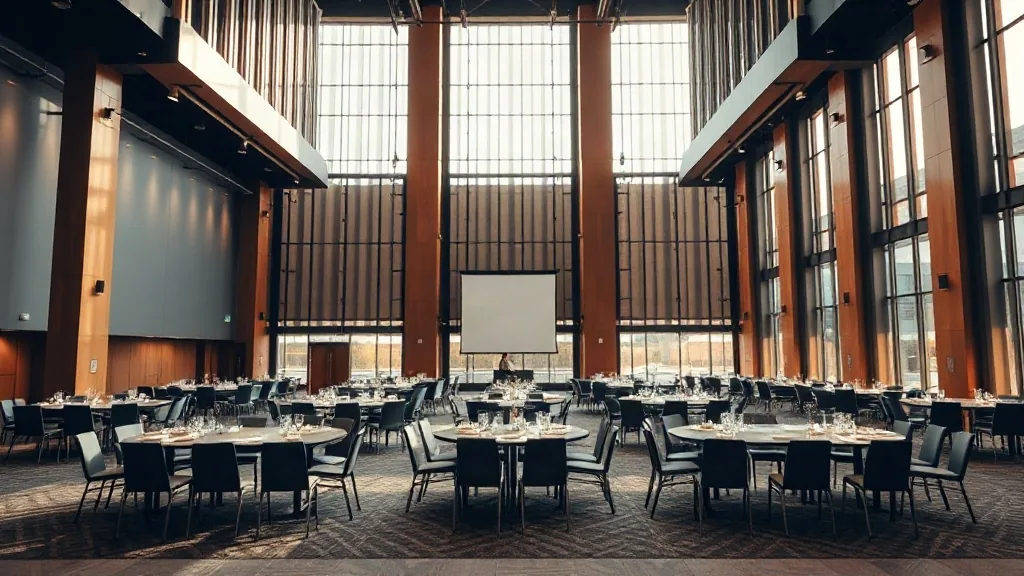
Hand this to someone who knows the language. If your company has an IT team, they often know the right questions. If not, hire an outside AV vendor on a consulting basis for two hours to scope the job and write the brief. That consultation costs $300-$600 and prevents a $6,000 misunderstanding.
The venue’s in-house AV company is usually convenient and expensive. For a 200-person all-hands at a banquet hall or hotel ballroom, an outside AV vendor will typically come in 30-50% below in-house pricing for comparable equipment. You’ll need the venue’s approval to bring in outside AV. Ask that question early.
Delegate immediately: catering
Catering has its own contract, its own service-charge structure, and its own lead times for menu confirmation. An HR lead who doesn’t know the difference between an F&B minimum and a catering estimate will agree to terms that cost the company $8,000 more than the budget.
At a hotel or resort property with in-house catering, you work with their catering manager directly. Get a food and beverage proposal in writing with per-head pricing that separates the base menu cost from service charges and tax. The “plus plus” notation (a menu price listed as $75++ ) means the actual cost per person will be $75 plus a service charge of 22-24% plus applicable sales tax, which produces a per-head cost of $94-$96, not $75. Every catering proposal should be read this way.
If the event is at a standalone event venue without in-house catering, you’re sourcing a caterer separately. That’s a full vendor management workstream. Delegate it to someone who’s hired an outside caterer before, or use a caterer the venue recommends (with a clear understanding of the budget ceiling).
Delegate immediately: transportation
Logistics for group moves, shuttles, and valet are operationally complex in ways that aren’t intuitive. Getting 250 people from a hotel to an off-site venue and back requires a shuttle schedule, a departure window plan, a backup vehicle, and a point person at each end who has the driver’s phone number. This is a vendor management job, not an HR job.
Hire a transportation broker or ask your venue if they have a preferred transportation vendor. Brief the vendor with three numbers: guest count, departure location, arrival location, and timeline. Let them propose the logistics. Your job is to approve the proposal and confirm the COI, not to design the shuttle schedule.
Delegate immediately: floral and decor
Decor is the most time-consuming vendor category relative to its event impact, especially for HR-managed events. Floral and decor vendors require a brief, a site visit, a proposal review, and multiple rounds of approval. The brief alone, if written by someone unfamiliar with decor terminology, generates three rounds of clarifying questions.
For most HR-managed corporate events (holiday parties, all-hands, recognition events), the decor brief has four fields: color palette aligned to company brand, table centerpiece format (floral, candle, or mixed), total decor budget ceiling, and setup time window. Write those four things, send them to two vendors, and pick the one whose proposal fits the budget without revision requests.
Keep in-house: content and agenda
Nobody else can own the agenda. HR leads the content development because they understand the company’s culture goals, the leadership team’s messaging priorities, and the employee experience they’re designing for. A venue coordinator can help with room layout. They can’t help with whether the recognition ceremony comes before or after the keynote.
Block time to draft the agenda before you finalize the venue. The venue selection depends on what the agenda requires: breakout rooms, a general session space, a dinner format, an after-party, or some combination. If you don’t know the agenda structure before you start venue shopping, you’ll make a venue selection that doesn’t fit the event.
Keep in-house: attendee communication
The save-the-date, the dietary form, the logistics email, and the day-of reminder all come from HR. Vendors don’t communicate with attendees. That’s yours.

Build a communication timeline: save the date 8 weeks out, full details 4 weeks out, dietary and transportation logistics 2 weeks out, day-of reminder with directions and schedule 48 hours before. Each email is short, specific, and contains exactly the information people need at that moment.
Keep in-house: vendor coordination
You own the relationship with every vendor. That means you’re the escalation point, you’re the contract signer, and you’re the one who resolves conflicts when the caterer and the AV team both need access to the ballroom at 2pm. Build a vendor contact sheet with every primary and backup contact across all vendors. Share it with anyone on your team who’s on-site.
The goal is not to do the work that every vendor does. It’s to make sure every vendor knows what the others are doing and who to call when there’s a conflict.
The one thing HR does that planners often miss
HR leads have one advantage that outside event planners rarely have: they know the attendees. They know who has mobility limitations, who has dietary restrictions that weren’t submitted in the registration form, who the difficult personalities are, and which team tensions are likely to surface in a group social setting.
Use that knowledge. Review the attendee list and identify three to five people who may have unstated needs. Reach out directly, not through a mass form: “We’re planning the logistics for the all-hands and want to make sure we have everything right for you. Anything we should know?” That single question, sent to a targeted list, catches the accommodation needs that fall through the cracks of standard event registration.
It also sends a signal to those employees that HR is paying attention. That signal is worth more than the logo on the name badge.
What’s your headcount and event type? Those two variables determine which venue format works and how to structure the delegation plan.


