
The Founder Running a 50-Person Company Offsite for the First Time
Founders approach offsites like product sprints: maximize output, minimize cost. That works for some decisions and fails hard for others. The four choices that actually matter for a first offsite, and the three places founders consistently over-engineer what doesn't need it.

A founder running their first 50-person company offsite will optimize for the wrong things about 60% of the time. Not because they’re bad planners. Because they apply product-development logic to an event, and those two domains have almost nothing in common.
In a product sprint, every resource invested should trace to an output. In an offsite, most of the value is ambient: shared context, trust built during unstructured time, a conversation that happened at dinner that would never have happened on a Zoom call. You can’t spec that. You can only create the conditions for it.
Here are the four decisions that actually matter for a first offsite and three places where founders reliably waste energy.
Decision 1: venue type determines everything downstream
Founders usually approach venue selection with three criteria: space for everyone, somewhere near headquarters, and a price that doesn’t trigger board questions. Those three criteria are fine but incomplete. The venue type sends a cultural signal that you may or may not want to send.
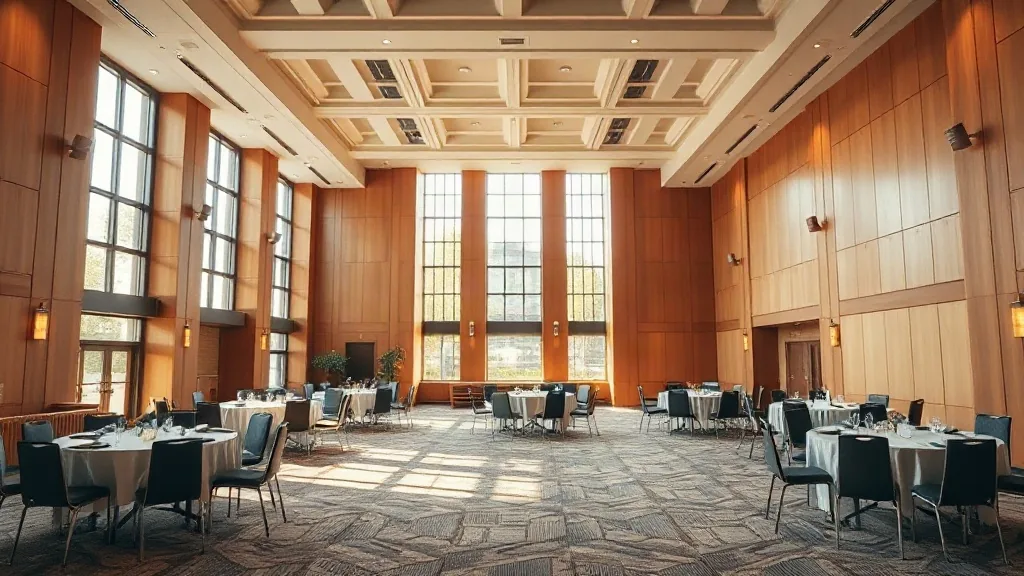
A coworking space with event capacity says: we’re scrappy, we trust each other in a work environment, this is a working session. That’s right for engineering and product teams in years one and two. It starts to feel wrong by year four when you have department leads who want to signal that the offsite matters.
A conference center says: we planned this, we take the time seriously, there’s a structure. That’s right when you’re using the offsite to finalize decisions that need buy-in from a 50-person organization.
A barn or farm property says: we want to disconnect from office mode and think differently. That’s right for culture-building, not for strategy alignment. Don’t choose a venue with a beautiful setting and bad Wi-Fi when your agenda depends on people accessing shared documents.
Decide what the offsite is for before you decide where it is.
Decision 2: agenda density is the variable most founders miscalibrate
Founders fill agendas. It’s the instinct. If you’re taking 50 people out of the office for two days, you want to justify that cost with wall-to-wall sessions. The result is an exhausted group that doesn’t retain the last four hours of content and doesn’t have the unstructured time that generates the actual relationship value.
The research isn’t formal, but the pattern is consistent: offsites that run at 70% structured, 30% unstructured produce more lasting organizational alignment than offsites that are 90% structured. The unstructured 30% is dinner, a group activity, a morning walk, or an hour of open discussion without a facilitator.
Build the unstructured time into the schedule explicitly. Block “dinner, open agenda” as a real item. If you don’t block it, it gets scheduled over.
For 50 people, two days, the skeleton looks like: half-day structured sessions day one, two hours of team activity, full evening open; full-day structured sessions day two with a two-hour break mid-day; close with 90 minutes of synthesis.
Decision 3: catering format shapes the energy in the room
Founders often treat catering as a logistics item. It’s also a culture signal. A plated lunch where 50 people sit assigned at tables for an hour produces one type of conversation. A buffet station setup where people move around and choose their own table produces a different one.
For a 50-person first offsite, skip assigned lunch seating. Set up round tables of 6-8 with no assigned positions. Let people sit with whoever they choose. Assign dinner seating (you can direct specific cross-functional conversations) but leave lunch open.
If budget is tight, a working lunch where food comes into the session room is not the right move. It splits people’s attention between food and the presentation. Take a real break, even if it’s only 45 minutes.
Decision 4: the communication before the offsite matters as much as the agenda
A 50-person offsite with no pre-reads, no clear statement of purpose, and no pre-work will generate two hours of scene-setting that should have happened before people arrived. The founder who runs the offsite will spend the first morning re-establishing context that half the room already had and the other half didn’t.
Send a two-page document to the whole group two weeks before the offsite. It should contain: one paragraph on why the company is doing this now, what the three main questions the group will try to answer, and what each person should prepare before they arrive. “Read the Q4 board deck, think about which market expansion question matters most to your team” is a preparation ask that takes 20 minutes and saves two hours of morning context-setting.
Where founders over-engineer
Team building activities. The outdoor ropes course, the improv workshop, the escape room buyout. Most of these produce compliance, not connection. People who want to connect with their colleagues will do it at dinner. Save the budget. A nice dinner runs $55-$80/head. A facilitated team-building experience for 50 people runs $3,000-$8,000 and is forgotten within 90 days.
The keynote speaker. The founder is the speaker. If you’re bringing in an external voice, it should be a customer, a board member, or an advisor with a specific perspective the team doesn’t hear regularly. Not a motivational speaker. Not a thought-leadership figure. Your 50-person team came to hear from each other, not a professional.
Branding and signage. Welcome banners, printed agendas, name badges with company logos. For a 50-person team that all know each other, this is overhead. Skip the printed materials and spend the money on one better meal or one additional evening of open time.
The budget allocation that works at the first-offsite scale
For a 50-person offsite with two days and one overnight, a working budget looks like this: venue rental or day rate at a conference center or coworking space with event capacity, $2,000-$4,000. Hotel room block for out-of-town attendees, negotiated directly, $149-$219/night per room. Catering at $80-$110/head per day for breakfast, lunch, and dinner, $8,000-$11,000 for two days. Group activity budget: $0-$1,500 if you use it, but you shouldn’t need it.
Total for a 50-person two-day offsite at a reasonable mid-tier venue: $18,000-$28,000. That’s $360-$560/person. It’s not a trivial number, but it’s defensible at the board or investor level when tied to a specific strategic output.
The founder who approaches the offsite budget with “what do we need” thinking gets to a good number. The founder who approaches it with “what would be nice” thinking ends up at $50,000 without a better strategic outcome.
What’s your team composition and the primary question you want to answer at the offsite? Those two things determine the venue format and the agenda structure.


