
The New CMO Who Wants a 200-Person Event in 60 Days
Sixty days is a real constraint, not an excuse to scale back ambition. What's achievable in 60 days versus what needs 90 or 120 depends on venue type, catering model, and AV production complexity. This is the honest timeline guide for the CMO who wants to know what's actually possible.

A new CMO joins in January and wants a 200-person customer event by mid-March. Eight weeks. The operations team says it can’t be done. The CMO says every company she’s worked for did it faster. Both positions are partially right, and the real answer depends on which venue type you’re using and which vendor categories can operate on a compressed timeline.
Here’s the actual breakdown.
What 60 days allows
Hotel ballroom or conference hotel. This is the most achievable format for 60 days. Large hotels and resorts have in-house catering, in-house AV (or a contracted in-house vendor), and standard event packages that can be confirmed in 5-7 business days. The limiting factor is availability, not lead time. For a 200-person event in any tier-1 or tier-2 market on 60 days’ notice, expect to find one or two viable dates at your preferred property, not five. If you have date flexibility (any Thursday or Friday in the 8-week window), availability opens up significantly.
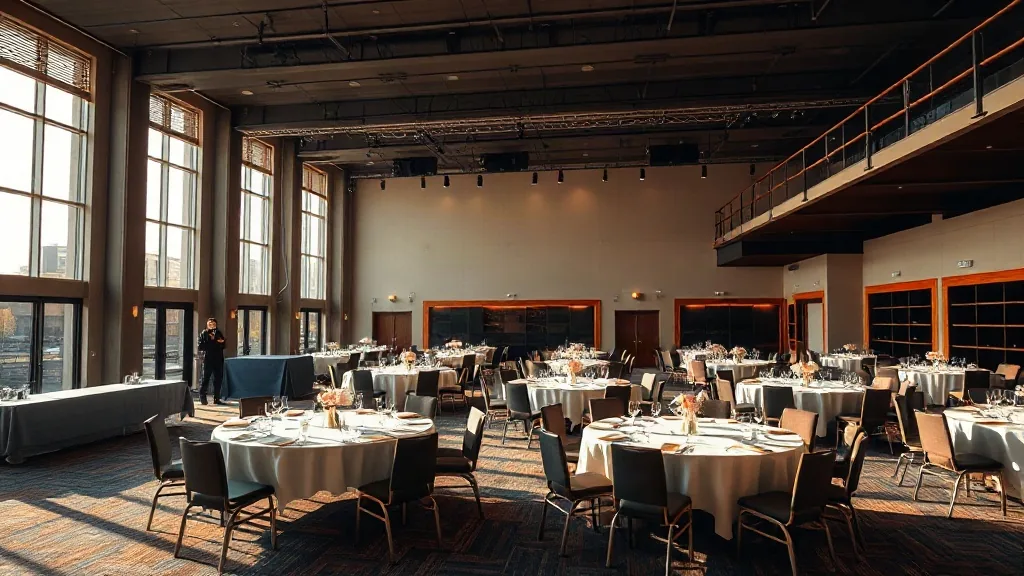
What you get on 60 days at a hotel: standard packages, in-house menus with modifications (not full custom development), and a production timeline that the hotel’s convention services team has run 40 times before. You’ll miss custom branding on the signage and you’ll use the venue’s existing linen colors. That’s a reasonable trade.
Conference center. Conference centers are often more available than hotel ballrooms on short notice because they serve a different booker pool (training programs, multi-day corporate meetings) rather than the social and gala market that typically books 6-12 months out. A purpose-built conference center in Atlanta or Nashville may have midweek availability in the 60-day window that a flagship hotel does not.
The trade-off: conference centers typically don’t do evening galas and receptions as naturally as hotel ballrooms. If the CMO’s event is a full-day conference with dinner, a conference center is fine. If it’s primarily a reception and dinner, a hotel ballroom serves the format better.
Industrial loft. Loft venues can book on compressed timelines because they have fewer in-house vendors (often none) and therefore fewer coordination dependencies. The problem: you’re starting a vendor sourcing process for catering, AV, furniture, and logistics simultaneously, all with a 60-day total window. Each of those vendors has their own lead time requirements. The caterer needs a final menu confirmation 3 weeks before the event. AV needs the room dimensions and rigging points to quote the job. Furniture rental for 200 people requires a 2-week lead time for delivery confirmation.
Lofts are achievable in 60 days with a very capable production team. They are not achievable in 60 days for a first-time or understaffed planning team.
What requires 90 days
Custom menu development. If the CMO wants a fully customized dining experience (a signature cocktail, a chef-designed menu aligned to the company’s brand), that requires a tasting, a menu revision, and final approval. Tasting scheduling alone takes 2-3 weeks when you factor in catering manager availability. Build in 90 days if food and beverage is a differentiator.
Custom production design. Branded staging, custom vinyl graphics, a corporate-branded backdrop for photography, and custom lighting rigs all require design approval before production. Design rounds take 2-3 weeks minimum. If the CMO has a brand team that moves fast, this can compress. If every design asset requires legal clearance, it cannot.
Speaker sourcing. Booking an external keynote speaker takes 6-12 weeks when sourced directly and 4-8 weeks when sourced through a bureau with existing relationships. If the CMO wants a known name at the event, 60 days is extremely tight. A speaker from within the company’s partner or customer ecosystem, booked directly, is achievable in 60 days with a strong existing relationship.
What requires 120 days
Exclusive hotel buyout. Reserving a hotel exclusively for a corporate group (hotel buyout, where the property operates only for your attendees) typically requires 4-6 months of lead time at any property worth buying out. The hotel needs to manage existing reservations, blackout the dates in their booking system, and negotiate with any groups that may have holds. Not achievable in 60 days except in rare cases of cancellation availability.
Custom fabrication. Physical set design, large-format structures, or custom signage that requires manufacturing lead time runs 6-8 weeks from approved design. On a 60-day event timeline, you have approximately 3 weeks to design approval and 5-6 weeks to event day. That’s mathematically possible with a fast creative team but leaves no room for revision.
The honest conversation to have in week one
Give the CMO three options with honest trade-offs:
Option A, 60 days: hotel ballroom or conference center, standard catering package, in-house AV, company-branded signage only (printed, not fabricated). Total planning complexity: moderate. Risk level: low if the venue has a competent convention services team.
Option B, 75 days: adds custom menu development and one outside AV vendor for upgraded production. Total planning complexity: moderate-high. Risk level: moderate.
Option C, 90 days: full production design, custom menu, external speaker, furniture and linen upgrade from the venue standard. Total planning complexity: high. Risk level: manageable with an experienced outside planner.
The CMO who gets that framing will almost always choose one of them rather than continuing to push for 60-day delivery of a 90-day product.
Where city tier changes everything on the 60-day timeline
In a tier-1 city (New York, San Francisco, Chicago, Los Angeles), hotel ballroom availability on a 60-day window is genuinely constrained on peak days (Thursday and Friday). The market books out 3-6 months in advance for premium properties. On a 60-day timeline in New York or San Francisco, you’re working with whatever cancellations and second-priority holds are available. You may find a good option, but you won’t have a choice of five.
In a tier-2 city (Atlanta, Dallas, Denver, Nashville, Austin, Phoenix), the 60-day window is workable for most mid-tier properties. The conference center market in these cities serves a high volume of corporate events and manages compressed timelines regularly. Conference centers in cities like Atlanta typically have availability managers who handle short-notice inquiries as standard practice.
In a tier-3 city, 60 days is rarely a constraint. Venues in smaller markets are hungry for corporate business and will prioritize a new client relationship over their standard booking lead time.
The CMO who moved from a company in Austin to a company in New York needs to understand that the 60-day timeline that worked at the previous company may not be realistic in the new market. That context is worth providing before the planning process starts.
What’s your event format (conference, reception, dinner, mix), and which city are you looking at? That combination determines what’s actually available on a 60-day timeline.


