
The Power Outage Mid-Product-Demo — How We Pivoted in 90 Seconds
The power cut at 2:17pm during the live hardware demo. Full room dark. The product VP was holding a prototype on stage with no display behind him. We were back in 90 seconds — here's exactly how.

At 2:17pm, the lights went out.
Not a flicker. Not a brownout. A full, clean cut — the kind where one instant every fixture in the room is on and the next instant you are in darkness. The kind of outage that means something upstream failed, not a tripped breaker.
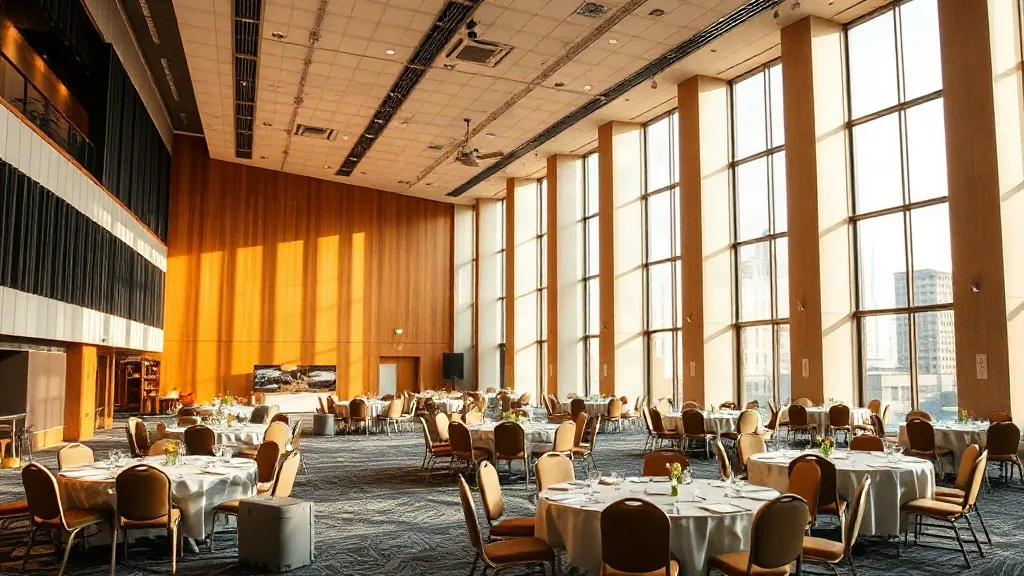
The product VP was standing on the stage with a hardware prototype in his hands. Behind him, a 16-foot rear-projection screen had been displaying a live data feed from the device. The screen was dark. The prompter was dark. The broadcast feed — we were streaming to 340 remote attendees across five countries — had dropped. The 180 people in the room were sitting in a space lit only by emergency lighting, which cast the venue in the kind of amber glow that looks like the opening of a disaster film.
The VP stood very still. I could see him from the production position at the back of the house.
I pressed the IFB in my ear and said two words to my team: “Go plan.”
What “plan” meant
About six months into my transition from AV vendor to independent production consultant, I started building what I call backup architectures into every show that has a live demonstration component. A backup architecture is not “we’ll improvise” — it’s a specific, pre-built set of alternatives that can be activated under known failure conditions, with assigned ownership and a trigger phrase.
For this event — a product launch for an enterprise software company with an integrated hardware component — I had three failure scenarios documented and rehearsed:
Scenario A: Software demo failure (the live product crashes). Backup: pre-recorded demo video on a separate laptop not connected to the network.
Scenario B: Display failure (projector or LED wall). Backup: wireless slide clicker hands to the VP with instruction to go narrative only; secondary screen in the front row for VP reference; room mics stay live.
Scenario C: Full power failure. Backup: battery-powered PA system, two 24,000mAh battery packs for the laptop running the demo video, wireless mics on battery, IFB system stays active.
We were in Scenario C.
My audio lead — who I had specifically worked through this scenario with during the pre-show rehearsal — activated the battery PA within 40 seconds of the outage. The system was a portable line-array unit that we had staged in the production alcove exactly because of this possibility. At 50 watts per side, it was not the 2,200-watt main system. It was enough.
My video lead switched the VP’s reference feed to a tablet mounted on a floor stand at downstage-left — he had pulled it from the case and positioned it in the first 30 seconds. The tablet was running a local copy of the presentation, independent of any venue infrastructure.
At the 90-second mark, the VP had audio back, a reference screen, and a working wireless mic.
What the VP did
This matters and I want to be honest about it: the VP was good. Not every exec is good in that moment. He stood still while we worked, which is the single most important thing a presenter can do during a technical recovery — do not fill the silence with nervous chatter, do not leave the stage, do not ask audible questions into a dead mic.
When the battery PA came up, he said — calmly, into his wireless mic — “Alright. Let’s keep going.” That was it. No apology, no explanation, no “I hope the tech team gets this sorted.” Just: let’s keep going. The room responded to his calm the way rooms always respond to calm under pressure: they settled.
He then made a choice that I thought was genuinely smart. Instead of resuming the demo at the point of failure, he said: “I was just about to show you something that this device does that no enterprise hardware has done before. Given the circumstances, I’m going to describe it first, and then we’ll show you when the room comes back.” He spent about three minutes describing the capability in plain language — no jargon, no slides — and the room was actually more engaged than it had been during the demo. Then the power came back.
2:28pm — restoration
Full power restoration at 2:28pm, eleven minutes after the outage. The venue’s facilities team had been working a building-level electrical issue — a transformer fault in the basement, unrelated to our production load. All venue systems restored.
We did a 90-second system check before resuming on the main system. The broadcast feed reconnected. The remote audience — who had received a holding screen with audio explaining a brief technical pause — stayed with us. We verified afterward that 94% of the remote attendees had remained connected during the outage window.
The demo ran, live, on the main system, starting at 2:31pm. It worked. The VP hit his talking points. The product performed.
In the debrief, the company’s head of marketing said the three-minute verbal description had been her favorite moment of the entire launch. “He talked about the product like a human for the first time all day,” she said. I thought that was interesting. The power outage had forced something that two weeks of rehearsal hadn’t.
What I built and what it cost
The battery backup system added $1,400 to the production budget — the portable PA, the battery packs for the laptop, the tablet as a secondary reference screen, and the extra rehearsal time to walk through Scenario C. The client’s original production budget did not include this line item. I proposed it three weeks before the event as a production-risk mitigation addition, explained what it covered, and the client approved it in about four minutes.
Fourteen hundred dollars. For the ability to say “go plan” and have something happen.
The alternative — standing in a dark room waiting for venue power to restore while 180 in-person attendees and 340 remote viewers wonder what is happening — costs more than $1,400. It costs confidence. And for a product launch, confidence is the product.
What I take from it
1. Build named failure scenarios before the event, not during it. Scenario A, Scenario B, Scenario C. Define them with your team. Assign ownership. Name the trigger. Rehearse them once. Knowing what “go plan” means before you say it is the entire point.
2. Battery backup for critical audio and reference display is not optional for product launches. I will not do a live product demo event without a battery PA and an independent reference screen for the presenter. The cost is small relative to the risk. I’ve added this to my standard production recommendation for any event with live demonstration content.
3. Train your presenter to stand still during a technical recovery. Thirty seconds of a calm presenter standing quietly is recoverable. Thirty seconds of a presenter talking nervously into a dead mic, leaving the stage, or audibly expressing anxiety is memorable in the wrong way. I now include “what to do if the tech fails” in every presenter briefing I run.
4. Broadcast continuity is a separate system design problem. The holding screen and audio message for the remote audience had been prepared in advance — not because I expected an outage, but because I expected that something would cause a pause at some point. A holding asset for your broadcast feed, pre-loaded and ready to activate, costs ten minutes to make and can preserve your remote audience through any gap.
5. Sometimes the failure creates the moment. The VP’s three-minute verbal description was the best thing he did all day. I am not suggesting you engineer power outages. I am suggesting that the forced constraint — no slides, no demo, just the product VP in a room with 180 people — revealed something about his product knowledge and communication ability that rehearsed performance had been covering up. When the technology fails, the human either shows up or doesn’t.
If you’re building a product launch or high-stakes live demonstration and you want a production consultant who thinks in backup architectures — product launches and conferences are exactly the kind of events I build contingency plans for. Send me the event spec and I’ll map the failure scenarios with you before you need them.


