
Booking a Venue in a City You've Never Visited: the Site Visit Substitute Checklist
Virtual site visits and photo galleries miss HVAC noise, loading dock access, neighborhood safety at 10pm, and the actual sightlines from the back row. Fifteen questions on a video call and three local contacts reduce the risk to manageable levels. Here's the full checklist.

I’ve booked venues in cities I’ve visited and cities I’ve never set foot in. The difference in preparation required is not slight. When I know a city, I already have answers to about 30% of the questions on my site visit checklist. When I don’t know the city, I’m starting from scratch on the neighborhood, the traffic patterns, the local vendor ecosystem, and the cultural context that shapes how an event feels.
Here’s the checklist I run for a venue I’ve never physically visited. Some of this can be done on a video call. Some of it requires a local contact. Three items require you to accept residual risk.
Questions for the video call (in this order)
1. Walk me through the load-in sequence while the camera faces the loading dock and service entrance.
Not the front door. The loading dock. I want to see the vehicle access, the dock height, and whether there are stairs between the dock and the main event space. Stairs with no freight elevator at a 200-person conference means every AV case and catering crate gets hand-carried up steps. I’ve learned this too late twice.
2. Show me the view from the back of the main room, sitting down.
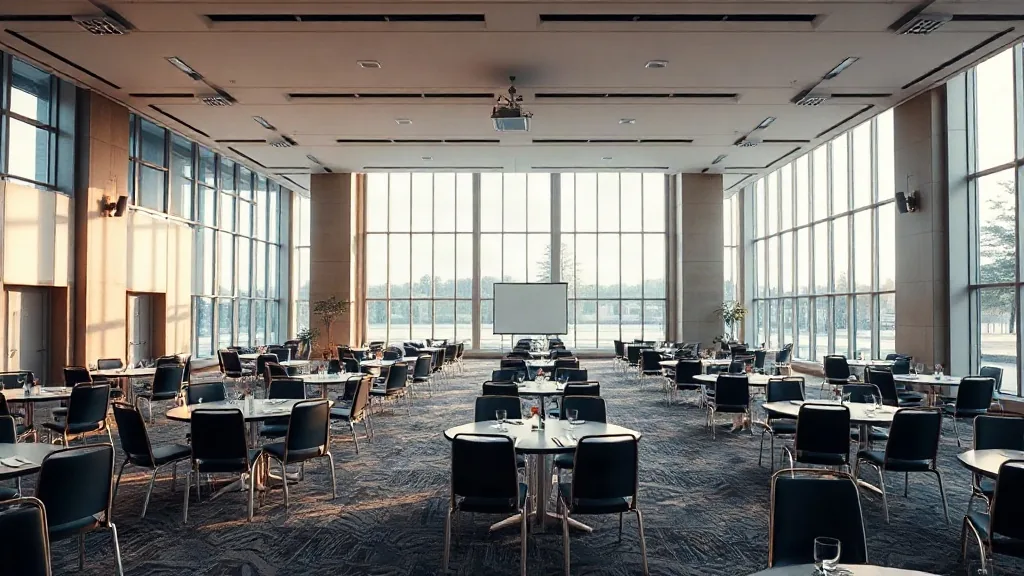
Ask the venue coordinator to sit in a chair at the back row while holding the phone or laptop camera. Is the screen visible? Is the stage visible? What’s the sightline from the corners? Venue photos are taken from the front corners with a wide-angle lens. That’s not where your back-of-room attendees sit.
3. Turn on the HVAC system and hold the phone near the air handler.
This sounds bizarre. Do it. Conference rooms and hotel ballrooms with aging HVAC infrastructure produce a continuous roar that sits at about 55-65 decibels. That’s acceptable for casual conversation and completely incompatible with an AV setup that doesn’t include wireless mics and a PA system. I’ve walked into rooms where the HVAC noise was inaudible during the initial venue call and overwhelming during setup on event day. Catch it now.
4. How far is the nearest restroom from the main event space, and how many stalls?
Ask for the walk with a timer. Thirty seconds each way is a 3-minute round trip. With 180 people taking breaks simultaneously, restrooms that are 45 seconds away will have lines that extend past the event space door.
5. What is the parking situation at 7pm on a weeknight?
Venue sales teams describe parking as “ample” regardless of actual availability. Ask specifically about 7pm, which is when corporate dinner events typically load their guest peak. Ask whether there is a dedicated lot, valet service, or whether guests park in a shared structure. Ask the cost per car. Parking surprises are a reliable complaint category.
6. What’s the closest bar, restaurant, or hotel within walking distance?
This tells you about the neighborhood, the after-dinner options, and whether guests who want to continue conversations after the event can do so without organizing transportation. A venue with nothing walkable within a quarter mile creates a hard stop at event end. Sometimes that’s fine. Often it isn’t.
7. What’s the cell signal like in the main room?
Stand in the center of the room and check your phone’s signal strength on camera. Corporate events with attendees who step out to make calls need at least three bars of LTE. Some venues, particularly underground ballrooms and historic properties with thick walls, have near-zero cell signal. Know this before your attendees arrive.
Questions that require a local contact
Some things you cannot learn from a venue representative. The venue won’t tell you that the neighborhood changes character after 9pm, or that the loading dock is shared with the restaurant next door and occupied until midnight on Fridays, or that the “preferred caterer” they recommend has a 40% on-time delivery rate.
You need someone who has worked events in this city. The options:
A local event planner. A 90-minute consulting call with a planner based in that city, at $100-$200, produces more accurate intelligence than three hours of Google research. Ask them about the venue, the caterer, the neighborhood, and the local AV vendor market. Pay for the call. It’s a $200 insurance policy on a $100,000 event.
The venue’s most recent corporate client. Ask the venue for a reference at a company similar to yours that has used the space in the last 12 months. Call that reference and ask specifically about load-in, catering quality, and any surprises. Most venues will provide a reference list. Most planners don’t call it.
Your hotel contact. If attendees are staying in a hotel nearby, the hotel’s concierge team knows the neighborhood, the transportation options, and whether the venue you’re using has a solid reputation for service.
Three residual risks you accept when you don’t visit in person
Smell. Some venues have HVAC systems that produce a musty or chemical odor when running under load. You cannot evaluate this remotely. Acknowledge it, plan to have the venue open for ventilation at least two hours before guest arrival, and accept the residual risk.
Acoustic quality. The way sound behaves in a large room depends on ceiling height, surface materials, and HVAC noise in ways that a video call cannot fully capture. If your event has a critical listening component (product demo audio, a keynote that requires near-silence), consider bringing your AV vendor on-site for a pre-event acoustic test even if you don’t make the trip yourself.
The intangible feel. There’s a reason site visits are standard practice. The combination of scale, light quality, smell, ambient sound, and proportional relationship of room elements creates a sensory impression that no video call replicates. You can reduce this risk but not eliminate it. The first time you use a venue without visiting in person, accept that you’re operating with partial information and communicate that clearly to your client or stakeholder.
What city are you booking in, and what’s the event format? I can help you identify the specific local contacts and the questions most relevant to that market.


