
The SVP Who Changes the Guest Count at Week Minus Three: Damage Control by Venue Type
Guest count changes inside three weeks trigger attrition clauses, catering minimums, and room-setup fees that the original contract didn't anticipate. The math changes significantly by venue type, and so does your best move for softening the damage.

Three weeks before a 200-person sales conference, the SVP calls. “We need to add 40 people.” Or: “Legal says the client list can’t come. We’re down to 130.” Both scenarios feel like a crisis. One of them is worse than the other, and which one depends entirely on the venue type and the contract you signed.
Here’s the actual damage by venue type and what you can do in the window you have.
Adding guests: the expansion problem
Adding 40 people to a 200-person event sounds simpler than subtracting them. It often isn’t. Here’s the math by venue type.
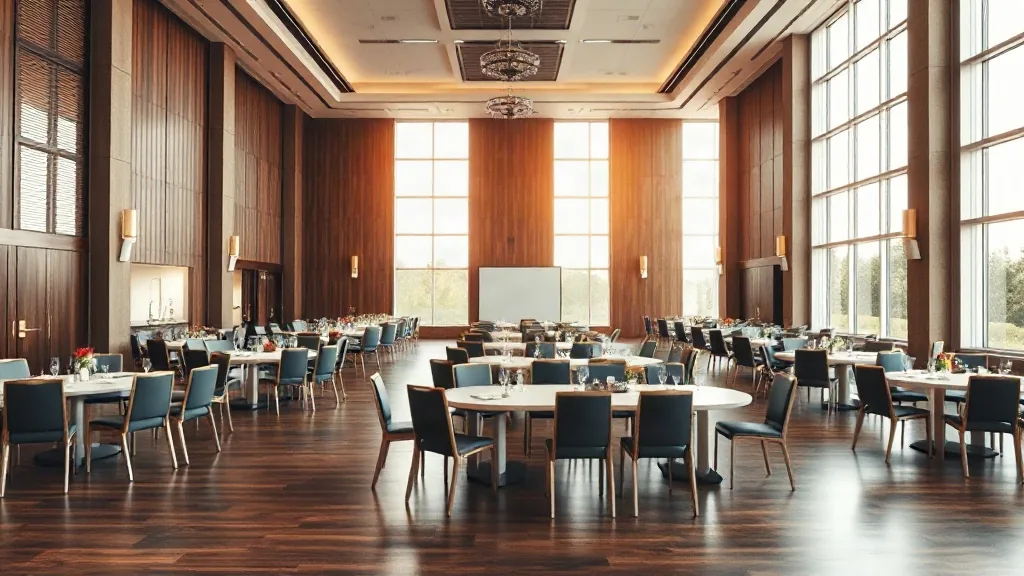
Hotel ballroom. Most hotel ballrooms have a setup maximum that was spec’d at contract signing. If your original setup was 200 at rounds of 10, the room was designed for 20 tables. Adding 40 people means 4 more tables, which may or may not fit within the room’s maximum capacity (most jurisdictions cap ballroom occupancy at 6-8 square feet per person for banquet setup). Your hotel or resort catering manager can confirm the code maximum. If the room can physically accommodate 240, you pay for 40 additional place settings, additional catering heads, and often an additional server. That runs $60-$120/head in direct costs plus a service-charge adjustment.
The harder problem: if the hotel also holds a room block for your event and the 40 new guests need rooms, you may have no inventory. Hotels release unsold room-block inventory to general sales at week-minus-30 for many markets. If you’re at week-minus-21, your extra 40 guests may be paying rack rate at a different property.
Banquet hall. Banquet halls are often more flexible on headcount expansion because they may be running multiple events simultaneously and can adjust table counts without affecting room capacity the way a hotel does. Call the operations manager directly (not sales) and ask whether the room layout can accommodate 240 with the original setup type. Also ask whether the kitchen can handle the additional covers; some smaller banquet halls have kitchen constraints that prevent same-day covers above a threshold.
Conference center. Adding 40 people to a conference center event is primarily an AV and seating problem, not a catering problem (most conference centers run day-rate catering with flexible cover counts). Add chairs to the general session space. Confirm the screen is visible from the new rows. The additional cost is usually modest: $15-$25/head in day-rate adjustment plus a chair rental and layout fee of $200-$400.
Dropping guests: the attrition problem
This is the scenario that costs real money. When the guest count drops by 30% or more inside 30 days, attrition clauses activate.
Hotel with room block. If your contract committed to 150 room nights at $249/night and actual pickup is 105 room nights, you owe the hotel revenue on the missing 45 rooms. At 80% attrition protection, the hotel can claim revenue on 0.80 x 150 = 120 rooms minimum. You delivered 105, short by 15 rooms. The attrition penalty: 15 rooms x $249 x the contracted number of nights. For a three-night block, that’s $11,205. This is a real, collectible bill.
Your best move at week-minus-three: call the hotel’s director of sales (not your event coordinator) and ask whether the unsold rooms have already been released to inventory. If they haven’t released the rooms yet, the hotel has no actual revenue loss yet, and you can negotiate a reduction in the attrition penalty. Offer to extend the event’s F&B minimum by $2,000-$3,000 as a concession. Many hotels will take that trade.
Banquet hall with F&B minimum. If you contracted at $18,000 F&B minimum for 200 guests ($90/head) and you’re now at 130 guests, your actual F&B spend at the same per-head cost would be $11,700, which is $6,300 below the minimum. The venue can claim that $6,300 regardless of what you actually consume. Your negotiation option: ask whether the F&B minimum can be partially satisfied through an upgraded menu (better wine, tableside dessert, premium catering options that cost more per head). Moving the per-head cost from $90 to $112 for 130 guests produces $14,560 in food and beverage spend, which narrows the gap to $3,440. Some venues will accept this. Some won’t.
The conversation to have before the changes happen
The most effective damage control happens before the SVP makes the call. At contract signing, add one sentence to the guest count clause: “Final guest count may be adjusted within 15% (upward or downward) within 21 days of the event without triggering minimum adjustments.” Many venues will accept this range for events booked more than 90 days out. Small banquet halls and independent event spaces accept it more readily than major hotel chains.
If you didn’t get that clause and you’re now at week-minus-three with a changed count, your leverage is limited. But you still have one card: the future booking relationship. If your company uses this venue regularly, or if you’ve used it before, mention that. “We’ve held three events here in the past two years and plan to continue” is not a guarantee of leniency, but it shifts the conversation from contract enforcement to relationship management.
The catering vendor conversation nobody has
When the headcount drops, planners call the venue. They often forget to call the caterer separately. At a banquet hall or event space with an exclusive caterer, the caterer and the venue are the same entity. But at venues where catering is contracted independently, the caterer has their own commitment position.
A caterer who has pre-ordered food and staffed the event based on 200 guests will have already incurred real costs when you call at week-minus-three with a count of 130. Their position is different from the venue’s: they can’t resell perishable inventory the way a hotel can potentially resell a hotel room.
Call the caterer the same day you call the venue. Ask: what’s the cancellation or reduction policy in our contract? What have you already purchased or committed to for this event? Is there a way to reduce the per-head count while keeping the per-head quality level, which would hold your revenue floor?
Many caterers will accept a 15-20% count reduction without a penalty if the request is made early enough in their prep timeline, typically more than 10 days before the event. Below that window, you’re often paying for what was purchased.
What’s your current contracted headcount, the new number, and the venue type? With those three variables I can tell you the likely financial exposure and the specific ask that has the best chance of softening it.


