
The CTO Running the Engineering All-Hands: What Every Tech Venue Gets Wrong
CTOs care about Wi-Fi bandwidth per device, dedicated power at every seat, and screen size relative to room depth. Eight infrastructure questions every CTO should ask before signing a venue for an engineering all-hands, along with the specific numbers that matter.

The CTO who runs an engineering all-hands for 80-150 engineers has specific infrastructure requirements that most venue sales managers have never been asked about. I know because I used to be on the AV side, quoting jobs for tech company events, and the CTOs who showed up to the site visit with real questions were a distinct minority. Most were fine with the venue’s “complimentary Wi-Fi” description until 120 laptops tried to join simultaneously.
Here are the eight questions that matter, with the specific numbers behind each.
Question 1: What is the venue’s sustained bandwidth to the internet, and how is it shared?
The “complimentary Wi-Fi” at a hotel or conference center is almost always a shared residential-grade connection split among all event spaces and guest rooms simultaneously. For an engineering all-hands where 120 engineers are all on their laptops, often simultaneously running code reviews, downloading packages, or joining secondary video calls, you need dedicated event bandwidth.
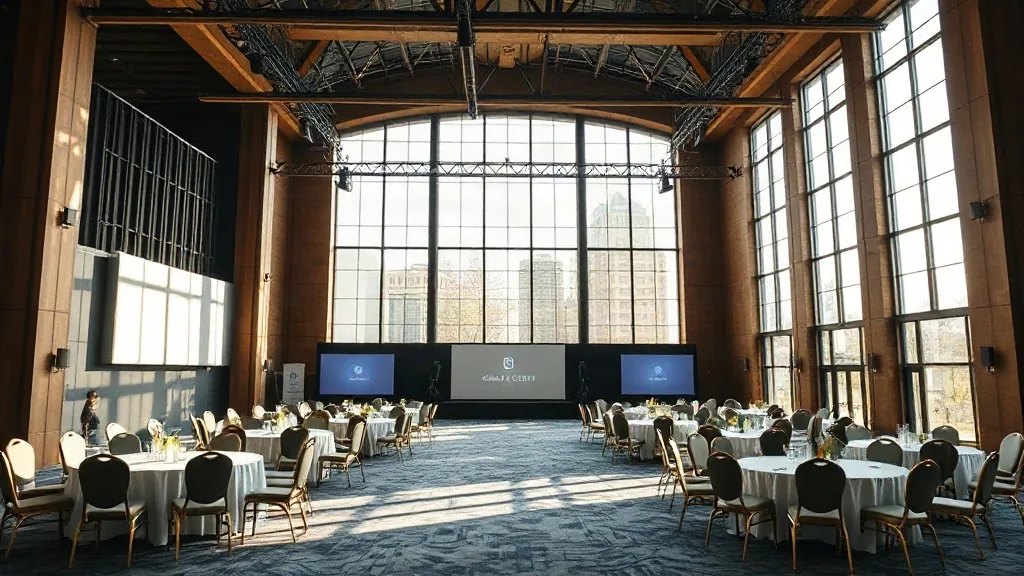
Ask for the dedicated event bandwidth as a separate line item. Standard ask for a 100-engineer event: 100 Mbps dedicated, not shared. Many hotels charge $500-$1,200 for dedicated bandwidth. It’s worth it. Many conference centers include it in the day rate; confirm before assuming.
Also ask: is the bandwidth shared with the rest of the hotel or event center during your event, or is your event segment physically isolated? These are different infrastructure configurations. The second is what you actually want.
Question 2: What is the access point density and 2.4/5 GHz split?
A venue with two access points for a 6,000-square-foot ballroom serving 120 devices is useless. You need one access point per 30-40 devices, ideally one per 25. For 120 engineers each with a laptop and a phone, plan for 240 devices minimum.
Ask whether the venue uses enterprise-grade access points (Cisco Meraki, Aruba, Ruckus) or consumer-grade equipment. Most hotels installed consumer-grade Wi-Fi systems and have not upgraded them. Ask specifically about 5 GHz support; most enterprise devices will prefer it, and 5 GHz networks are less congested in dense environments.
Question 3: Is there power access at every seat?
Engineers don’t put their laptops away during all-hands sessions. They’re open the whole time. Two hours into a session, battery levels become a real distraction: people moving to find outlets, extension cords appearing on the floor, laptops going to sleep during a presentation.
For an engineering event, ask: is there power at every seat, or at designated power strips distributed through the room? A conference center designed for corporate training often has floor-mounted power outlets in the seating area or trench-distributed power under removable floor panels. A hotel ballroom almost never does. An industrial loft venue can be wired for power distribution but requires electrical planning and lead time.
Budget $1,500-$4,000 to bring in a temporary power distribution system if the venue doesn’t have seated power. It’s worth doing.
Question 4: What is the screen size relative to the room depth?
Standard event industry rule: the screen diagonal in feet should equal approximately one-sixth of the room depth in feet. A room that is 80 feet deep needs a screen that is at least 13 feet diagonal. For code review presentations, pull requests on GitHub, or terminal output demonstrations, engineers need to read code on that screen. That requires higher resolution and larger screen size than a standard corporate keynote.
Ask for the screen size and the room depth. Calculate the ratio. If the venue’s default screen is undersized for the room, ask about a larger screen rental. A 14-foot diagonal HD projection screen rents for $600-$1,200/day outside the venue’s in-house AV package.
Question 5: What is the noise floor in the room during normal operation?
HVAC noise, particularly in basement ballrooms and interior conference rooms without exterior windows, sits at 55-65 decibels in some venues. Engineers working on laptops may not notice. Engineers trying to listen to a presentation with technical content, or engineers in a breakout session trying to discuss architecture decisions, will notice immediately.
Turn on the HVAC and listen during the site visit. If you need to raise your voice to talk at a conversational distance, the noise floor is too high for a technical session without a full PA system.
Question 6: Can the venue support a demo environment with multiple simultaneous live app connections?
Some engineering all-hands sessions include live product demonstrations, load testing presentations, or live coding exercises. These require stable internet connections for multiple simultaneous outbound sessions. Ask whether the venue has firewall restrictions that would block specific ports or protocols (VPN, SSH, custom application ports). Corporate hotel networks frequently block non-standard ports as a security policy.
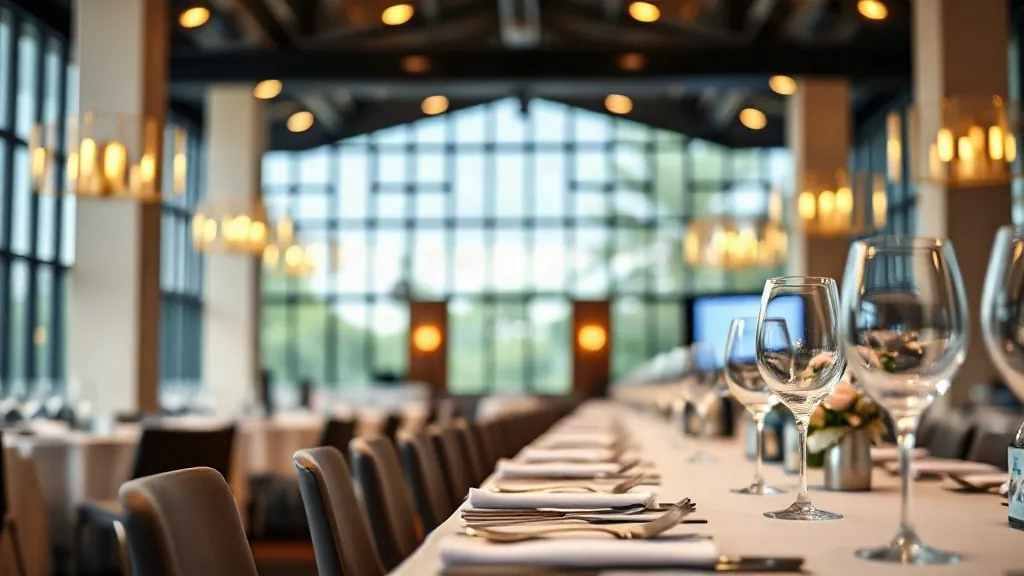
If the venue’s network blocks ports your engineers need, you have three options: negotiate a network policy exception (often possible with advance notice), bring a dedicated cellular router as a demo backup, or limit live demos to pre-recorded video.
Question 7: What is the HVAC temperature control granularity?
120 engineers in a room generate heat. Laptop cooling fans generate heat. Projectors generate heat. A room that starts at 68 degrees at 9am when 30 people are present will be 76 degrees by 11am when 120 people are present and the projector has been running for two hours. If the thermostat only adjusts in 2-degree increments and takes 15 minutes to register a change, you’ll spend the last three hours of the day-one session managing a room that’s too warm.
Ask: who controls the thermostat, can it be adjusted during the event, and what’s the adjustment lag time?
Question 8: Is there a separate engineers’ work area adjacent to the main session room?
Engineering all-hands events often have a cadre of engineers who are on-call or who need to be reachable for production issues during the event. These engineers need to be able to step out and work without disrupting the general session.
Ask whether there’s a lobby, a pre-function space, or a breakout room adjacent to the main session room where engineers can set up laptops without losing audio access to the main room. Some venues can pipe audio to adjacent spaces. Others can’t.
What’s your confirmed headcount and city? I’ll help you identify coworking spaces or purpose-built conference venues with the technical infrastructure your engineering team actually needs.


