9 Tulsa Art-Deco Venues for Corporate Events
Tulsa built its Art Deco skyline on oil money in the 1920s and 1930s, and those buildings are still standing, still operating, and still the most interesting corporate event spaces in the state. Nine Deco-era venues where the architecture is genuinely doing the work.

I’ve planned events in a lot of cities where the historic venue stock is a marketing claim more than an architectural reality — “historic” meaning built in 1978 with some exposed brick added during the renovation. Tulsa is not that city. Tulsa built its Art Deco core during one of the most concentrated periods of oil wealth in American history, and the buildings that went up in the 1920s and 1930s are some of the finest examples of Deco architecture in the country. The Philcade, the Philtower, the Boston Avenue Methodist Church, the Tulsa Union Depot — the city has a legitimate claim to being one of the great Deco destinations in the United States.
For corporate events, this matters in a specific way. Art Deco architecture photographs exceptionally well, communicates wealth and ambition without shouting, and creates a room that guests remember as a visual experience independent of anything the event itself does. When the venue is a 1929 oil-money tower restored to its original detail, the event starts with a setting that most cities cannot provide at any budget.
I’ve been booking Tulsa since 2019, mostly for energy-sector and healthcare clients doing regional offsites. The city’s event infrastructure is deeper than the size suggests and the pricing reflects a secondary Oklahoma market rather than a premium destination.
I’ve run events at five of these.
If you want the full set, the Tulsa historic venue directory is long. This is the slice I trust.
What I’m filtering for
- Genuine Art Deco architecture, not period-costume renovation. Original materials, original detail, original spatial logic. If the Deco is applied as wallpaper over a 1970s building, it’s off the list.
- A room that runs a professional corporate event. Beautiful building with no AV and a catering kitchen that hasn’t been touched since the Carter administration is not on this list.
- The Tulsa value equation. Tulsa prices below Oklahoma City and well below Dallas. Venues that have missed this memo get removed.
The list
1. The Tulsa Club (Downtown)
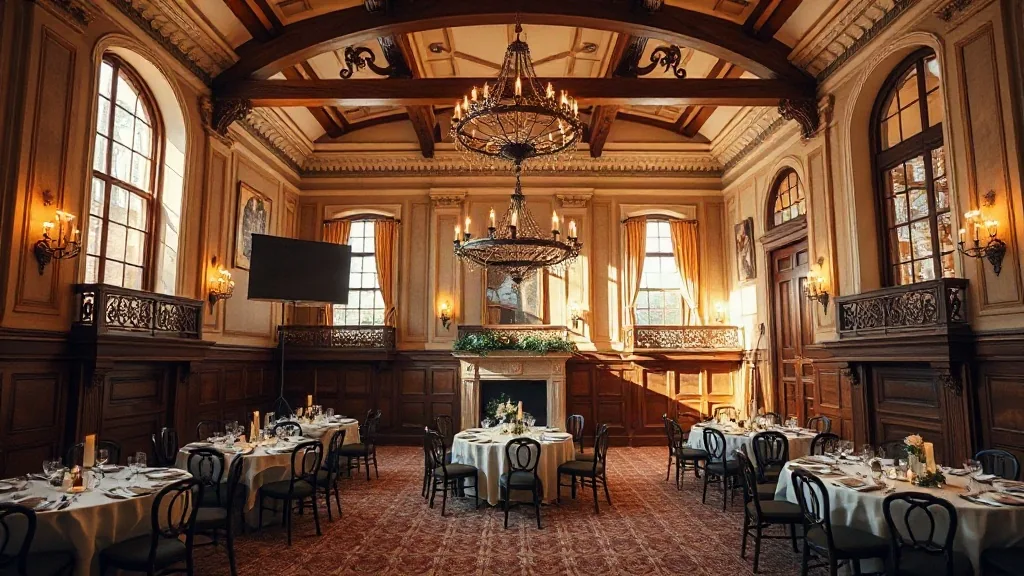
A 1927 private city club — fully restored, event spaces throughout multiple floors, a grand ballroom with original Deco plasterwork, and a position at the center of Tulsa’s downtown that puts it within walking distance of every major hotel in the area. Capacity ~300. This is the Tulsa anchor: the room that senior energy-sector and finance clients respond to immediately, the venue that out-of-town guests photograph before the event starts. The restoration is serious and the event operations have caught up to the architecture.
2. The Philtower Building (Downtown)
A 1927 Gothic-Deco skyscraper that is one of Tulsa’s most recognizable buildings — available for private events in the upper floors with city views and Deco detail throughout. Capacity ~150. For a senior-leadership dinner or a small executive event where the room is everything and the size is right, the Philtower is the Tulsa pick that most out-of-town planners don’t know about. Worth the advance coordination to access.
3. The Tulsa Union Depot (Downtown, Brady Arts District)
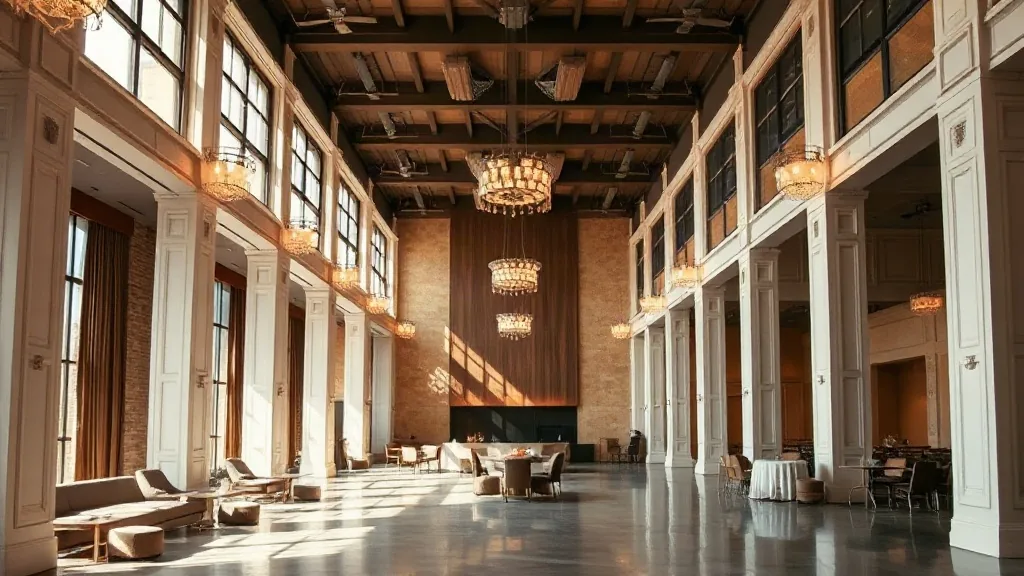
A 1931 Deco railroad station that has been restored into an event venue — the grand waiting hall, the high ceilings, the terrazzo floors, the original materials throughout. Capacity ~600. For a large corporate gala or a company celebration where scale and grandeur are both required, the Union Depot is Tulsa’s most impressive event room. The Brady Arts District location puts it in the most actively programming neighborhood in the city.
4. The Mayo Hotel (Downtown)
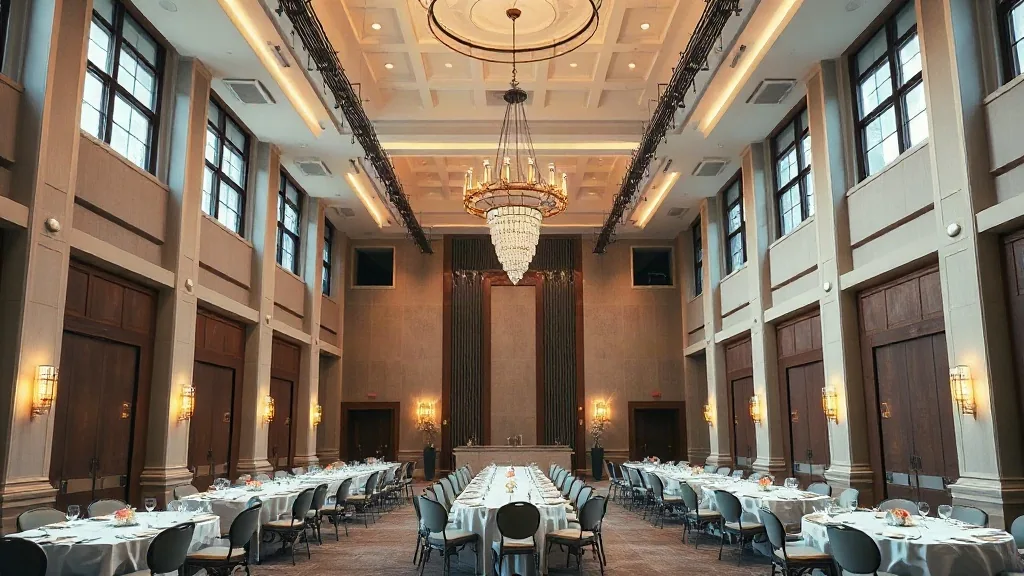
A 1925 Renaissance Revival hotel — Tulsa’s grand hotel of the oil-era, restored to full operation with a ballroom, event spaces, and a full hotel infrastructure on property. Capacity ~400 in the ballroom. For a multi-day conference with a room block or a formal gala where the hotel setting is part of the operational brief, the Mayo is the answer. The building’s history is woven into Tulsa’s oil-era story and it carries that weight appropriately.
5. The Philcade Building (Downtown)
A 1931 Deco building with retail-level arcades and upper-floor spaces — smaller scale than the Tulsa Club or Union Depot but with some of the finest Deco detail in the city. Capacity ~200. For a mid-size client dinner or a leadership event where the architectural specificity is the brief, the Philcade is the Tulsa room for planners who’ve already done the more obvious options.
“We’ve run four successive annual dinners in Tulsa and moved through the major Deco venues in sequence. Clients who’ve attended multiple years started commenting on the architectural progression — which is exactly the kind of thing that makes a client feel like the event is curated rather than assembled.” — Director of Client Engagement at an energy-services company.
6. Boston Avenue United Methodist Church (Downtown)
A 1929 Art Deco church that is a National Historic Landmark — available for private events with advance coordination, one of the finest pieces of Deco architecture in the United States by any measure. Capacity ~1,200 in the main sanctuary. I include this with a genuine caveat: the church is a working congregation and the events program is selective. For the right event — a memorial service, an industry convening with a civic dimension, an event where the architectural pilgrimage is part of the intent — it is incomparable. For a standard corporate conference, start with the Tulsa Club.
7. The Woody Guthrie Center (Brady Arts District)
A museum and cultural center dedicated to Woody Guthrie, located in the Brady Arts District — private events in the gallery spaces, an auditorium, and a program that connects Oklahoma’s labor and folk history to the present. Capacity ~300. For a company with a labor-relations, manufacturing, or workers’-advocacy identity, or for any event where the Oklahoma-specific cultural context is meaningful, the Woody Guthrie Center is the Tulsa venue that no other category of space can replicate. For a conventional energy-sector dinner, it’s off-brief; for the right client, it’s exactly right.
8. Gilcrease Museum (Northwest Tulsa)
A major collection of American West art and artifacts — private events in the museum spaces and on the grounds, a setting that positions Tulsa as a serious cultural destination rather than a secondary Oklahoma city. Capacity ~400 across the event spaces. After-hours corporate events amid the collection. For a leadership dinner or a client reception where the Western American identity is a relevant frame — energy companies, agriculture-adjacent businesses, law firms with Oklahoma-territory roots — the Gilcrease delivers it with institutional weight.
9. The Campbell Hotel (Midtown)
I saved this for last as the change of scale and register — a boutique hotel in a restored 1927 building in Midtown, smaller than everything else on this list, with 26 rooms and event space for groups up to ~75. Capacity is the real constraint. But for a senior-leadership retreat, a small board dinner, or a client event where intimacy is the point and the Deco bones are still present in the bones of the building, the Campbell is the Tulsa pick that feels most deliberate and most specific. It’s the venue I’d use for a group of 40 executives who don’t need to be impressed with scale and will notice the quality of the room they’re actually in.
A note on Tulsa’s Deco calendar and the Brady Arts District
Tulsa’s Art Deco Heritage Festival runs annually and concentrates the city’s best architectural programming into a single window — guided tours, building openings, events in spaces not normally accessible. For a corporate event that deliberately incorporates the Deco heritage as a program element, scheduling around the festival is worth exploring. The Brady Arts District, which surrounds the Union Depot and the Woody Guthrie Center, has become the programming center of Tulsa’s arts and events community, and the restaurants, galleries, and event spaces in that district give any multi-day event a credible dinner-and-after anchor.
One practical note on Tulsa logistics: Tulsa International Airport is 20 minutes from downtown, direct from Dallas, Denver, Atlanta, Chicago, and Houston. For a regional conference drawing from the energy-sector corridor — Oklahoma City, Houston, Midland-Odessa, Denver — Tulsa is often the easiest logistics answer on the map, and the combination of direct flights, affordable hotels, and the Deco venue stock makes the value proposition genuinely compelling for clients who haven’t considered it.
Picking from this list
- Formal gala, Deco grandeur, large group → Tulsa Union Depot
- Senior-client dinner, historic prestige → The Tulsa Club
- Multi-day conference, hotel on property → The Mayo Hotel
- Small leadership retreat, intimate scale → The Campbell Hotel
- Cultural context, Western American identity → Gilcrease Museum
If none fits, the wider Tulsa historic venue list has more, and Tulsa corporate event venues across all categories covers conference centers, hotels, and meeting spaces. Or zoom out to historic venues across Oklahoma.
Send me the headcount, whether the Deco context is intentional in your brief or just a bonus, and the date — and I’ll narrow it to two.