
What I Actually Pay for AV in a Tier-1 vs Tier-3 City (Based on 6 Years of Invoices)
Tomas Acosta pulls six years of AV invoices to show the real cost gap between NYC, SF, and LA versus mid-sized cities for a 200-person conference. The line-item breakdown explains where every dollar goes and why the tier-3 quote looks low until you read the rider.

Six years of invoices. I have them in a folder called “AV Pain.” The lowest I’ve ever paid for a functional 200-person conference AV setup was $5,800, in Tulsa in 2021. The highest was $58,400, in San Francisco in 2023. Same headcount. Roughly the same program: general session with a keynote, two breakout rooms, live sound, basic confidence monitors, no broadcast or streaming.
The gap is not explained by vendor greed. It’s explained by union labor rates, freight costs, equipment ownership, and the simple fact that a sound technician in Manhattan charges $75 to $95 per hour while the same role in Columbus, Ohio runs $38 to $52. The geography bakes into every line.
Here’s what I’ve learned from paying both.
The tier-1 baseline: $18,000 to $45,000 for 200 people
In tier-1 cities (NYC, SF, LA, Chicago, Boston, DC), you’re almost always working inside a hotel or convention center that either owns or controls AV through an in-house or preferred vendor. That vendor markup on equipment runs 35 to 60 percent above open market. You can sometimes bring an outside AV company, but you’ll pay a house labor fee of $1,500 to $4,000 for the privilege.
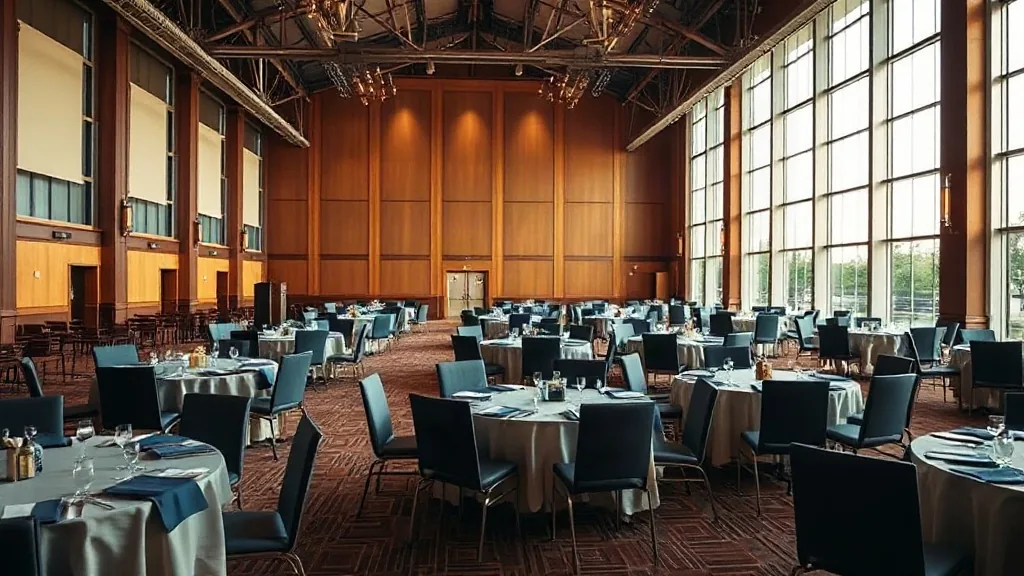
In the tier-1 hotels I book in San Francisco and New York, a standard 200-person general session setup looks like this:
| Line item | SF/NYC range |
|---|---|
| Projection (twin screens, 12K+ lumens, fold-flat) | $4,200 - $6,800 |
| Audio (line array or distributed, 2 wireless mics, mixing board) | $3,800 - $5,400 |
| Stage, riser, and podium | $1,800 - $3,200 |
| Confidence monitors and prompter | $900 - $1,600 |
| Lighting (basic wash, no theatrical) | $1,400 - $2,800 |
| AV technician labor (2 techs, 10-hour day each) | $1,600 - $2,800 |
| Setup/teardown/freight | $2,200 - $4,000 |
| Total, general session only | $15,900 - $26,600 |
Add two breakout rooms at $2,200 to $4,500 each and you’re at $20,300 to $35,600 before streaming, recording, or any graphic support.
The hotels at the top of this range aren’t giving you better equipment. They’re giving you the same equipment, owned by the venue, with a labor force subject to collective bargaining agreements that set minimum crew sizes and straight-time vs overtime thresholds. An eight-hour event day that runs to 8:30 pm triggers overtime for the whole crew. That alone can add $2,400 to a bill.
The tier-3 baseline: $6,000 to $14,000 for 200 people
In tier-3 cities (population under 400,000, outside major metro pull), the same 200-person scope comes in at a fraction of that. The conference centers I’ve used in cities like Raleigh, Tulsa, and Green Bay have in-house AV at significantly lower rates, or they allow outside vendors without a fee.
A comparable 200-person general session breakdown in a tier-3 city:
| Line item | Tier-3 range |
|---|---|
| Projection (single large screen or twin, 8K lumens) | $1,200 - $2,400 |
| Audio (house PA system or portable line array, 2 wireless mics) | $1,000 - $1,800 |
| Stage and podium | $600 - $1,200 |
| Confidence monitors | $350 - $600 |
| Lighting | $500 - $900 |
| AV technician labor (1-2 techs, 8-hour day) | $480 - $1,100 |
| Setup/teardown | $400 - $700 |
| Total, general session only | $4,530 - $8,700 |
The tier-3 totals look inviting. And they often are, with one major caveat.
Where the tier-3 quote falls apart
The low-end tier-3 quote often assumes you’ll use the house sound system, which was sized for 80 to 120 people in a fixed configuration. A 200-person room with a wide floor plan and hard surfaces is a different acoustic situation. When I’ve pushed tier-3 vendors to upgrade from house PA to a proper flown or column line array for a rectangular 200-person room, the audio line alone jumps from $1,000 to $2,800.
The second gap is screen sizing. The tier-3 quote usually includes a single 10-foot screen in a room that’s 80 feet long. For 200 people seated in theater style, that’s not enough throw. Two screens and an IMAG (image magnification) confidence feed for the speaker adds $1,800 to $3,500 to the quote.
After those corrections, a properly scoped 200-person conference AV in a tier-3 city runs $7,000 to $12,000 for the general session, with two breakouts adding $2,000 to $3,500 total. Still well below tier-1, but the gap narrows from 4x to 2x once you’re comparing equivalent setups.
The union labor question
In cities with IATSE labor agreements, minimum crew size rules apply inside certain venues. At a union hotel in Chicago, you might be required to hire a minimum of four stagehands even if your event needs two. That floor can add $800 to $1,600 to a day’s labor cost with no production benefit.
If you’re booking a conference center rather than a hotel, check whether the venue’s AV contract specifies union labor. Conference centers vary widely here. Purpose-built facilities outside major metro cores often have no union requirement and staff their own AV crews at straight-time rates.
Convention centers are almost universally union in tier-1 cities. The Javits Center in New York, McCormick Place in Chicago, and Moscone in San Francisco all operate under IATSE contracts. Budget accordingly: your AV line for a 200-person event at a convention center in one of those cities will rarely come in below $25,000 once union minimums, freight, and rigging are applied.
What I actually do differently in each tier
In tier-1 cities, I scope AV first and build the rest of the budget around it. I ask the venue on the first call whether AV is in-house exclusive, and if the answer is yes, I request their rate card before I sign anything. I’ve walked from a venue because the in-house AV quote for a 200-person event came in at $52,000 and they wouldn’t allow outside vendors.
In tier-3 cities, I scope more carefully for the acoustic math. I ask for the room dimensions and ceiling height before I look at the quote. A 200-person room with 12-foot ceilings and hard floors needs different treatment than one with 20-foot ceilings and carpet. The gear that works in the second room fails in the first.
Both tiers share one problem: the quote you receive in week one is not the invoice you receive in week nine. Overtime is the most common delta. Every conference center booking guide I’ve read understates this risk. Build 12 to 15 percent contingency on your AV line for any event that runs more than seven hours, regardless of tier.
The one-line version
Tier-1 cities run $18,000 to $45,000 for a properly scoped 200-person conference. Tier-3 cities run $6,000 to $14,000 for equivalent scope. The gap is real, but the tier-3 quote in your inbox right now is probably missing screen size, proper audio, and overtime exposure.
Have a conference or multi-day event in the planning stages? Share the headcount, program format, and city and I’ll tell you what the AV line should look like.


