
Breakout-room math: how many you need and how big
Too few breakout rooms and your tracks overflow; too many and you pay for empty space. Here is the arithmetic I use to size breakouts against attendance, track count, and the honest reality of how people self-select.
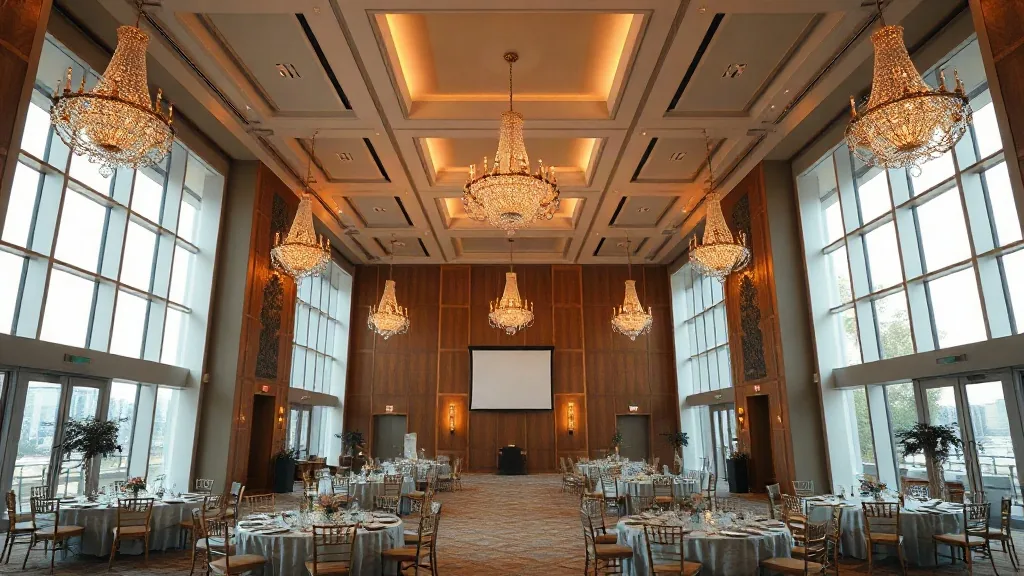
At a 300-person association conference I ran, we planned four concurrent breakouts and sized each room for 75, because 300 divided by 4 is 75 and that felt tidy. The first session, one topic pulled 140 people into a room built for 75. Attendees stood in the hallway. Two of the other three rooms held 40 each and looked abandoned. The math was arithmetically correct and operationally wrong, because people do not distribute themselves evenly across tracks. They chase the session they want.
Breakout sizing is not division. It is a distribution problem, and the distribution is always lumpy.
The wrong way and the right way
The wrong way is total attendance divided by number of tracks. That gives you the average, and no session ever draws the average. The right way starts from the peak: what is the largest share of the audience that will pile into a single popular session at once, and can your biggest breakout room hold it.
My rule is that the most popular concurrent session will draw somewhere between 35 and 50 percent of total attendance if the topics vary in appeal, which they always do. For 300 attendees that means the hot session could pull 105 to 150 people. So my largest breakout room needs to hold 150 in the setup I am using, not 75. The difference between an general session and a breakout room blurs here, because a popular breakout can approach general-session size.
Size for the peak, not the average
Once I know the peak session could hit 150, I size the rooms unevenly on purpose. One large room for the anchor session, two mid-size rooms, and if budget allows a small fourth for the niche track. That looks like 150, 90, 90, and 45 across four concurrent slots, which totals 375 of capacity for 300 people. The 25 percent cushion is not waste. It is the buffer that keeps the popular room from overflowing into the hallway.
The setup multiplies this. In classroom seating a room holds less than half its theater number, so a room rated 150 theater seats about 70 classroom. If my breakouts are working sessions with tables, I need rooms rated far higher in theater terms than my headcount suggests. A conference center that lists a breakout room at 100 is telling me the theater number, and my classroom breakout in it holds 45.
How many concurrent tracks
The number of concurrent breakouts is a function of two things: total attendance and how granular your content is. Too few tracks and every room is overcrowded. Too many and you fragment a 300-person audience into rooms of 30 that feel empty and cost you rental and AV on each one.
My working ratio is one concurrent track per 60 to 90 attendees. For 300 people that is four tracks, maybe five. For 600 people, seven or eight. Below 120 attendees I rarely run more than two concurrent tracks, because a third splits the room too thin. The industry conference season calendar fills with events that over-track and end up with sad half-full rooms, and a half-full breakout reads as a failed session even when the content is strong.
Every concurrent room is a full AV load
Here is the cost that surprises first-time conference planners. Each concurrent breakout needs its own AV: a projector or screen, a sound system, a mic, and often a tech to run it. Four concurrent tracks means four AV packages running at once, and at $1,500 to $3,500 per room per day depending on the market, breakouts are frequently the largest AV line on the whole event.
This is why the track count is a budget decision, not just a content one. Going from four tracks to six adds two full AV packages, two more rooms of rental, and two more techs, which can add $8,000 to $14,000 to a single conference day. I scope the AV for the conference against the track count early, because deciding to add a fifth track two weeks out means finding a fifth room, a fifth AV package, and a fifth tech in a tight window, at premium prices.
Placement matters as much as size
Sized-right rooms in the wrong places still fail. If the popular anchor session is in a room at the far end of a long corridor and the general session lets out at the opposite end, 150 people stampede the length of the building in a 10-minute transition and arrive late and irritated. I put the largest, most popular breakout closest to the general session exit, and the smaller niche rooms further out, so the biggest crowd moves the shortest distance.
At a convention center with breakouts spread across two levels, I keep concurrent sessions on the same floor when I can, because sending part of the audience up an escalator between sessions adds transition time and loses people to the coffee stand on the way. A hotel or resort with a cluster of same-floor breakouts off a central pre-function space is worth more to me than a bigger property with the rooms scattered, because the cluster keeps transitions tight.
Build in the flex room
I always try to hold one unassigned room in reserve if the venue and budget allow. When the hot session overflows, that flex room becomes an overflow simulcast with a screen and audio feed, and the people who could not fit still get the session. It costs one more room and one more AV feed, and it turns a hallway of frustrated attendees into a solved problem. For a high-stakes convening it is the cheapest insurance on the floor plan.
Predict the peak before you can measure it
For a repeat event I have attendance data from last year and can size the rooms against real numbers. For a first-year convening I do not, so I ask two questions during registration design. Which track does the marketing lead into, and which speaker has the biggest name. Those two answers point at the anchor session more reliably than any even split, because attendees follow the headline and the known name. I put my largest room on that session and accept that I am guessing, then I keep the flex room ready for the guess that misses.
I also use the registration form to gather intent when I can. A single optional question asking which track a registrant is most likely to attend gives me a rough distribution weeks before the event, and even a 40 percent response rate is enough to spot the room that is about to overflow. It converts a blind split into an informed one, and moving a session to a bigger room three weeks out is free, while doing it on the day is impossible.
So before you draw the breakout grid, tell me this. What is your total attendance, how many concurrent tracks are you planning, and how uneven do you expect the topic appeal to be? Give me those and I will tell you how big your anchor room needs to be and how many rooms you are actually paying for.


