
Corporate event sustainability reporting is becoming mandatory
Procurement teams now ask for event carbon numbers the same way they ask for a certificate of insurance. Here is what the reporting request looks like, what the venue can and cannot give you, and how to collect the data before the invoice closes.
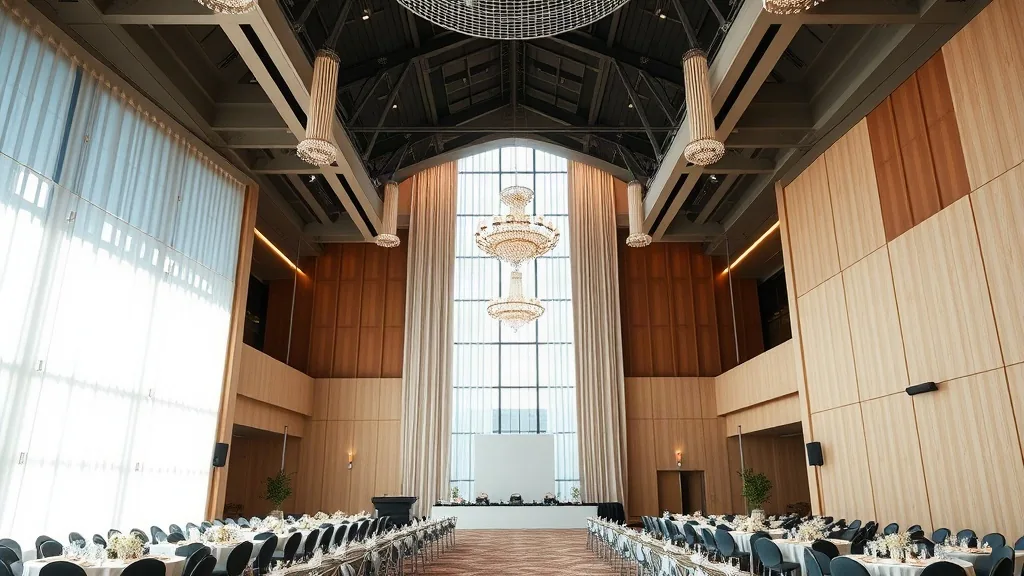
Last October a finance client sent me a one-line email three days after their 280-person leadership summit: “Legal needs the event’s Scope 3 number for the annual disclosure. Can you send it by Friday?” I had photos, a final banquet event order, and a signed contract. I did not have a kilogram-of-CO2 figure, and I had never been asked for one before. That request is now the third one I get on almost every corporate booking, and the venues that can answer it are pulling ahead.
Sustainability reporting used to be a nice-to-have line on an RFP. In 2026 it reads more like the insurance requirement: a box the client’s compliance team needs checked before they can close their own books. Healthcare and finance clients feel it first because their parent companies file under frameworks that count purchased services, and a company offsite is a purchased service.
What the reporting request actually asks for
The email says “sustainability report.” What the client’s team wants is narrower than that. In every case I have handled, it comes down to four numbers and one document.
- Estimated event emissions, usually in kilograms of CO2 equivalent, split into travel, food, energy, and waste.
- Diversion rate: the share of event waste that got composted or recycled instead of landfilled.
- Food donation weight, if any surplus catering went to a local pantry.
- Energy source for the venue, meaning whether the building runs on grid power, on-site solar, or a renewable-energy contract.
- A one-page summary the client can attach to an internal file.
Nobody is asking me to be a carbon accountant. They want defensible estimates with a source behind each one. A 280-person, single-day event runs roughly 20 to 40 kg CO2e per attendee once you count regional travel, so a napkin figure lands between 5,600 and 11,200 kg. That range is fine as long as you show the inputs. The compliance team fixes the methodology on their end; they just need my raw counts.
Where the venue holds the data you cannot get elsewhere
Here is the part planners miss. Two of those four numbers live inside the venue’s own systems, and you cannot reconstruct them after the event. If you do not ask on site, they are gone.
Waste diversion is the clearest example. A convention center with a real back-of-house program can tell you how many cubic yards went to compost versus landfill for your event dates, because their waste hauler bills them by stream. A hotel or resort that outsources janitorial often cannot, because everything goes into one compactor. Same building class, opposite answer. I now ask about this before I sign, not after the client emails me.
Energy source is the second. Some venues buy renewable-energy certificates for the whole building and will hand you a one-line attestation on request. Others have on-site solar covering a known percentage of load. Most run on standard grid power, which is a real answer too, just a higher-emission one. The venue knows; you have to ask the operations manager, not the sales manager, because sales rarely has the number in front of them.
The three questions I now put in every RFP
I added a short block to my request-for-proposal template, and it does double duty: it gets me the reporting data, and it tells me fast which venues have their operation together.
- Do you track landfill diversion by event, and can you report a diversion rate for our dates? A yes-with-a-number is a strong signal. A “we recycle” with no measurement is a no.
- What is the energy source for the event space, and can you provide a renewable-energy attestation if we ask? This separates the buildings with a real program from the ones with a recycling bin in the lobby.
- Do you partner with a food-recovery organization, and will you log donation weight for our surplus? Many cities have a recovery nonprofit that will pick up unserved, unopened catering, and the donation weight is a clean number for the report.
For methodology on the catering side, the same discipline that produces a clean cost estimate produces a clean emissions estimate. If you already build a tight food plan, you are most of the way there. My approach to reading a caterer’s numbers is in how to evaluate a catering proposal, and the per-head service-style breakdown in catering cost per head by service style doubles as your food-emissions worksheet, because a plated beef dinner and a vegetarian buffet sit at opposite ends of the carbon range.
Travel is the biggest number and the one you control at booking
For most corporate events, attendee travel is 60 to 80 percent of the total footprint. That is not a venue problem; it is a location problem, and you set it the day you pick the city. A regional meeting that pulls 200 people into a drive-market hub produces a fraction of the travel emissions of the same meeting flown into a resort three time zones away.
This is where the sustainability conversation and the budget conversation stop fighting each other. The lower-emission choice, a central conference center that most attendees can drive to, is also usually the cheaper one once you price airfare and two hotel nights per head. When a client tells me the CFO and the compliance officer both want something, a drive-market venue is often the one answer that satisfies both. The pushback against fly-everyone-in offsites that I wrote about in the hybrid backlash of 2026 is partly a carbon story wearing a budget costume.
Build the report while the event is live, not after
The mistake I made in October was treating the number as a post-event task. It is not. It is a data-collection task that happens during the event, and if you wait, half the inputs vanish.
My current process is short. I get the diversion rate and energy attestation named in the contract, so the venue is on the hook to produce them. On event day, I have the banquet captain note the final covers served by menu type, because that drives the food number. I ask the food-recovery partner for a donation receipt with weight before they leave the loading dock. I pull the final attendee roster with home cities so someone can model travel later. That is four data points captured in real time, and it turns a Friday-deadline scramble into a fifteen-minute summary.
The venues that can support this are a specific group right now, mostly larger convention facilities and newer hotels with corporate-sustainability commitments of their own. That gap is closing fast. By this time next year I expect the diversion-rate question to be as routine on an RFP as asking about the loading dock hours, and the venues that still answer “we recycle” will be losing bookings to the ones that answer with a number.
If you have a 2026 event where the client’s compliance or ESG team is in the room, tell me the headcount, the city, and whether attendees are driving or flying. That trio tells me which of these four numbers will be hard to get and which venues can actually produce them.


