
The Hybrid Backlash of 2026 — and Where It Lands
Hybrid events promised to solve attendance and access. Three years in, the honest verdict from production is more complicated: hybrid done right is 40% more expensive and still mostly broken. Here's what actually works.

I want to tell you about a hybrid event I ran in late 2024 that I think captures the moment we’re in. It was a financial-services leadership conference in San Francisco — 220 in-room, 340 remote. The in-room AV was excellent. The venue had good rigging, good acoustics, four cameras, a professional switching setup. We’d done this room before and we knew what it could do.
The remote experience was broken in a specific way that was not our fault and that we could not fix on site. The remote attendees had a 14-second streaming delay — industry-standard for internet broadcast — which meant that when the facilitator asked the room to use the audience response tool in real-time, the remote attendees were answering a question the room had already moved past. The in-room audience saw a 70% response rate. The remote audience saw a 23% response rate and the ones who responded were voting on yesterday’s news. The facilitator, who was excellent, handled it gracefully. But the two audiences were experiencing different events with different information at different times. “Hybrid” was the name we gave to that, but it wasn’t really a single event.
I’ve been doing production for fourteen years. I ran my first proper hybrid event in 2021 and I’ve done somewhere north of forty of them since. Here is my honest assessment of where things stand in 2026, because I think the industry is in a backlash moment and the backlash is not entirely wrong.
Why the backlash is happening
The backlash to hybrid events is happening for specific, diagnosable reasons.
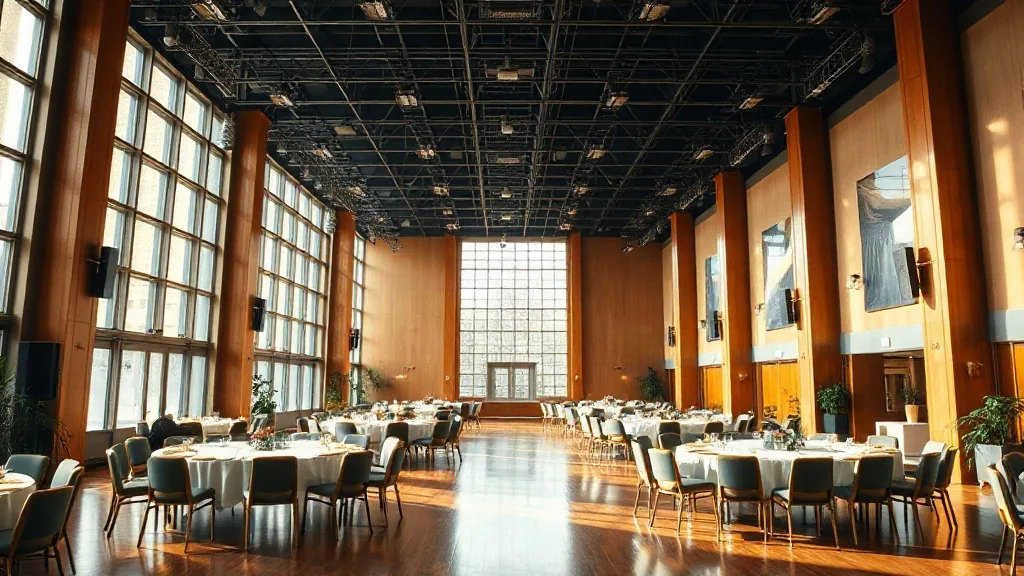
The in-room audience subsidizes the remote audience’s experience. The modifications required to serve a remote audience — cameras that cut away from the speaker, lighting designed for broadcast rather than room comfort, moderator attention split between in-room and digital Q&A tools, pacing slowed to accommodate the streaming delay — all degrade the in-room experience. Every in-room attendee is paying (in attention, comfort, and engagement) for the remote attendees’ access. Most in-room attendees haven’t been told this. They just know the event feels slightly worse than it should.
Remote attendees are not really attending. Studies done in 2023 and 2024 by event research firms consistently show that remote attendees at hybrid events multitask at a rate of 60-75%. The camera is on. The audio is playing. The person is answering emails. This is rational behavior — there’s no social cost to multitasking when you’re watching a stream. The “attendance” number the planner reports includes people who were technically present and productively absent.
The production cost is real. A proper hybrid event — with dedicated broadcast-grade camera operators, a switching engineer, a remote-audience producer, and the platform infrastructure to serve a concurrent digital audience — costs $18,000 to $45,000 more than the equivalent in-room-only event at the same venue. That’s before you’ve done anything about making the remote experience actually engaging. Most organizations running hybrid events are not paying this. They’re running a camera on a tripod connected to Zoom and calling it hybrid. That’s why it fails.
Where hybrid actually works
I don’t want to be the person who declares hybrid dead, because it isn’t, and there are specific contexts where it’s the right answer.
Global organizations with genuine geographic distribution. If you have 50 in-room attendees in Chicago and 200 remote attendees across eleven time zones who genuinely cannot travel, hybrid isn’t a choice — it’s the only viable format. The question is whether you invest enough in the remote production to make the remote experience worth attending. Many organizations don’t.
C-suite access events. A CEO who can join a town hall for 30 minutes via video but can’t be in the room for a full-day conference is worth the hybrid infrastructure for those 30 minutes. The asymmetry works when the in-room and remote components serve different purposes and different audiences.
Recorded-for-later content. The camera infrastructure required for hybrid also gives you a recording. For conferences where the recorded content has genuine post-event value — training libraries, regulatory documentation, a session that your 400 remote members who couldn’t attend will watch over the following month — the production investment can be justified by the recording output, not just the live remote experience.
What “hybrid” is turning into
The trend I’m watching in 2026 is a disaggregation of what “hybrid” meant in 2021-2023 into three distinct product categories that require different production approaches and different venue setups.
Category 1: In-person with a recording. The event is designed entirely for the in-room audience. A camera capture happens for the record and for asynchronous distribution. No live remote audience. No streaming delay accommodations. No split production team. This is what most organizations calling themselves “hybrid” should actually be running.
Category 2: In-person with a simultaneous broadcast. There is a live remote audience, but it’s explicitly secondary. The in-room experience is not compromised for it. The remote audience gets a broadcast — well-produced, professional, with a dedicated remote producer — but they know they’re watching, not attending. The interaction model for remote attendees is different from in-room: they can submit questions but they don’t vote on live polls.
Category 3: Distributed synchronous events. Multiple in-person hubs, each with their own local programming and production, connected by a shared broadcast layer. Each hub has 50-150 people in a room together. The “hybrid” element is between hubs, not between in-person and at-home. This format — running simultaneous events in Atlanta, Chicago, and Dallas, connected by a shared main-stage broadcast — is gaining traction precisely because it preserves the in-room experience at every location. The Atlanta conference centers and similar mid-market venues are increasingly seeing requests for this kind of multi-hub setup. I used a format like this for a 600-person event in 2025 across three markets and it worked better than any single-venue hybrid I’ve run.
The venue implications
If the trend is toward Category 1 and Category 3 and away from Category 2, the venue requirements shift.
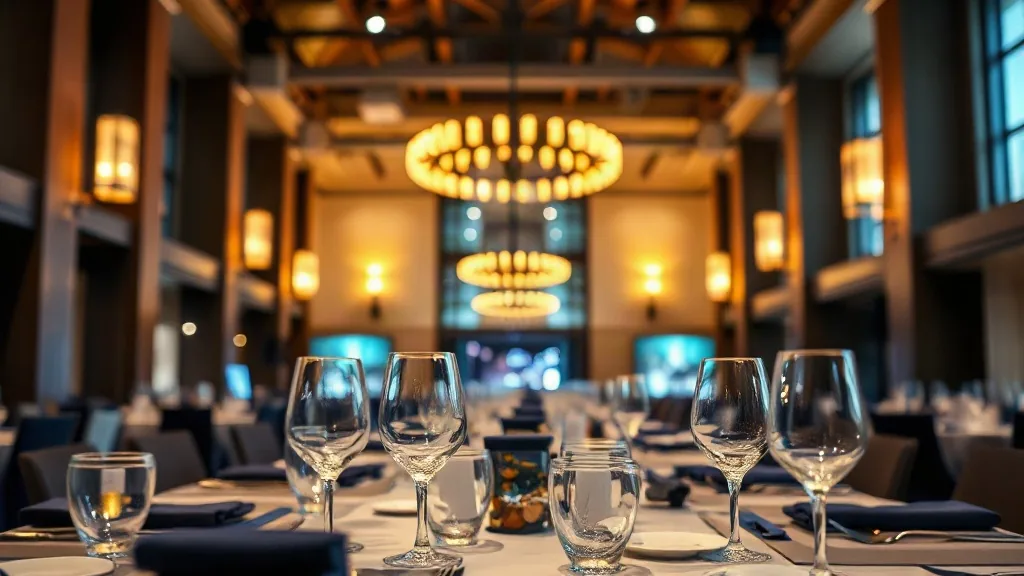
For Category 1, you need a venue with good in-room AV and one camera position. Most conference centers in California and across the country can handle this.
For Category 3, you need multiple venues in multiple markets that can run similar production setups simultaneously. This is a coordination challenge more than a technology challenge. I’ve started maintaining a short list of venues in different cities that have equivalent production capabilities — same rigging points, same sightlines, same lighting standards — so that a multi-hub event looks and feels consistent across markets. Browse the meeting spaces directory by city and note which venues list their technical specs in detail. Those are the ones worth calling for multi-hub work.
For Category 2 — real hybrid with a live remote audience — the venue requirements are much more demanding: broadcast-grade rigging, a dedicated broadcast control room (not a shared production space), acoustic treatment that works for cameras and not just room presence. Very few venues are actually built for this. The ones that are charge accordingly.
My take on 2026
The hybrid backlash is correcting an overclaim, not killing the category. What’s happening is a return to honesty: in-person is for the people in the room, remote is for the people watching, and designing an event that serves both simultaneously without compromising either is hard and expensive and usually not worth it.
For planners, the useful question is: who is actually in my remote audience, what do they need, and can I serve them better asynchronously than I can live? More often than not, the answer is that a well-produced recording delivered to remote attendees within 48 hours of the event serves them better than a compromised live experience. That’s not a step backward — it’s an honest assessment.
See AI moderators are coming for what’s changing in the production toolset — some of the AI tools are genuinely making the remote-audience experience better, which may extend the life of Category 2 hybrid longer than I’m predicting.
Send me the brief. If it says “hybrid,” I’ll ask you to tell me who the remote audience is and what they actually need. The answer usually changes the format.


